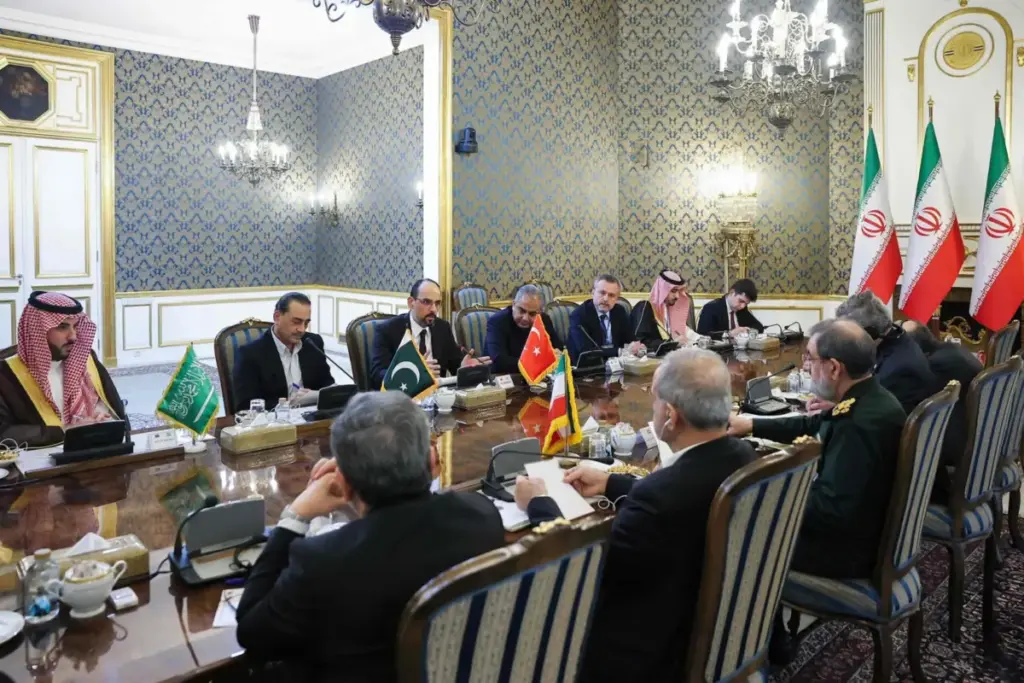
Iranian President Masoud Pezeshkian has expressed Tehran’s strong willingness to strengthen regional cooperation and settle long-standing disputes during high-level diplomatic talks with senior officials from Türkiye, Saudi Arabia, and Pakistan in the Iranian capital on Monday. Addressing the visiting delegations, the Iranian leader issued a compelling call for greater solidarity and unity among Muslim nations to tackle pressing geopolitical challenges, according to reports published by the official state news agency IRNA.
The high-stakes diplomatic engagement took place during a scheduled meeting in Tehran involving high-ranking representatives from the Mecca Defense Alliance. Amid a volatile regional climate marked by escalating tensions, President Pezeshkian emphasized the critical need for deeper unity and coordinated cooperation among Islamic countries. He argued that collective action is the most effective pathway toward achieving lasting peace, stability, and mutual development across the Middle East and South Asia.
"The Islamic Republic of Iran, with firm conviction and serious determination, is ready to take steps toward deepening regional cooperation, resolving differences and drawing on the shared capabilities of Islamic countries," President Pezeshkian stated during the discussions.
Elaborating on Tehran’s broader foreign policy stance, the Iranian president noted that his administration actively supports any diplomatic understanding, bilateral initiative, or multilateral framework that contributes to the enhancement of regional unity, mutual cohesion, security, and sustainable development. He underscored that by leveraging their combined economic, political, and strategic assets, Muslim countries possess the potential to offer the wider global community a compelling model of justice and development.
Monday’s diplomatic gatherings in Tehran featured a significant quadrilateral meeting bringing together official delegations from Türkiye, Saudi Arabia, Pakistan, and the host nation, Iran. According to diplomatic sources, the core agenda for these pivotal talks centers heavily on pressing regional security concerns, ongoing worries regarding Israel’s activities across the region, and the rapidly evolving humanitarian and political developments in Palestine and Lebanon.
The quadrilateral format has drawn significant international attention due to the high-ranking and influential nature of the participants representing each state. Both Iranian President Masoud Pezeshkian and Iranian Foreign Minister Abbas Araghchi are directly attending the high-level meetings, ensuring that Tehran’s official diplomatic and security positions are fully represented at the negotiating table.
Meanwhile, regional powers have dispatched key strategic figures to articulate their respective interests and explore avenues for coordinated action. Türkiye is being represented at the Tehran talks by Ibrahim Kalın, the Director of the country’s National Intelligence Organization, highlighting the security-focused dimension of Ankara’s engagement. Saudi Arabia’s delegation is led by Defense Minister Prince Khalid bin Salman, signaling Riyadh’s active involvement in discussions touching upon regional defense and strategic stability. Pakistan is represented by Chief of Army Staff Asim Munir, reflecting Islamabad’s deep interest in regional security frameworks and diplomatic coordination among major Islamic nations.
The convening of this quadrilateral forum in Tehran occurs at a critical juncture for the region, where intersecting crises in Gaza, Lebanon, and broader strategic flashpoints have heightened the urgency for dialogue among key regional stakeholders. By bringing together defense, intelligence, military, and political leadership from Iran, Saudi Arabia, Türkiye, and Pakistan, the talks aim to bridge historical gaps and foster a more cohesive approach to mitigating regional conflicts. As the discussions continue, regional observers are closely monitoring the outcomes of the Tehran meetings to gauge whether this high-level dialogue can translate into concrete diplomatic frameworks and long-term security cooperation among the participating Muslim nations.