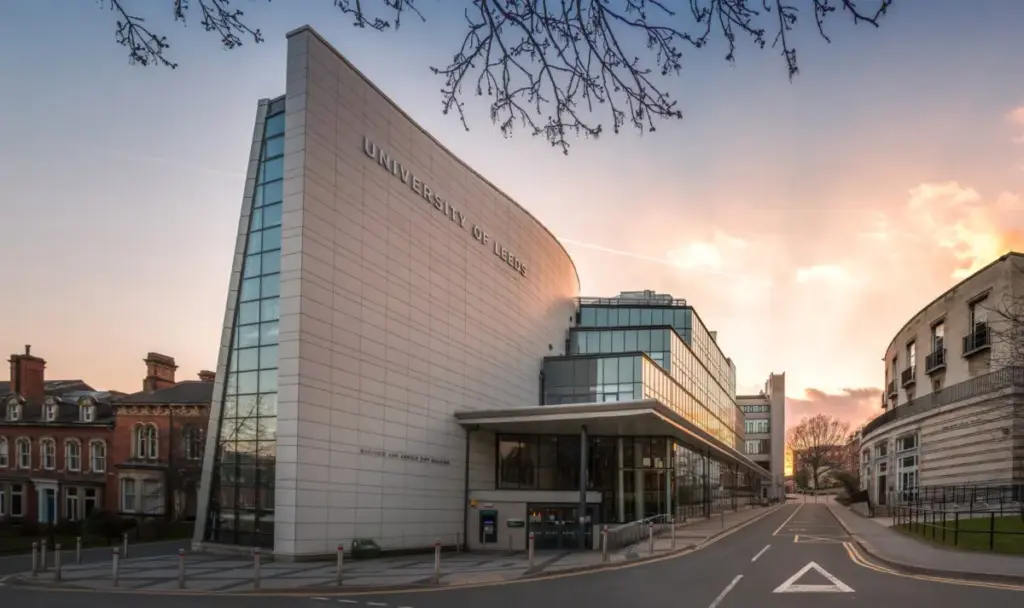
LEEDS, UK — A Muslim chaplain at the University of Leeds has officially resigned from her position, stepping down amid a deeply polarized climate on campus triggered by the return of a Jewish chaplain who served in the Israel Defense Forces (IDF) during the ongoing war in Gaza.
Farhat Yaqoob, who served the university community with dedication since 2014, announced her resignation after Rabbi Zecharia Deutsch resumed his duties on campus. Rabbi Deutsch’s return sparked an immediate and sustained protest movement led by pro-Palestine students, plunging the university into a fierce debate over campus safety, institutional duty of care, and the broader global fallout from the conflict in the Middle East.
In a formal statement released via the Instagram page of the Leeds University Union Islamic Society, Ms. Yaqoob explained that her foundational principles and personal ethos no longer aligned with the trajectory and environment of the university institution.
"It is with a very heavy heart that I am writing this message to you all. But I need to share the news that I will be standing down in my role as the Muslim Chaplain," Ms. Yaqoob wrote in her public address to the student body.

Reflecting on her departure, she emphasized the core values that guided her decade-long tenure, stating that her faith serves as a foundation for her humanity and her professional practice. She noted that social justice is an integral component of any institutional duty of care.
"Based on the current climate, especially since the international events around early October 2023, I have struggled to find those fundamental values lived out here on campus in the way that I feel works in harmony with me. It is becoming extremely challenging for me to stay on as chaplain," she added.
The Leeds University Union Islamic Society expressed profound sadness over her departure, praising her extensive contributions to the campus community throughout her tenure. In their own social media statement, the student group highlighted her unwavering commitment to student welfare during difficult times.
"She has worked tirelessly in her time to bring unity to campus, through mentoring students and being a light to us all in some of our darkest times," the Islamic Society stated. "She has been and will always be someone who strengthens and supports our community and has been a person of safety in some of the most unsafe times, for that we will forever be grateful."
The controversy at the heart of the chaplain’s resignation centers on Rabbi Zecharia Deutsch, a rabbinical emissary who has served as the Jewish chaplain for universities in the Yorkshire region, including Leeds, since 2021. Following the escalation of hostilities in October 2023, Rabbi Deutsch traveled to Israel to serve in the IDF reserves amidst the military campaign in Gaza.

When Rabbi Deutsch resumed his chaplaincy role on campus in January, students expressed immediate outrage, anguish, and fear regarding his presence. As protests escalated across the university grounds, reports emerged indicating that Rabbi Deutsch and his wife, Nava, had been forced into temporary hiding due to safety concerns and threats they received following his return.
Public scrutiny intensified as digital footprints from his time in military service circulated widely online. Videos and photographs showed Rabbi Deutsch wearing an Israeli military uniform and speaking publicly about the conflict. In one widely shared video, he defended the military campaign, stating: "There is so much confusion going on and it’s so clear that there is evil and there is good. And what Israel is trying to do is destroy the evil, which is the most moral thing possible."
The resumption of his duties coincided with a devastating escalation of casualties in the region. Since October 7, the military operations conducted by the IDF in Gaza have resulted in the deaths of approximately 30,534 Palestinians, a toll that includes 13,430 children and at least 8,900 women, alongside an additional 71,920 reported injuries. These staggering figures have drawn widespread international condemnation, leading to accusations of war crimes and genocide. The gravity of the situation prompted South Africa to institute formal legal proceedings against Israel at the International Court of Justice, alleging violations of the Genocide Convention.
Against this backdrop of international turmoil, student activism at the University of Leeds intensified. Protesting students launched a series of demonstrations, culminating in a sit-in occupation within a section of the historic Parkinson Building. The demonstrators demanded the immediate suspension and dismissal of the Jewish chaplain, arguing that his active participation in a military force accused of genocide rendered the campus unsafe for Muslim and pro-Palestine students.
Speaking directly to independent media outlets, students participating in the sit-in maintained that the university environment had deteriorated into an unsafe space, asserting that their concerns were frequently overlooked or misrepresented in mainstream public discourse.

Parallel to the physical protests on campus, public campaigns gained massive traction online. A petition hosted on Change.org calling for the dismissal of Rabbi Deutsch from the University of Leeds and other associated institutions rapidly surpassed 12,000 signatures. Prominent national advocacy groups also intervened, amplifying the students’ demands. The Muslim Association of Britain publicly addressed the university administration on social media platform X, questioning the institution’s commitment to student safety.
"Why have you allowed Zechariah Deutsch to return to the university as a chaplain after serving in the IDF?" the organization wrote. "You have a duty of care towards your students to ensure their safety at all times. How can your students feel safe with a war criminal complicit in genocide roaming your campus?"
In response to the mounting pressure, student protests, and the high-profile resignation of the Muslim chaplain, representatives for the University of Leeds issued a detailed statement addressing the community’s concerns.
A university spokesperson emphasized the institution’s commitment to maintaining an inclusive environment for its large and diverse demographic. "As a diverse community of more than 39,000 students from 137 countries, we work hard to uphold freedom of speech for all and to ensure that the different experiences and perspectives of all in our community can be heard," the spokesperson stated.
The university highlighted its legal obligations regarding free speech while drawing a firm line against discrimination and harassment. "The University has a legal duty to support free speech and peaceful expressions of views within the law, and has facilitated numerous authorised vigils and protests. We absolutely condemn all antisemitism, Islamophobia, harassment and abuse and would always take action against it."

Acknowledging the deep emotional toll the international conflict has taken on campus staff and students, the administration sought to validate the experiences of its Muslim population. "Our recent statement in response to antisemitic incidents in no way diminishes the experience of our Muslim staff and students. Islamophobia and antisemitism are equally abhorrent and have no place at the University of Leeds. We know that many of our Muslim staff and students are finding this to be an incredibly difficult time with many experiencing significant anguish and upset. We are meeting regularly to continue to listen, discuss and identify how we can continue to provide further support and address their ongoing concerns."
Addressing the departure of the Muslim chaplain, the administration expressed deep regret. "We are saddened that Sister Farhat will be standing down from her role with us, and wish to thank her sincerely for her significant support for our Muslim students and staff as well as our wider community at Leeds over the past nine years of her service. The University will continue to ensure they receive the invaluable spiritual and pastoral support provided by the Muslim chaplaincy."
Regarding the status of the Jewish chaplaincy, the university clarified the administrative arrangements governing Rabbi Deutsch’s position. "Rabbi Deutsch is employed by the UJC to support Jewish students in Leeds and at other universities in the Yorkshire region. The University remains in close contact with the UJC to discuss how it supports his work, and ensure we are sensitive to the diverse perspectives of our community."