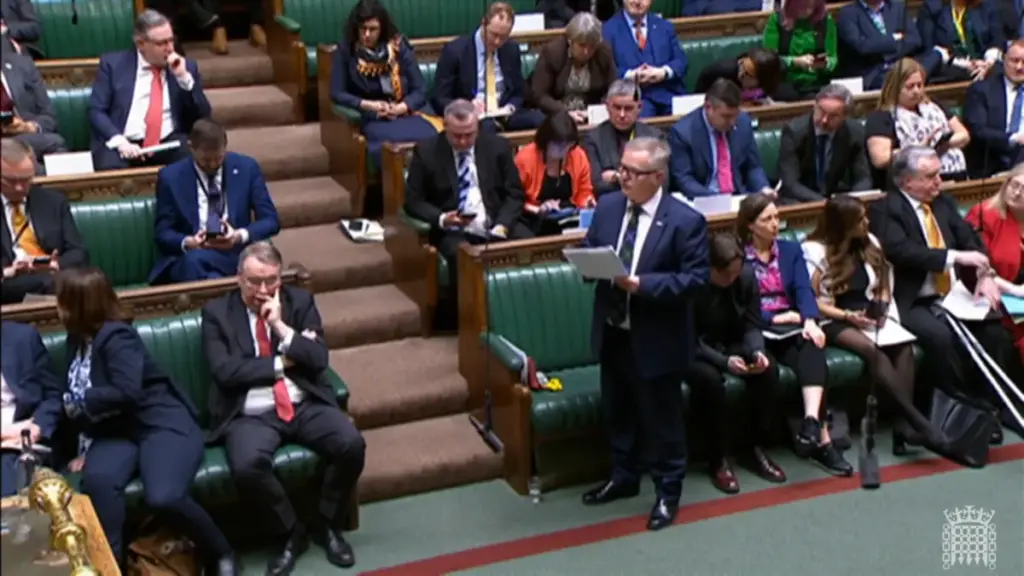
The address, which quickly drew widespread attention, focused heavily on the disproportionate nature of the military tactics employed in Gaza. O’Hara explicitly called out actions that have defined the conflict, pointing to the imposition of a total siege on the territory, the heavy bombardment of densely populated residential neighborhoods, the systematic eradication of civilian infrastructure, and the continuous loss of non-combatant lives. In his remarks to the Speaker of the House, the Scottish National Party representative maintained that international standards of conduct and the core legal frameworks governing self-defence cannot be stretched to legitimize the catastrophic humanitarian crisis that has gripped the region.
To underscore the gravity of the situation and bring the human cost of the conflict directly into the halls of the UK Parliament, O’Hara invoked the words of the renowned Palestinian poet Mahmoud Darwish. Reading the poet’s poignant reflection into the parliamentary record, O’Hara quoted: "In silence we become accomplices. But when we speak, every word has the power to change the world." Building upon Darwish’s timeless observation, the MP emphasized that the international community—and British legislators in particular—carry a moral obligation not to look away from the suffering of ordinary people. He stated his intention to share the direct testimonies of those who are being forced to endure the daily horrors of the military offensive, ensuring that the voices of Gaza are heard inside the corridors of power where foreign policy and diplomatic stances are shaped and debated.
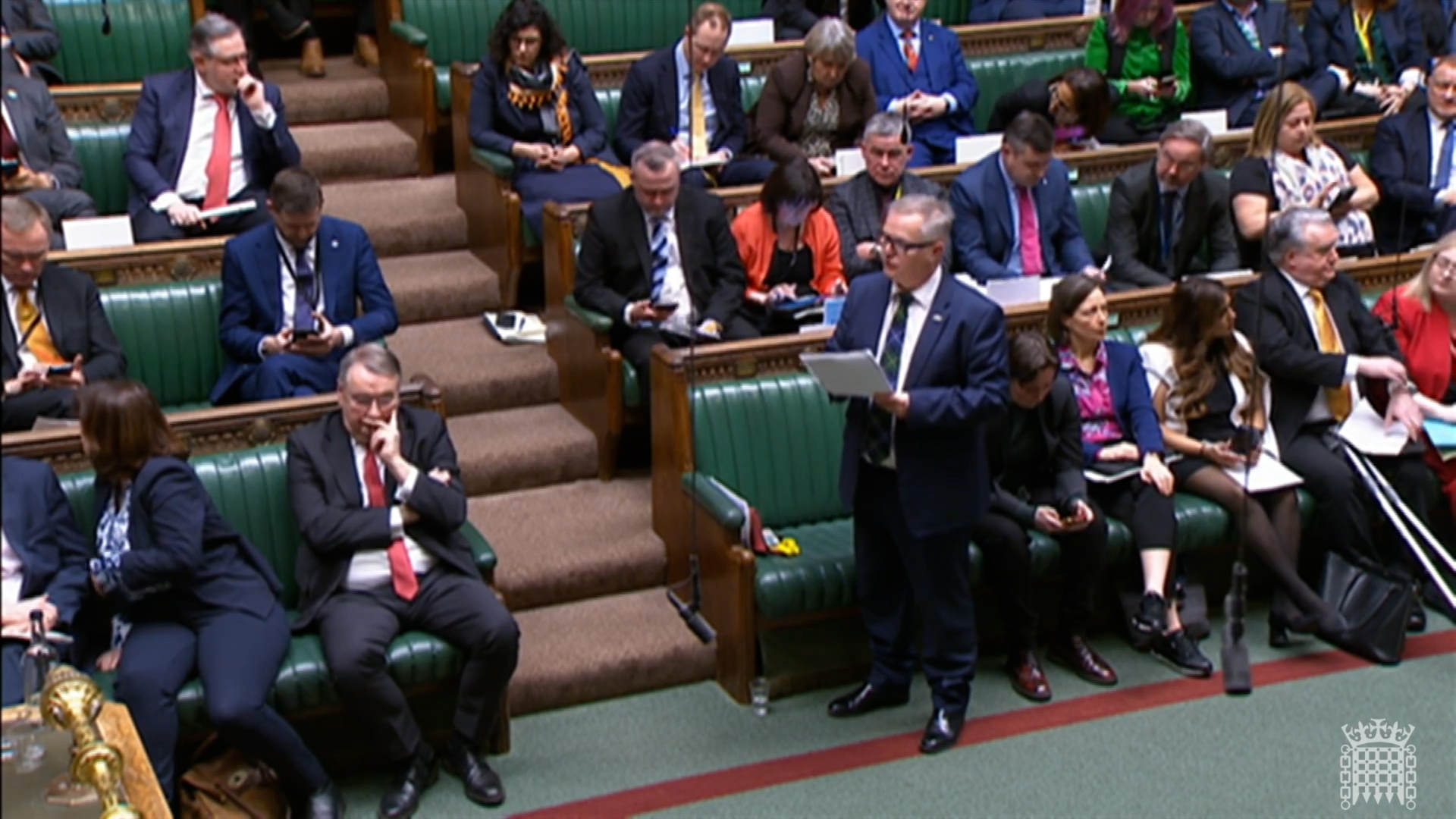
The intervention by O’Hara forms part of a broader, ongoing debate within the UK Parliament regarding the humanitarian catastrophe in Gaza and the diplomatic posture of the British government. Lawmakers from various parties have increasingly clashed over arms exports, diplomatic engagement, and the calls for an immediate and permanent ceasefire. While some political figures have consistently defended Israel’s right to target Hamas following the October events, a growing contingent of MPs has raised serious alarms regarding potential violations of international humanitarian law, warning that the scale of destruction in Gaza far exceeds any acceptable threshold of military necessity or proportionality.
Throughout his address, O’Hara emphasized that the destruction of residential areas, hospitals, schools, and water and sanitation systems represents an erasure of civilian infrastructure that will take generations to rebuild, effectively making normal human life impossible for the millions of residents trapped in the enclave. By highlighting the total siege conditions—which have severely restricted the flow of food, clean water, medical supplies, and fuel—the Scottish National Party MP sought to refocus the parliamentary debate away from abstract political rhetoric and onto the immediate survival needs of the civilian population.
The invocation of Mahmoud Darwish further highlighted the cultural and historical dimensions of the Palestinian struggle, reminding the House of Commons that behind the daily casualty statistics and geopolitical maneuvers lie real human stories, culture, and a deep-seated desire for dignity and justice. O’Hara’s decision to bring the everyday realities of Palestinians into the parliamentary record reflects a growing insistence among certain UK politicians that domestic policy discussions must account for the moral and legal implications of Britain’s international alliances and diplomatic voting records.

As the debate surrounding the UK’s response to the conflict continues to evolve, interventions such as the one delivered by Brendan O’Hara ensure that the pressure remains on political leaders to address the root causes of the violence and to take a definitive stand against actions that violate international humanitarian norms. By challenging the limits of how self-defence is interpreted on the global stage, the speech serves as a significant marker in the ongoing parliamentary discourse concerning accountability, human rights, and the urgent necessity of protecting civilian lives in zones of armed conflict.