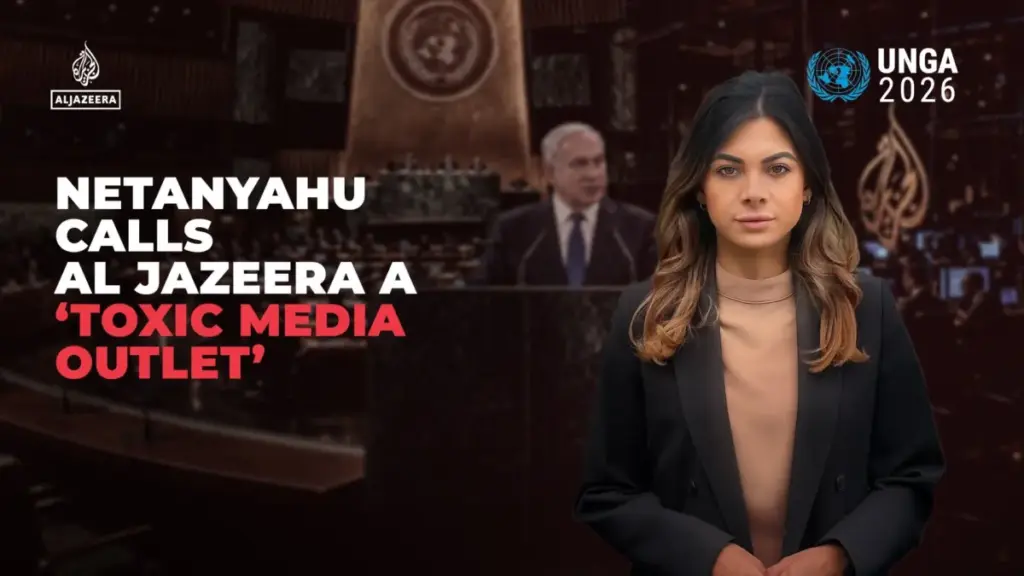
Israeli Prime Minister Benjamin Netanyahu has sharply escalated his rhetoric against international media coverage of the ongoing conflict, branding the Qatar-based broadcaster Al Jazeera a "toxic media outlet" and characterizing the press writ large as an "eighth front" in Israel’s multi-sided war.
The remarks, which place independent journalism directly in the crosshairs of military strategy, come against the backdrop of a severe information blackout in the Gaza Strip. While the Israeli government maintains that its sweeping restrictions and targeted actions against news organizations are vital to national security and counter-propaganda efforts, international press freedom watchdogs and human rights organizations argue that the measures are designed to suppress documentation of the war’s devastating human cost.
According to reporting by Al Jazeera’s Noor Wazwaz, the Israeli government’s aggressive stance toward the media has translated into unprecedented operational bans, severe access limitations for foreign journalists wishing to enter the besieged enclave, and the deaths of numerous Palestinian reporters working on the ground under extreme danger.
The characterization of the media as a military front underscores a fundamental shift in how modern conflicts are waged and perceived. Prime Minister Netanyahu’s description of journalists and broadcasting networks as combatants on an "eighth front" expands the concept of the battlefield far beyond traditional geographic lines, encompassing information ecosystems, satellite transmissions, and digital narratives. In the view of the Israeli administration, networks like Al Jazeera do not merely report the news, but actively participate in the psychological and diplomatic dimensions of the conflict by broadcasting perspectives that challenge Israel’s official narrative and military objectives.
This rhetorical offensive has been accompanied by tangible, high-stakes policy actions. Months prior to Netanyahu’s latest comments, the Israeli government moved decisively against Al Jazeera, utilizing emergency regulations to shut down the network’s operations within Israel. These measures included raiding the broadcaster’s temporary bureau, confiscating broadcast equipment, blocking its local transmissions, and restricting access to its websites. Israeli authorities justified the unprecedented shutdown by claiming that the network posed a direct threat to state security, accusing it of incitement and of serving as a mouthpiece for Hamas and other adversaries.
Al Jazeera and its supporters have consistently rejected these allegations, condemning the closure as a blatant attempt to silence independent reporting and obscure the realities on the ground in Gaza. The network has maintained that it provides vital, on-the-ground coverage of events affecting civilians, hospitals, and infrastructure in the Palestinian territory, operating in accordance with the highest standards of international journalism despite facing extraordinary risks.
The friction between the Israeli government and the press extends well beyond a single network. Throughout the protracted conflict, international journalistic organizations, including the Foreign Press Association (FPA), have repeatedly petitioned the Israeli Supreme Court and appealed directly to government and military authorities for independent access to the Gaza Strip. Barring rare and tightly controlled military-escorted press tours, foreign journalists have been systematically prohibited from entering Gaza independently since the war began following the October 2023 attacks.
This blanket exclusion has placed an immense and lethal burden on local Palestinian journalists, who have remained inside the enclave to document the unfolding humanitarian crisis at the cost of their own lives. International bodies, such as the Committee to Protect Journalists (CPJ) and Reporters Without Borders (RSF), have documented a staggering death toll among media workers in Gaza, making the current conflict one of the deadliest periods for journalism in modern history. The deaths of these reporters, coupled with the systematic destruction of media offices and broadcasting infrastructure in Gaza, have created what critics describe as an information vacuum, where verifying facts and documenting civilian casualties becomes increasingly difficult.
As the war continues to reverberate across multiple regional and international arenas—from active combat zones and diplomatic summits to the digital and information spheres—the battle over narrative control remains fiercely contested. Prime Minister Netanyahu’s framing of the media as an operational front signals that the information war is viewed by leadership as no less critical than the physical fighting on the ground. However, as Al Jazeera’s Noor Wazwaz highlights, this strategy of containment, closure, and verbal condemnation raises profound questions about the future of press freedom, accountability, and the public’s right to independent information during times of war.