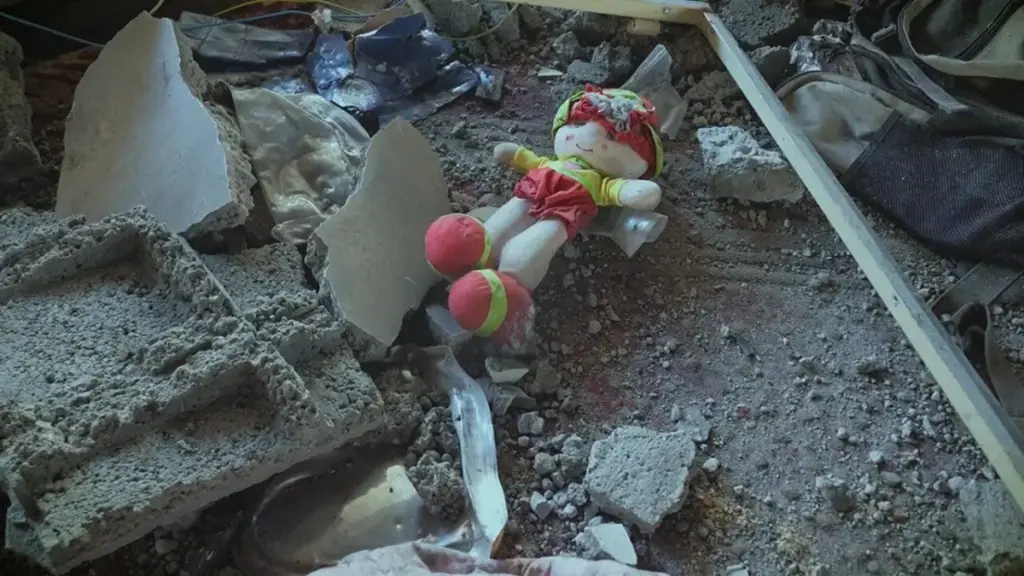
Gaza — One year after a ceasefire agreement was officially reached in the Gaza Strip, more than 100 humanitarian, human rights, and civil society organizations have issued a stark warning that the truce exists merely in name only. According to the coalition of aid groups, Israeli forces continue to kill and injure Palestinians on a daily basis, while crippling restrictions on humanitarian aid, heavy equipment, and rebuilding materials are preventing families from recovering from years of devastation.
The joint coalition cautioned that the ongoing death toll, destruction, and systemic deprivation in the besieged enclave must not be normalized under the diplomatic cover of a defunct ceasefire agreement.
Over the past year, relentless Israeli military strikes, artillery fire, and ground operations have claimed the lives of more than 1,400 Palestinians, including at least 327 children. Local families and rescue workers have been forced to recover hundreds of bodies directly from the rubble using little more than their bare hands, as Israeli authorities continue to restrict the entry of heavy machinery and excavation equipment needed to safely reach collapsed structures. Countless more bodies remain trapped beneath the debris, unreachable and uncounted.
Military actions have also altered the physical landscape of the territory. The Israeli military has pushed the so-called "Yellow Line" further into the Gaza Strip, extending past the original withdrawal boundaries established in the ceasefire agreement. This tactical shift has further compressed Palestinians into an increasingly narrow, densely packed area, exacerbating overcrowding and safety risks.
Recent high-resolution satellite imagery underscores the staggering scale of the destruction inflicted by Israeli forces across the enclave. Entire neighborhoods have been reduced to pulverized concrete, residential homes flattened, and vital agricultural lands systematically razed. Data indicates that more than 80 percent of all structures across the Gaza Strip have sustained varying degrees of damage, with approximately two-thirds completely destroyed.
A Dire Humanitarian Crisis as Winter Approaches
As another harsh winter approaches, hundreds of thousands of families continue to languish in flimsy tents, makeshift plastic shelters, or severely damaged homes, facing their fourth consecutive winter completely exposed to biting cold, high winds, and destructive flooding.
Demographic vulnerabilities compound the crisis. Nearly one in every four households in Gaza is now headed by a woman, and these families face exponentially higher risks of living in unsafe, inadequate, or entirely exposed makeshift shelters.
With nowhere safe left to run, desperate families have increasingly taken to sheltering in structurally compromised, war-damaged buildings that face an imminent threat of collapse. The lethal danger of this reality was underscored tragically in September, when a multi-story damaged building collapsed in Gaza City, killing 21 people instantly, including 12 children.
Humanitarian leaders have expressed profound frustration over the international community’s failure to enforce compliance or ease blockades.
Jan Egeland, Secretary General of the Norwegian Refugee Council, condemned the ongoing situation: "It is utterly shameful that a full year after the ceasefire was signed, so little has improved for Palestinians in Gaza. Families are still being forced to make impossible choices, between sheltering in damaged and dangerous buildings or living in tents facing unbearable temperatures. Israeli restrictions are still preventing the required equipment or materials, which are the only ways for communities to begin rebuilding their lives. As winter approaches, all governments must take concrete steps to ensure that the flow of aid increases without hindrance, so that Palestinians can finally begin the vast task of recovery and reconstruction."
Collapse of the Healthcare System and Acute Hunger
The restrictions imposed on the territory have had an equally catastrophic impact on essential public services, chief among them the healthcare sector. Currently, not a single one of Gaza’s 36 hospitals is fully functioning. Facilities struggle with critical, chronic shortages of life-saving medicines, specialized medical equipment, and the fuel required to keep emergency generators running.
Newborn babies housed in incubators, patients requiring continuous oxygen or intensive care, older adults, and individuals living with disabilities or severe, life-changing injuries face acute, life-threatening risks. Specialized medical treatment, post-traumatic rehabilitation, and assistive devices remain severely restricted or entirely unavailable.
The backlog for urgent medical care continues to mount. More than 18,500 patients, including at least 4,000 children, remain in urgent need of medical evacuation outside the Gaza Strip to receive life-saving treatments unavailable locally. Tragically, more than 1,000 patients have already died while waiting for permits and clearances that never arrived.
Simultaneously, food insecurity has reached catastrophic proportions. An estimated 1.4 million people are currently facing crisis-level hunger or worse as the year draws to a close. Compounding the nutritional emergency, unsafe drinking water and utterly devastated sanitation infrastructure continue to drive the rapid spread of entirely preventable waterborne diseases.
Voices from the Ground and Calls for Accountability
Aid agencies stress that the current humanitarian catastrophe follows an unmistakable and relentless pattern. Families continue to face lethal violence, children die from preventable illnesses, and the landscape remains dangerously littered with unexploded ordnance. Flattened homes cannot be cleared, and essential aid supplies remain stalled at borders while populations starve.
Local civil society organizations, operating under immense strain, argue that the situation demands immediate international intervention rather than passive observation.
Mohsen Abu Ramadan, a Board Member of the Palestinian NGO Network, emphasized the plight of local humanitarian workers: "Palestinian organisations are responding to immense needs under Israeli occupation with destroyed offices, displaced staff, and shrinking budgets. Local and national organisations are first responders and will remain, but we need to be protected. Governments must act to end Israel’s attacks and restrictions on our work and donors must provide direct, flexible funding to meet the needs."
Children, meanwhile, continue to bear the heaviest burden of the protracted violence.
Inger Ashing, CEO of Save the Children, highlighted the daily toll on the youngest generation: "A ceasefire is meaningless if children are still being killed and families are still unable to rebuild their lives. Since the ceasefire was announced, nearly one child has been killed every day. Families remain trapped in a devastating cycle of loss and deprivation, unable to recover. Governments that backed this agreement must use their influence to stop the killing and ensure children can access food, healthcare, shelter and education. Gaza’s children have a right to safety and a future. Governments have the power to help secure both, and they must use it."
Human rights advocates argue that the unmitigated suffering mirrors the very conditions that prompted the UN Commission of Inquiry—in reports issued in September 2025 and June 2026—to conclude that Israel has committed acts of genocide. Observers maintain that the international community’s legal and moral responsibilities do not conclude simply because an agreement was signed on paper.
Agnes Callmard, Secretary-General of Amnesty International, underscored the absolute necessity of legal accountability: "Accountability cannot be swept under the rubble. The recovery and future of Gaza cannot be separated from a framework grounded in international law, justice, and the rights of victims. The persistent failure to hold Israel accountable and press Israel to comply with the International Court of Justice’s binding orders continues to fuel the atrocity crimes on a mass scale against Palestinians."