Within the expansive and carefully curated holdings of the National Art Library at the Victoria and Albert (V&A) Museum in London, a fascinating intersection of science, history, and fine art lies quietly preserved. While the library is widely celebrated for its vast collection of printed materials relating strictly to art and design, its shelves also house several rare and historically significant early textbooks that bridge the gap between scientific inquiry and artistic illustration. Among these treasures are seminal works on anatomy and astronomy that trace humanity’s evolving understanding of the natural world, showcasing not only groundbreaking scientific advancements but also the exquisite craftsmanship of the eras in which they were produced.
Revolutionizing the Study of the Human Body
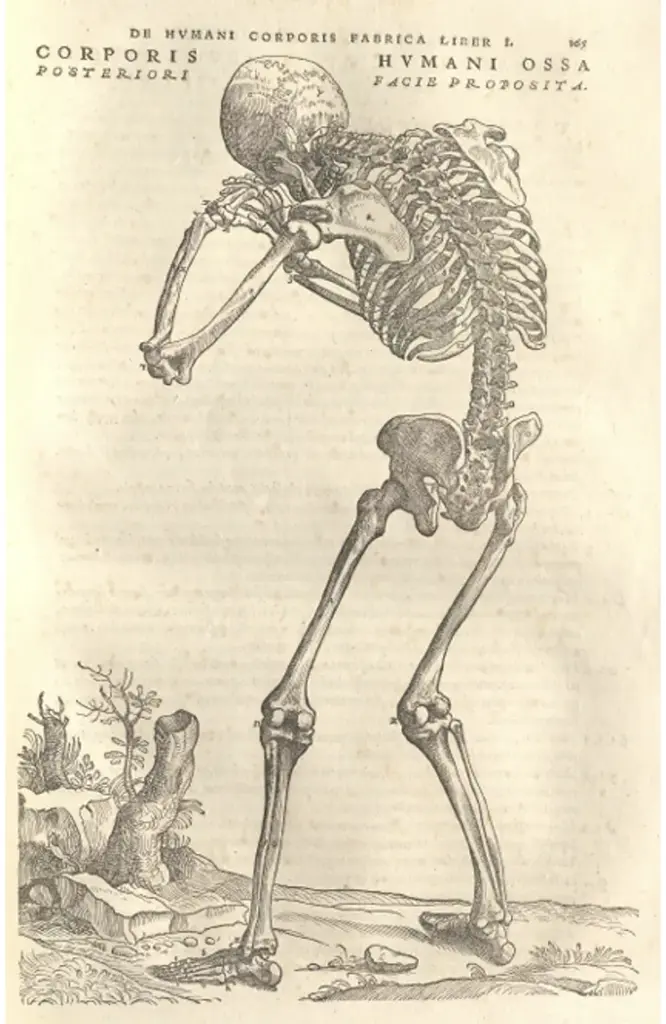
One of the most remarkable volumes held within this collection is Andreae Vesalii Bruxellensis, scholae medicorum Patauinae professoris De humani corporis fabrica libri septem, a monumental work commonly abbreviated as De humani corporis fabrica libri septem, which translates to On the Fabric of the Human Body in Seven Books. Published by Joannes Oporinus in Basel in 1543, this landmark publication is widely considered by historians and medical professionals alike to be the first true anatomical textbook.
The author of this ambitious work, Andreas Vesalius (1514–1564), served as a Professor of Medicine at the University of Padua in Italy during the vibrant cultural and intellectual awakening of the Italian Renaissance. Vesalius endeavored to create a comprehensive, highly accurate guide to the internal structures of the human body. This was a monumental undertaking that had not been seriously attempted since the ancient work of the Greek physician Galen more than 1,400 years prior. For centuries, the systematic study of human anatomy through dissection had been severely restricted or outright banned by most major religious and social institutions of the time, leaving medical science heavily reliant on outdated and often flawed classical texts.
To achieve unprecedented levels of precision, Vesalius broke with traditional academic detachment and actively performed his own dissections, meticulously mapping the physical reality of human anatomy. Recognizing that visual communication was essential for conveying complex physiological structures, he enlisted the talented German artist Jan Steven van Calcar (1499–1546) to collaborate on the project. Van Calcar produced over 250 stunning woodcut prints to accompany the text. The woodcut technique involved carving detailed designs into blocks of wood so that the image remained raised, allowing the surface to be inked and pressed onto paper or fabric to produce crisp, highly detailed reproductions. This method not only permitted the creation of remarkably accurate and intricate illustrations of muscles, bones, and organs, but it also enabled these complex visual aids to be mass-produced and reused across multiple editions.

The extraordinary artistic quality of Van Calcar’s woodcut images, combined with the profound historical significance of the work as a cornerstone of early modern scientific printing, is precisely why this rare masterpiece was acquired by the National Art Library. It stands as a testament to the powerful synergy between Renaissance art and the burgeoning empirical sciences.
Illuminating the Cosmos for a New Generation
In addition to pioneering works of medical illustration, the National Art Library’s collections also preserve exceptional contributions to the physical sciences, including rare astronomical texts that reflect the pedagogical efforts of early educators. Among these is A compendious system of astronomy: in a course of familiar lectures, in which the principles of that science are clearly elucidated, so as to be intelligible to those who have not studied the mathematics; also trigonometrical and celestial problems, with a key to the ephemeris, and a vocabulary of the terms of science used in the lectures, which latter are explained agreeably to their application in them, authored by Margaret Bryan and published in London by H.L. Galabin.
First published in 1797, the library proudly preserves the expanded second edition, printed in 1799. The author, Margaret Bryan (1759–1836), was a prominent educator and the founder of a school for young women, a notable role for a female scientist and academic during the late eighteenth century. Consequently, the book originated as a structured collection of her carefully prepared astronomy lectures delivered to her students. Designed to be accessible, the volume covered complex subjects such as calculating the distances, orbits, and intricate motions of the planets, making advanced scientific concepts comprehensible to individuals who had not undergone formal training in mathematics.
This particular volume offers a fascinating window into the history of astronomical nomenclature and discovery. Notably, the text refers to the planet Uranus by the name Georgium Sidus (George’s Star), a moniker that was commonly used in Britain for nearly seventy years following the planet’s initial discovery by William Herschel in 1781 in honor of King George III. Furthermore, because of its publication date at the close of the eighteenth century, the book predates the eventual mathematical discovery of Neptune by nearly fifty years.

Margaret Bryan’s dedication to scientific education did not stop with this volume. She later published two additional significant scientific textbooks: Lectures in Natural Philosophy in 1806 and An Astronomical and Geographical Class Book for Schools in 1816.
The astronomical volume held at the V&A arrived as part of the distinguished Clements Collection within the library. The collection is named after Henry Clements, a dedicated collector of armorial bindings—historical books whose protective covers feature the distinct heraldic coats of arms of the noble or prominent families who once owned them. Following his death, Clements’ remarkable library was generously bequeathed to the National Art Library in 1948, permanently enriching the institution’s holdings with unique examples of both historical literature and bookbinding art.
Researchers, historians, and members of the public interested in examining these rare textbooks firsthand can request to view them within the Special Collections section of the National Art Library, located at the V&A South Kensington. Access to these fragile and historically invaluable materials requires completing a free registration process and submitting a viewing request in advance via the library’s online catalogue.