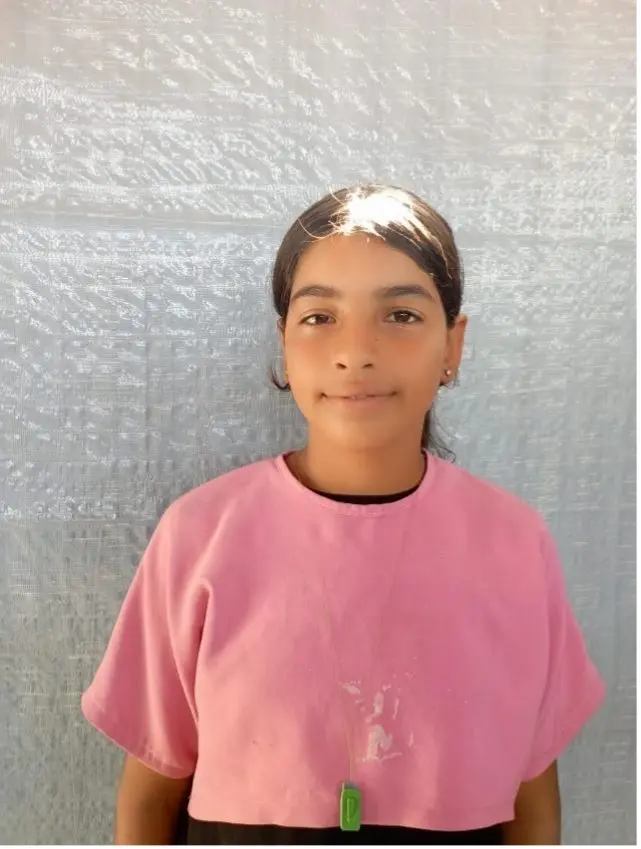
At just 12 years old, Amira has already endured a lifetime of profound heartbreak. Having lost her father to cancer, she has subsequently faced the terrifying reality of displacement and the complete destruction of her family home amid the ongoing conflict in Gaza. Yet, despite the immense trauma and daily hardships she experiences, she continues her education online and holds steadfast to her dream of becoming a nurse.
Amira’s childhood shifted irrevocably when she was nine years old and lost her father. She remembers him vividly as a foundational source of love, safety, and unwavering strength during her formative years. His passing left a permanent void in her life, altering her sense of security. Then, when the war in Gaza began, Amira and her remaining family members were thrust into yet another harrowing period characterized by acute loss, relentless fear, and radical instability.
Forced to Leave Their Home
Before the conflict upended their lives, Amira lived with her mother, Manal, and her siblings in the Al-Salam neighbourhood of Rafah. When the family was ultimately forced to flee under the threat of violence, they had to leave the vast majority of their personal belongings behind. Carrying only what they could manage, they managed to take with them a few changes of clothes, essential bedding, and basic kitchen items.
At the time, they held onto the fragile hope that the displacement would be temporary and that they would soon be able to return to the familiarity of their home. Instead, those hopes were shattered when their house was completely destroyed. With no home to return to, the family remained displaced and eventually had to construct a makeshift tent to shelter themselves.
Life within the tent was exceptionally difficult and posed constant threats to their health and well-being. During the scorching summer months, the tent became intensely hot and stifling, while in the bitter winter, it offered little protection against freezing temperatures. When heavy rains arrived, rainwater routinely leaked inside, turning the surrounding ground into thick, impassable mud.
Basic survival became a daily struggle. Accessing clean water and sufficient food required immense physical effort and patience. The family frequently spent long, grueling hours waiting in lines to collect water from passing distribution trucks. When they lacked the financial resources to purchase food, they had to rely entirely on community kitchens for their daily sustenance.
Losing Everything Again
The family’s trials intensified further when they suffered another catastrophic loss: their tent was suddenly destroyed by fire. The blaze consumed the last of their remaining possessions, reducing their few remaining clothes, cooking equipment, and personal items to ash.
“Everything we owned was turned to ashes,” Manal shares, detailing the devastating scale of the fire. The incident left the family once again entirely stripped of the basic necessities required for daily survival in an already hostile environment.
In the wake of the fire, their immediate material needs grew even more desperate. They now require sturdier, more secure shelter arrangements and waterproof coverings to withstand the elements, alongside basic sanitation facilities such as a bathroom. Furthermore, they urgently need functional cooking equipment, replacement clothes, and shoes for every family member.
Continuing to Study Despite Displacement
Despite the unrelenting hardships and the absence of a stable environment, Amira remains fiercely committed to her education. Working entirely online, she has continued her studies and is now successfully navigating the seventh grade.
Balancing her education with domestic responsibilities under extreme constraints, Amira plays a vital role in supporting her family. Without access to electricity or modern conveniences like a washing machine, she washes the family’s clothes by hand. Amid these crushing daily demands, she maintains a clear vision for her future, driven by a deep-seated dream of entering the medical field and becoming a nurse. She desperately hopes that circumstances will allow her to continue her schooling uninterrupted.
In her rare moments of downtime, Amira enjoys drawing as an outlet for her creativity, though she currently lacks the basic art materials needed to practice and develop her talent. Her immediate material needs remain starkly pressing, encompassing essential items such as winter clothing, undergarments, and durable shoes to protect her against the seasonal cold.
Supporting Orphaned Children in Gaza
The realities faced by Amira and her family reflect a much wider crisis affecting countless children across Gaza who have been stripped of their parents, their homes, and any foundational sense of physical and emotional security. To address these immense needs, organizations like Islamic Relief have maintained a long-standing commitment to the region.
Islamic Relief has actively supported orphaned children in Gaza through its specialized Orphan Sponsorship Programme since 1999. The initiative operates on a one-to-one sponsorship model, matching an individual donor directly with a child. Under this framework, the child’s guardian receives a consistent, regular monthly financial payment. In the context of Gaza, families are given the autonomy to allocate this critical support toward the needs they deem most urgent at any given time, whether that includes purchasing food, securing necessary clothing, accessing healthcare, or funding education.
In response to the escalating humanitarian emergency, Islamic Relief has significantly expanded the reach and scale of the sponsorship programme. More than 25,000 children throughout Gaza are currently receiving vital sponsorship support. However, the depth of the crisis is underscored by the fact that over 5,000 additional children still remain on the waiting list, hoping for assistance.
Where logistical conditions and access allow, sponsored families are also eligible to receive supplementary seasonal support. This includes specialized provisions such as Ramadan and Qurbani food parcels, holiday Eid gifts, and essential winter items designed to help families endure harsh weather conditions.
Holding on to Hope
Amira’s journey is a powerful testament to the resilience of children caught in the crosshairs of conflict. Despite losing her father, her home, and her sense of safety, she refuses to let go of her aspirations. She continues to study, looks toward the future, and holds on to a remarkably simple yet profound hope: to finish her education, train as a nurse, and ultimately live somewhere safe and peaceful with her family.
Through initiatives like Islamic Relief’s Orphan Sponsorship Programme, individuals have the opportunity to make a tangible difference in the lives of vulnerable children. By providing regular, dependable support, donors can serve as a vital lifeline for Gaza’s orphans and their families, helping them navigate unimaginable adversity while keeping their futures alive.