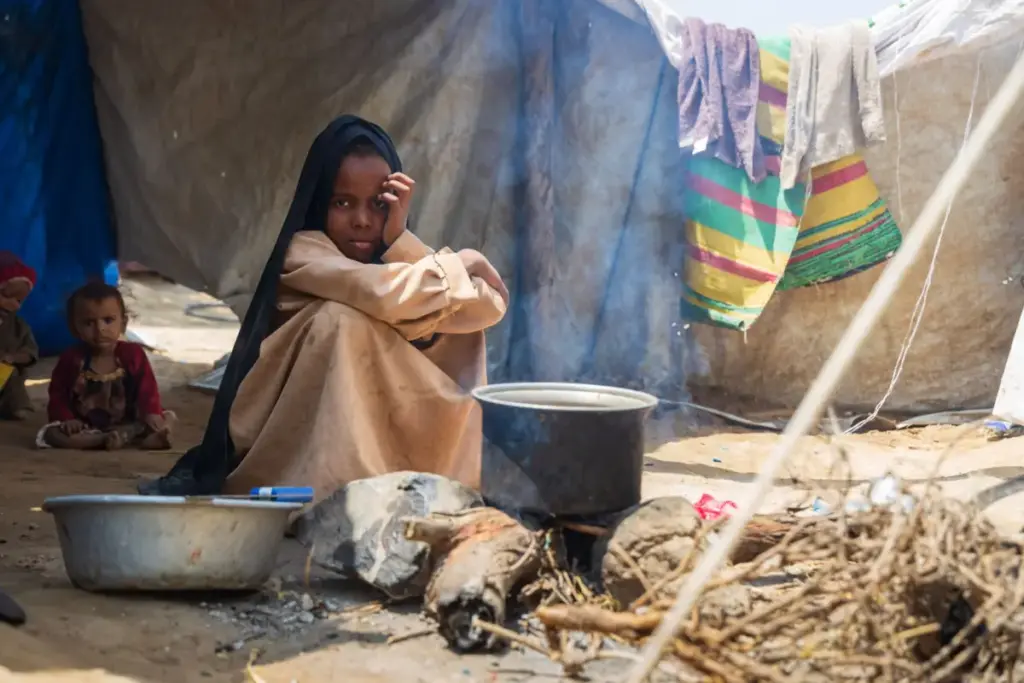
TAIZ, YEMEN — An escalating wave of armed conflict across Yemen’s Taiz governorate has severely disrupted critical infrastructure, blocked vital transportation arteries, and pushed hundreds of thousands of vulnerable civilians to the brink of catastrophe. In a strongly worded joint statement, a coalition of 32 international and local non-governmental organizations has issued an urgent plea for immediate intervention, warning that ongoing fighting along the west coast and surrounding areas has crippled civilian movement, severed access to life-saving humanitarian assistance, and triggered a perilous spiral in food and commodity prices.
The renewed hostilities, which gained momentum in early September, have compounded years of compounding hardship for families already exhausted by prolonged conflict, economic instability, and the systematic erosion of essential public services. According to the international humanitarian agencies spearheading the warning, the renewed clashes have triggered fresh waves of mass displacement, placing an unsustainable burden on both displaced households and the resilient host communities striving to accommodate them.
The Human Toll of Escalating Violence
The human cost of the renewed military escalation has manifested rapidly across multiple fronts. In a national briefing released on September 25, the United Nations Children’s Fund (UNICEF) reported that it had verified at least 15 child deaths and 14 injuries resulting from violence across Yemen since September 3, alongside three additional children reported missing. While these figures reflect a nationwide toll rather than localized casualties exclusively within Taiz, they underscore a lethal environment for children caught in the crossfire of active hostilities.
Humanitarian monitors note that the kinetic impact of the fighting is inextricably linked to the restriction of movement. As frontlines shift and intensify, key arterial roads have become impassable or dangerously contested, preventing civilians from fleeing active danger zones and cutting off injured individuals from timely, life-saving medical interventions. The coalition of 32 NGOs has emphasized that all parties to the conflict bear an immutable obligation under international humanitarian law to protect civilians and guarantee safe, unhindered passage for the wounded to reach medical facilities without delay.
Displacement Crisis Overwhelms Taiz Host Communities
Displacement tracking figures highlight the sheer magnitude of the humanitarian emergency unfolding in the region. In an update published on October 7, the International Organization for Migration (IOM) revealed that 201,217 individuals had been displaced across Yemen since the current escalation pattern began in June 2026, with the vast majority of these displacements occurring since September 1.
The IOM’s Displacement Tracking Matrix captured a particularly severe impact within Taiz governorate, which alone accounts for 114,708 of the newly displaced population—representing roughly 57 percent of the nationwide total recorded during this recent wave. This sudden and massive demographic influx has severely strained local governance structures, municipal services, and host communities that were already operating far beyond capacity to meet pre-existing humanitarian needs. Shelters are overcrowded, community resources are depleted, and social safety nets have fractured under the sustained pressure.
Soaring Prices and Crippling Supply Chain Disruptions
Compounding the displacement crisis is a severe economic shock driven by market disruptions and dwindling commercial supplies. With key transport routes blocked, damaged, or rendered insecure, the flow of essential commercial goods into Taiz has slowed to a trickle. Local reports confirm acute shortages of staple foods, cooking gas, and automotive and heating fuel, triggering an immediate and devastating spike in market prices.
Data cited by Al Jazeera Arabic in an October 9 report illustrates the alarming velocity of inflation confronting Taiz residents. According to the director of Taiz’s statistics office, the price of potatoes doubled over the span of just four days, surging from 1,000 to 2,000 Yemeni rials per kilogram. Simultaneously, the price of basic flour escalated by 50 percent, climbing from 38,000 to 57,000 rials. When paired with widespread shortages of cooking gas and escalating fuel tariffs, these price hikes have placed basic caloric survival out of reach for families with negligible or entirely nonexistent household incomes.
The human face of this economic deprivation is visible in the daily struggles of displaced mothers. "I can only buy bread that comes to 500 Yemeni Rials, and even that’s not enough for all of us," shares a displaced mother caring for four children amidst the crisis. "I divide the bread among my children and go without food myself."
Without a sustained resumption of commercial traffic and the stabilization of supply routes, humanitarian agencies warn that food security indicators will deteriorate rapidly, pushing vulnerable demographics closer to famine conditions.
Healthcare Systems and Essential Services Under Severe Strain
The infrastructural collapse extends far beyond commercial markets into the public health sector, where facilities are struggling to cope with simultaneous influxes of trauma cases and preventable illnesses. Reports emerging from Taiz indicate critically depleted stocks of essential pharmaceuticals, clinical consumables, and the fuel required to run emergency generators.
This resource starvation directly threatens a wide array of vital medical interventions, including emergency trauma care, major surgeries, intensive care units, kidney dialysis operations, and neonatal care services. Without immediate resupply operations, patients requiring sustained medical attention, expectant mothers, and newborn infants face catastrophic risks.
Compounding the health crisis is an urgent need for reliable access to safe drinking water and functional sanitation infrastructure. Humanitarian actors warn that without sustained improvements in water, sanitation, and hygiene (WASH) services, the population—particularly displaced families living in cramped communal spaces—faces heightened vulnerability to outbreaks of cholera and other acute waterborne diseases.
Specialized protection concerns further complicate the operational landscape. Children, elderly residents, and individuals living with disabilities encounter formidable physical and administrative barriers when attempting to access distributed aid and services. Meanwhile, women and girls require continuous, uninterrupted access to reproductive healthcare, safe spaces, and specialized gender-based violence support services. Pregnant and breastfeeding mothers, in particular, remain highly vulnerable and require specialized nutritional and medical support regardless of their displacement status.
Humanitarian Access Restrictions Hamper Relief Efforts
Compounding the physical suffering of the population is a deeply restrictive operational environment for humanitarian workers. Insecurity, active hostilities, and administrative roadblocks continue to impede the ability of aid organizations and local partners to access affected zones, conduct thorough needs assessments, and deliver assistance in a secure and timely manner.
Because conditions on the ground vary wildly by location and are prone to rapid deterioration, humanitarian mapping remains incomplete. Restrictions placed on assessment teams create significant information gaps, implying that current statistical counts may significantly underestimate the true scale of human suffering across remote or heavily contested districts. The 32-signing NGOs emphasize that safe, sustained, and principled humanitarian access is an absolute prerequisite if the aid community is to mount a response proportional to the scale of the crisis.
Unified Call for Urgent Action
In response to the escalating catastrophe, the coalition of 32 organizations has issued a comprehensive framework of demands directed at all parties to the conflict, as well as the international donor community.
The joint statement insists that all parties to the conflict must strictly adhere to international humanitarian law by actively protecting civilians and vital civilian infrastructure, including healthcare facilities and water treatment networks, while taking all feasible precautions to minimize harm. Furthermore, combatants must guarantee safe civilian movement, facilitate the unhindered flow of essential commercial goods—including food, fuel, medicines, and water—and remove all bureaucratic delays, diversions, or interferences targeting humanitarian personnel and relief consignments. Protection of the healthcare sector must also be prioritized by allowing timely deliveries of medical supplies and ensuring the secure passage of patients, ambulances, and medical personnel.
Simultaneously, international donors and humanitarian agencies are urged to rapidly mobilize and scale up financial support for displaced families, vulnerable residents, and overburdened host communities, with a strict strategic focus on food security, emergency shelter, healthcare, WASH services, and specialized protection. Donors must also prioritize emergency health funding to combat cholera and acute watery diarrhea outbreaks, while delivering flexible financial and operational backing to local responders, particularly women-led organizations uniquely positioned to navigate complex local dynamics.
The 32 organizations concluding the statement stress that the preservation of Taiz depends entirely on maintaining open, secure lifelines for civilians, commercial goods, and humanitarian aid, warning that decisive action is the only viable mechanism to prevent further loss of life, deepening hunger, and the total collapse of civic infrastructure.
The joint statement is endorsed by the following 32 humanitarian and civil society organizations:
- ACCEPT International
- Action for Humanity International
- ADRA Yemen
- CARE International
- Center for Civilians in Conflict (CIVIC)
- Concern Worldwide
- Danish Refugee Council (DRC)
- Diakonie Katastrophenhilfe
- Dorcas Aid International
- Geneva Call
- Handicap International – Humanity & Inclusion (HI)
- Helpcode Italia ETS
- Humanitarian Aid & Development (HAD)
- International NGO Safety Organisation (INSO)
- International Rescue Committee (IRC)
- Islamic Relief
- MedGlobal
- Mehad
- Muslim Hands UK
- Norwegian Refugee Council (NRC)
- Oxfam
- Polish Humanitarian Action (PAH)
- Première Urgence Internationale (PUI)
- Prosper Global
- Pure Hands
- Relief International
- Saferworld
- Save the Children International (SCI)
- Secours Islamique France (SIF)
- Solidarités International
- War Child Alliance
- ZOA