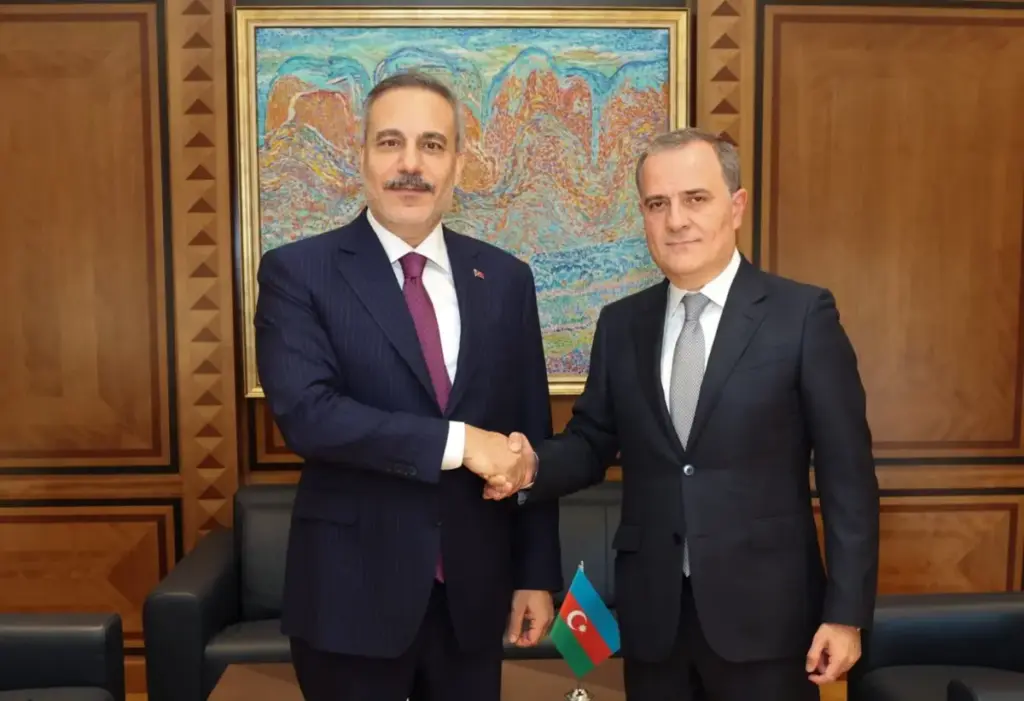
ISTANBUL — Turkish Foreign Minister Hakan Fidan has issued a stern warning regarding the dangerous spillover effects of ongoing international conflicts, declaring that the expansion of the Russia-Ukraine war into the Black Sea directly threatens the safety of Turkish citizens and commercial vessels. Speaking during a joint news conference in Baku alongside his Azerbaijani counterpart, Jeyhun Bayramov, on Tuesday, September 15, 2026, the Turkish top diplomat characterized the intensifying maritime risks as completely unacceptable.
The high-level diplomatic meeting in the Azerbaijani capital brought together two strategic allies to discuss a rapidly deteriorating geopolitical landscape. Against a backdrop of widening hostilities in Eastern Europe and the Middle East, the foreign ministers focused heavily on how maritime security, regional stability, and international supply chains are being severely compromised by ongoing military escalations.
Black Sea Spillover Poses Direct Risk to Turkey
During the joint press briefing, Foreign Minister Fidan placed significant emphasis on the shifting dynamics of the Russia-Ukraine conflict. As the war stretches deeper into its multi-year timeline, the geographic scope of military operations has increasingly bled into the maritime corridors of the Black Sea. Fidan noted with profound concern that these developments are no longer confined to land engagements or isolated naval skirmishes; rather, they now pose a direct and tangible hazard to the safety, security, and well-being of Turkish citizens, as well as civilian maritime traffic navigating the vital sea lanes.
Turkey, sharing a long maritime border in the Black Sea with both Russia and Ukraine, has maintained a delicate diplomatic balancing act since the outbreak of the conflict. Ankara has consistently positioned itself as a crucial mediator, facilitating grain corridor agreements and prisoner exchanges while strictly implementing the Montreux Convention to prevent the escalation of naval warfare within the straits. However, Fidan’s pointed remarks in Baku signaled growing frustration and alarm in Ankara over the creeping proximity of naval warfare to Turkish waters. The foreign minister reiterated that transforming a critical shared body of water into an active zone of indiscriminate military hazard is a dangerous precedent that cannot be normalized or accepted by regional littoral states.
Broadening Crisis: The U.S.-Iran Conflict and the Strait of Hormuz
Expanding his remarks beyond the Black Sea, Minister Fidan turned his attention to the escalating tensions and military confrontations in the Middle East, specifically addressing the ongoing U.S.-Iran conflict and its immediate ramifications for global energy corridors and regional stability.
The security of the Strait of Hormuz—a crucial artery for global petroleum transit—emerged as a central point of concern during the talks in Baku. Fidan stressed that the international community must take proactive and resolute steps to ensure that safe, unobstructed, and free passage through the Strait of Hormuz is firmly maintained. The disruption of commercial and energy shipping through this narrow waterway has far-reaching economic consequences that reverberate well beyond the immediate Middle Eastern theater, threatening global inflation and energy security.
Furthermore, the Turkish foreign minister explicitly called for an immediate cessation of mutual attacks and retaliatory strikes involving Gulf countries and the wider theater of the U.S.-Iran confrontation. Fidan underscored that continuous military friction in the Gulf region creates a destructive cycle of instability, heightening the risk of a wider regional conflagration that would devastate regional economies and displace civilian populations. He emphasized that diplomatic channels and de-escalation must take precedence over military adventurism if long-term stability is to be restored to the Middle East.
Strengthening Bilateral Ties in Turbulent Times
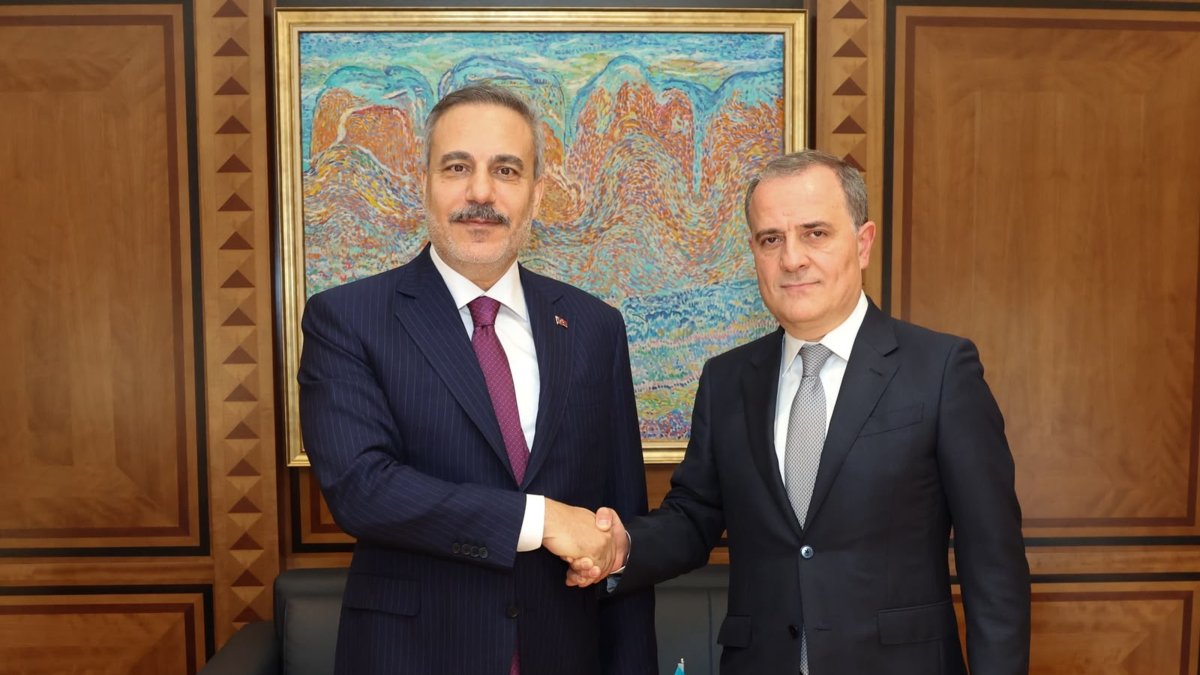
The joint news conference in Baku also served as a reaffirmation of the deep-rooted diplomatic, economic, and strategic partnership between Turkey and Azerbaijan. The meeting between Hakan Fidan and Jeyhun Bayramov underscored the close coordination between Ankara and Baku on regional security matters, transport corridors, and energy cooperation in the South Caucasus.
As regional actors grapple with overlapping crises stretching from the contested waters of the Black Sea to the volatile shipping lanes of the Persian Gulf, Turkey and Azerbaijan continue to emphasize multilateral cooperation and adherence to international law as the primary bulwarks against growing global instability. The diplomatic consultations in Baku are expected to pave the way for further bilateral coordination as both nations navigate an increasingly unpredictable international security environment.