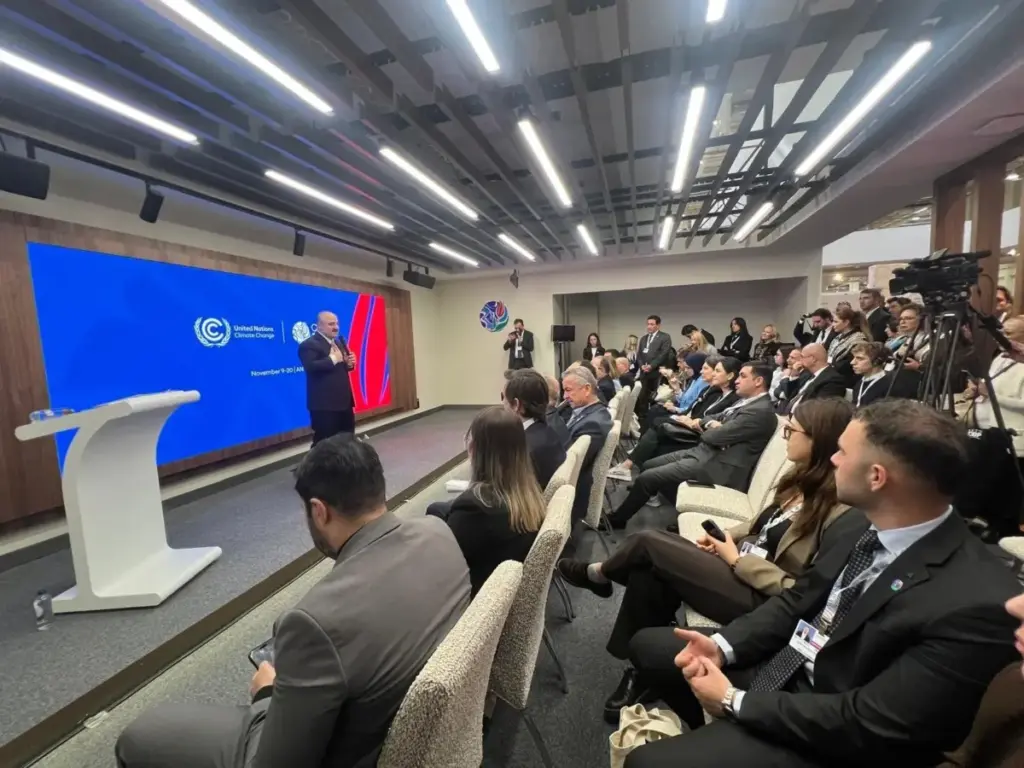
ANTALYA — Türkiye’s long-term development trajectory and its capacity to meet stringent global energy and climate targets are fundamentally dependent on simultaneous, coordinated progress across multiple critical sectors, including industry, manufacturing, and transportation. That was the core message delivered by Mustafa Varank, former minister of industry and technology and a senior lawmaker representing the ruling Justice and Development Party (AK Party), during an interview on the sidelines of the COP31 United Nations climate summit in Antalya.
Speaking to Daily Sabah on Wednesday, Varank emphasized that the country’s green transformation cannot be achieved through piecemeal policies or isolated adjustments. Instead, a comprehensive, systemic approach is required to reshape how energy is produced, consumed, and managed nationwide. "We really needed to design this from scratch," Varank said, reflecting on the magnitude of the structural reforms undertaken by Türkiye in recent years to align its domestic economy with international climate commitments.
Among the cornerstone strategies of Türkiye’s evolving climate agenda is the rapid acceleration of electrification, particularly within the transportation sector. According to Varank, shifting toward electric mobility serves a dual purpose: reducing the nation’s heavy reliance on imported fossil fuels while simultaneously curbing carbon emissions. "If you prioritize electric vehicles, you’ll reduce your reliance on fossil fuels. By reducing your reliance on fossil fuels, you’ll also reduce your imports," he explained. Beyond transport, Varank highlighted that optimizing energy consumption through enhanced efficiency across the board remains an urgent national priority.
Urban planning and infrastructure development are expected to play pivotal roles in achieving these efficiency gains. Varank, who currently chairs the energy and industry committee in the Turkish Parliament, pointed out that the built environment offers substantial potential for energy conservation. "If you can make your cities more sustainable, for example, by properly insulating homes to keep them warm, you’ll reduce your energy needs," he noted, adding that parallel improvements in digitalization, industrial infrastructure, and smart grid technologies will further drive down energy consumption nationwide.
Despite clear strategic blueprints and strong political momentum, securing adequate financial backing remains one of the most formidable obstacles standing in the way of climate action. Varank stressed that bridging the gap between ambitious climate commitments and tangible, ground-level implementation hinges almost entirely on the availability of robust, long-term financing mechanisms. During a panel discussion at the U.N. climate summit, he reiterated the indispensable need for international financial support and cross-border cooperation, arguing that developing economies cannot be expected to shoulder the immense costs of the global energy transition alone.
By way of illustration, Varank pointed to Türkiye’s own comprehensive roadmap, noting that executing the country’s strategic energy plan through the year 2040 will require an estimated $500 billion in investments. Given the sheer scale of capital required, he argued that it is financially unfeasible for Türkiye—and many peer nations facing similar development demands—to fund these multi-faceted transformations using purely domestic resources. "This is where COP31 will open the door to funding opportunities and international partnerships," he said.
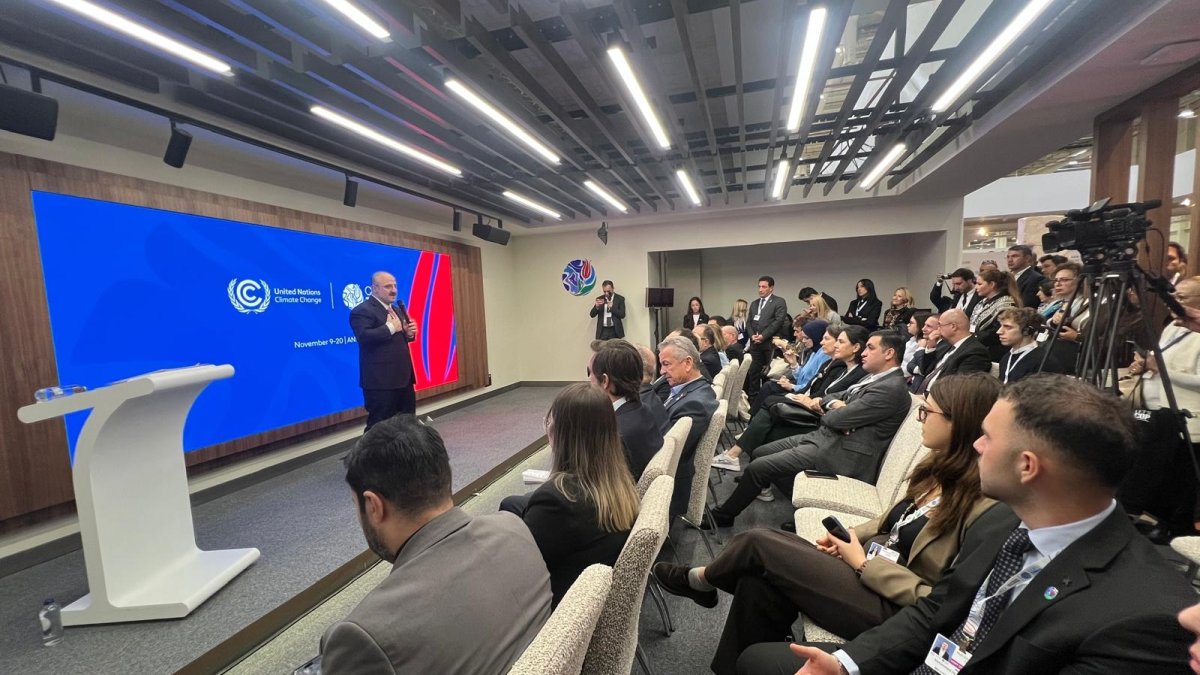
Varank also highlighted the diplomatic and symbolic significance of Türkiye hosting this year’s landmark climate gathering. "By hosting COP31 here in Türkiye, we can see just how much awareness we’ve raised in this regard and how we’ve contributed by bringing the world together here," he observed. The summit has drawn an unprecedented level of global participation, welcoming representatives from 196 countries, including more than 100 world leaders. To manage the massive influx of delegates, observers, and international media, Turkish authorities have mobilized 58,000 security personnel across Antalya and surrounding provinces to ensure the safety of an expected crowd exceeding 90,000 participants.
According to the former minister, the momentum behind Türkiye’s green initiatives is anchored by the decisive political will of the AK Party government, which has placed sustainable development at the forefront of national policy. This governmental commitment directly mirrors the United Nations’ broader emphasis on accelerating the global transition toward cleaner, renewable energy sources, with large-scale electrification recognized globally as a primary driver for reducing carbon footprints.
This strategic alignment was underscored last week when Energy and Natural Resources Minister Alparslan Bayraktar officially unveiled Türkiye’s updated 2040 energy targets. Under the newly announced framework, the Turkish government aims to elevate the share of electrification nationwide to 36% and scale up the deployment of electric vehicles to reach 20 million units on the road by 2040.
Varank pointed to the domestic production of Türkiye’s homegrown electric vehicle brand, Togg, as a prime example of strategic foresight, describing the venture as "the right step at the right time" in bolstering the nation’s electrification goals. However, he emphasized that electrifying transportation and expanding renewable generation capacity must be complemented by a significant scaling up of nuclear energy to ensure a reliable, low-carbon baseload power supply.
Türkiye’s recent diplomatic and industrial maneuvers reflect this dual focus on nuclear expansion. In November 2025, a foundational memorandum of understanding was signed between Türkiye’s state-backed nuclear energy enterprise and the Korea Electric Power Corp. (KEPCO), establishing a robust framework for bilateral cooperation. This partnership was further solidified in November 2026 with the signing of a secondary financing agreement involving Korea Eximbank (KEXIM), securing crucial financial pathways for ongoing and future nuclear power infrastructure projects.
In addition to pursuing large-scale conventional nuclear power plants, Varank underscored the strategic importance of investing in innovative, decentralized technologies. He specifically highlighted small modular reactors (SMRs) as reliable, domestically adaptable solutions that can enhance energy security while fostering local manufacturing capabilities. Türkiye has already initiated domestic research and development programs aimed at mastering SMR technology and building a localized industrial supply chain. Echoing these national ambitions, Minister Bayraktar announced in September that Türkiye is firmly on track to have its first small modular reactor operational during the first half of the 2030s, marking another major milestone in the country’s comprehensive long-term energy evolution.