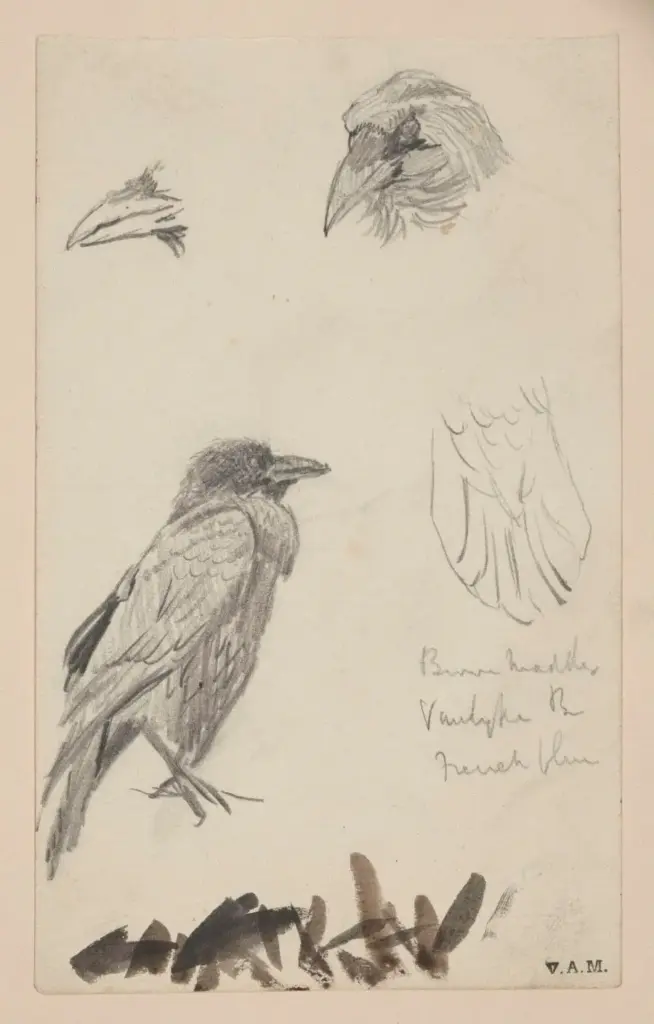
As museums continuously work to make their vast holdings accessible to the global public through digital platforms, the hidden, meticulous labor behind collection management often remains unseen. At the Victoria and Albert (V&A) Museum in London, a five-month archival project has been dedicated to shining a light on the works on paper by
Randolph Caldecott (1846–1886), a foundational figure in 19th-century illustration. Supported by The Randolph Caldecott Collection Trust, this intensive curation effort seeks to overhaul the digital presentation of nearly 700 drawings, paintings, and prints attributed to the celebrated artist.
Caldecott remains best remembered for his vibrant annual "Picture Books," which captivated Victorian audiences and transformed children’s literature with titles like The House that Jack Built and Babes in the Wood. However, his prolific career extended far beyond juvenile fairy tales, encompassing travel book illustrations, adult-themed periodical features, and early commercial work. When the museum internship began in June, only about half of the V&A’s extensive Caldecott holdings were properly indexed with his name in the internal collections management software. This digital disconnection made it remarkably difficult for researchers, art historians, and casual browsers to discover these historical items through the museum’s public-facing online portal, Explore the Collections.

Confronted with a substantial backlog of unlinked and under-documented records, the project required a multi-faceted investigative approach, combining historical sleuthing, institutional collaboration, and direct physical examination of fragile Victorian materials.
Existing Information and Archival Foundations
Cataloguing a portion of the V&A’s staggering collection of over 1.3 million objects is an ongoing, collaborative institutional enterprise. Many of the Caldecott pieces already possessed varying levels of documentation provided by previous museum staff, ranging from thorough scholarly interpretations to simple name tags. These baseline details offered an invaluable initial roadmap, outlining the impressive breadth of the collection. In several instances, physical artifacts retained crucial contextual clues directly on their original mounts or historical paper labels.
Beyond these direct object markers, a wealth of supplementary data lay dormant within the historical Registers of Engravings and Drawings from successive years. Digitizing and reviewing these historical ledgers proved to be a vital methodology. These contemporary acquisition records provided a direct window into the museum’s past, allowing researchers to draw meaningful connections between individual artworks acquired simultaneously during the 19th and early 20th centuries.
Exploring the National Art Library
To properly contextualize Caldecott’s diverse body of work, the research naturally expanded into the National Art Library (NAL) located at South Kensington. While Caldecott achieved lasting fame for his children’s literature, his professional output also included extensive contributions to adult travel books and mainstream periodicals.
In nineteenth-century travel publications, publishers typically included a comprehensive list of illustrations at the very front of each volume. By systematically transferring these historical titles into the modern object records, curators were able to provide immediate clarity regarding what each proof print depicted. This cross-referencing allows modern viewers to easily locate the published iterations of these standalone prints. Similarly, for Caldecott’s prolific illustrations for the prominent Victorian publication The Graphic magazine, recording the specific issue date for each individual piece established precise chronological parameters for when the artwork was created.
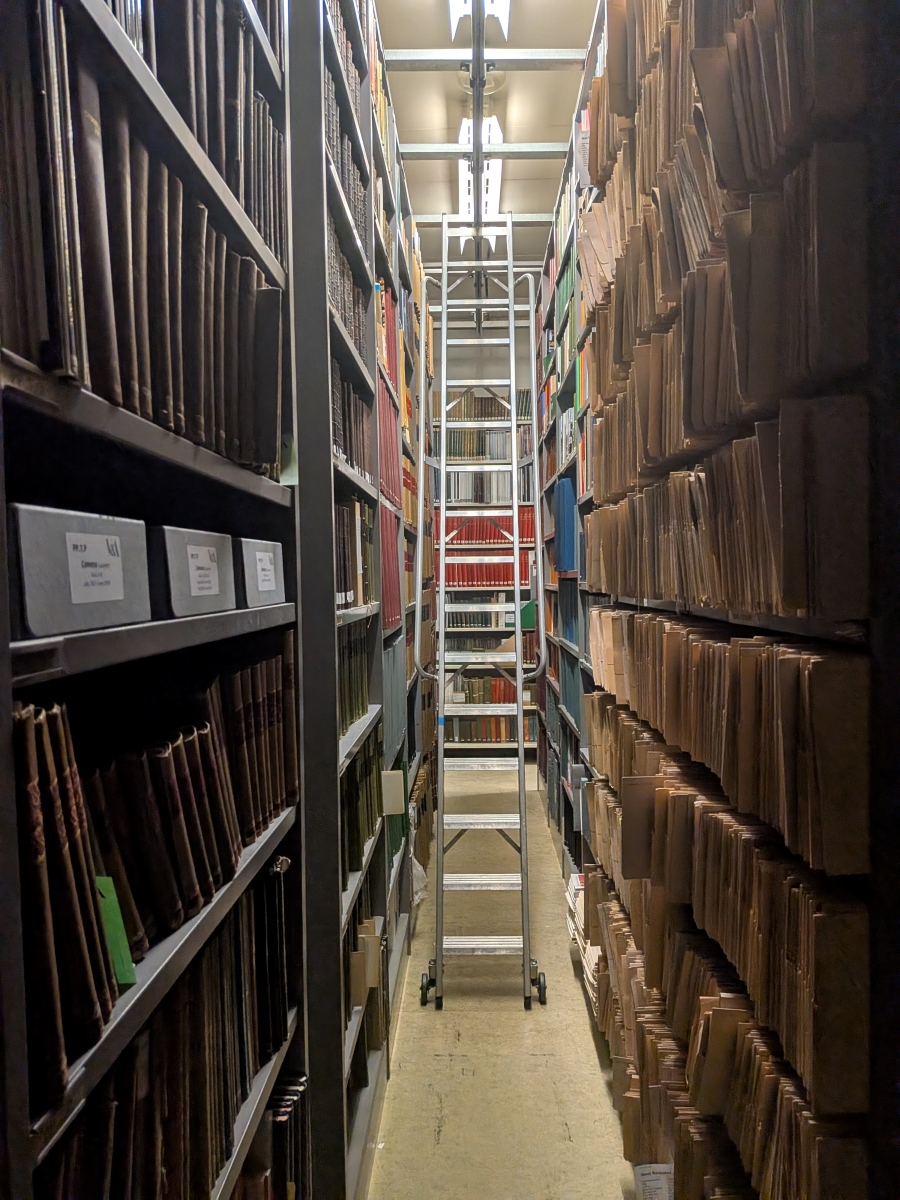
Housing the UK’s largest comprehensive collection of literature dedicated to art, design, and performance, the National Art Library serves as an essential resource for both institutional staff and the general public. Accessing the massive, bound archival volumes of The Graphic required scaling tall library ladders to retrieve the heavy nineteenth-century folios from towering shelves. Reviewing these fragile publications offered a rare, immersive look at the material culture of the 1840-to-1880s era.
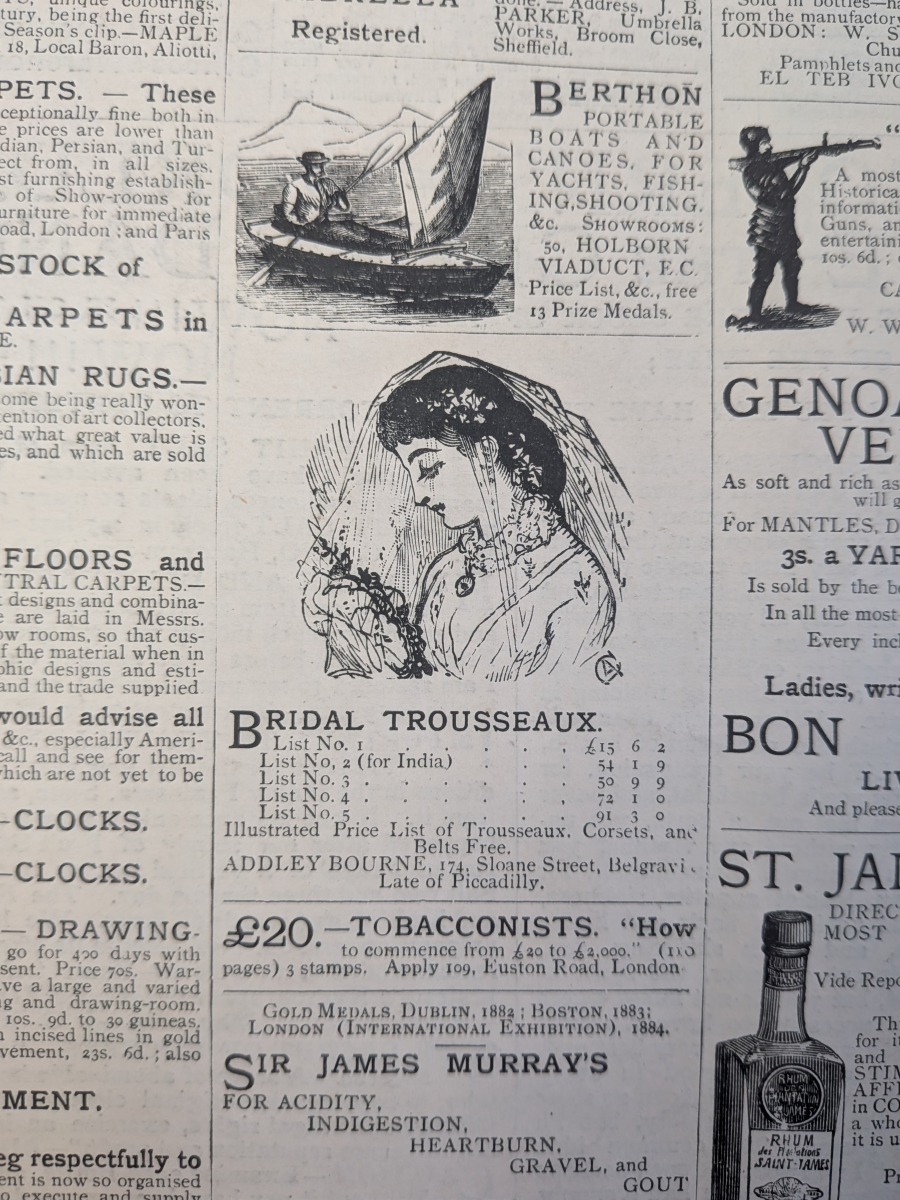
Unlike modern facsimile reproductions, which frequently crop or excise surrounding material, viewing the complete nineteenth-century magazine issues revealed highly decorated contemporary advertisements accompanied by minute, whimsical illustrations. These ephemeral pages provide a richer, more authentic picture of the vibrant visual world that Caldecott and his contemporaries inhabited.
Further exploration of the library’s children’s book holdings—housed at the V&A East Storehouse and accessible to the public via the museum’s free Order an Object service—highlighted the technical innovations of Caldecott’s publishing partnerships. Alongside master wood engraver Edmund Evans, Caldecott pushed the boundaries of Victorian book production. Their collaborative projects were renowned for high-end color printing utilizing up to six distinct color inks, alongside pioneering layout choices such as multiple double-page spreads within a single volume. Examining these fragile, original Victorian copies firsthand provided indispensable context for understanding the physical production of the illustrated books, ensuring that remote digital users can benefit from accurate, deeply informed cataloguing data.
New Discoveries
Sustained, dedicated research into a single artist invariably yields unexpected breakthroughs, enabling scholars to trace an artwork’s evolutionary path from preliminary conception to final publication. A striking example emerged during the detailed examination of a primary sketchbook used by Caldecott between approximately 1870 and 1886.
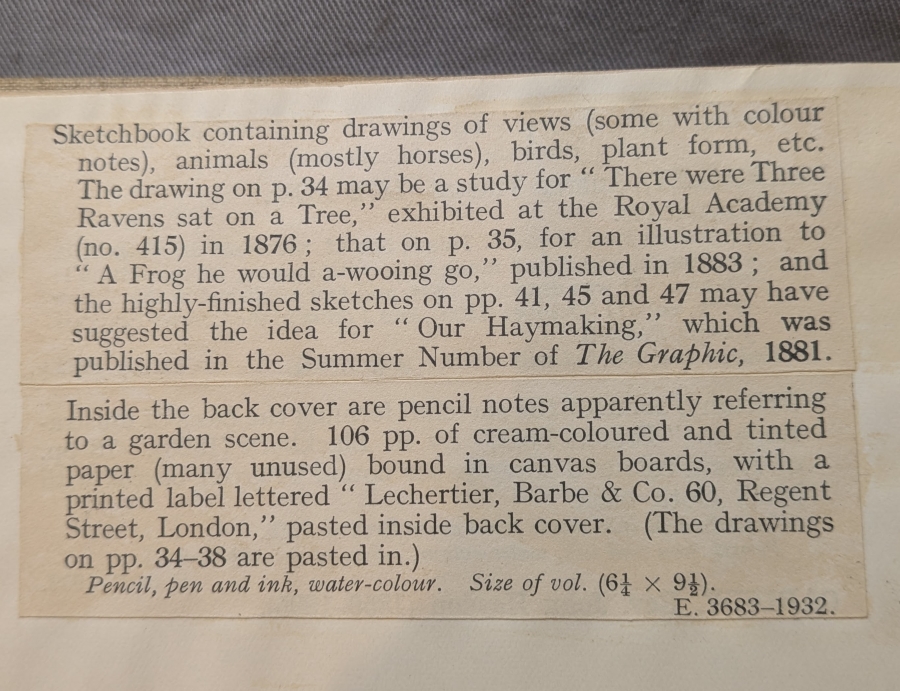
An archival label affixed to page 35 of the sketchbook tentatively identified the drawing as a potential study for an illustration in the classic tale A Frog he would a-wooing go. However, a close visual inspection complicated this long-standing assumption. While the illustrated frog on the page possessed a charming demeanor, it lacked the distinctive, stylish waistcoat worn by the dapper protagonist in the published version of A Frog He Would A-Wooing Go. Furthermore, because this particular page had been physically pasted into the sketchbook rather than drawn directly onto the bound paper, determining its true origin became a compelling archival mystery.
The solution presented itself during a subsequent examination of the Picture Book collection held at the National Art Library at the V&A East Storehouse. While reviewing a copy of Jack and the Bean-stalk—a publication issued posthumously following Caldecott’s death in 1886—the missing context came to light. Because the illustrations for the volume were unfinished at the time of the artist’s passing, the publishers opted to reproduce his preliminary sketches directly.
As the pages were turned, the mysterious frog sketch was successfully identified, alongside two additional misidentified drawings within the same sketchbook: a dynamic study of goats and a detailed rendering of a crow. By updating the object records with these newly established connections, future art historians and researchers can now accurately trace the provenance of these preparatory drawings.
Enquiring with Other Organisations
While the V&A’s internal archives and library formed the primary foundation for the five-month project, inter-institutional collaboration proved equally critical in resolving complex provenance questions. Inquiries directed to the NatWest Archive shed vital light on Caldecott’s lesser-known early professional life as a bank clerk—a formative period that influenced his artistic sensibilities.
Additionally, researchers reached out to Houghton Library at Harvard University, which preserves the complementary portion of the original preliminary sketches for Jack and the Bean-stalk. By sharing digital scans of these related drawings, Houghton Library enabled a direct comparative analysis of scale, media, and physical format. This cross-institutional dialogue definitively confirmed that the drawings preserved within the V&A sketchbook belonged to the exact same creative series.
Through meticulous archival investigation, cross-institutional collaboration, and rigorous database cataloguing, this five-month initiative has significantly enhanced the accessibility of Randolph Caldecott’s works on paper. By transforming unlinked records into fully contextualized digital entries on the V&A’s Explore the Collections portal, the project ensures that both casual enthusiasts and academic researchers can better understand and appreciate the enduring legacy of a quintessential Victorian illustrator.