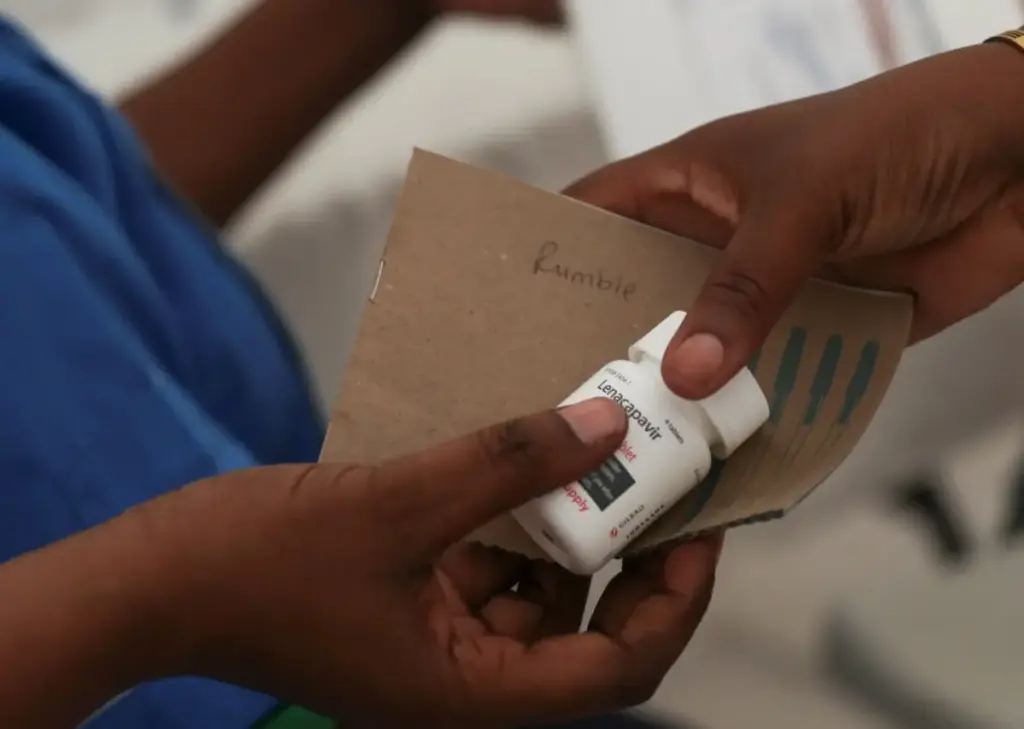
A groundbreaking medicine administered just twice a year could fundamentally transform the global fight against HIV, offering a level of protection that experts describe as the closest science has ever come to a vaccine. However, as international funding shrinks and pharmaceutical pricing structures draw intense scrutiny, a fierce debate has erupted over who will actually be allowed to access this monumental scientific breakthrough.
Developed by United States pharmaceutical giant Gilead Sciences, the long-acting injectable drug lenacapavir has emerged as a revolutionary tool in modern medicine. In a landmark 2024 clinical trial involving more than 2,000 young women across South Africa and Uganda, not a single participant who received the lenacapavir injection contracted HIV. Following these exceptional results, the World Health Organization (WHO) recommended the drug as an additional form of pre-exposure prophylaxis, or PrEP—a specialized medical treatment designed to substantially reduce the risk of acquiring the virus. Furthermore, the US Food and Drug Administration (FDA) approved lenacapavir for HIV prevention, providing patients worldwide with the option of receiving an injection just twice a year rather than maintaining a strict daily pill regimen.
Carlota Baptista da Silva, the global HIV lead at Doctors Without Borders—known internationally by its French initials, MSF—highlighted the profound significance of the pharmaceutical advancement. She noted that lenacapavir is arguably the most innovative tool to enter the HIV arena in the past decade because it represents the closest option humanity currently possesses to a true vaccine.
Despite the immense scientific promise of the drug, its arrival comes at a uniquely challenging juncture for global health initiatives. International funding dedicated to combating HIV fell by 18 percent in 2025, dropping to $7.3bn, which marks its lowest level in nearly two decades, according to data from the United Nations programme on HIV/AIDS (UNAIDS). This severe financial squeeze has already inflicted immediate damage on vital prevention programmes around the world. Statistics show that the number of people receiving preventative medicines to reduce infection risk plummeted from 1.4 million in 2024 to 1.1 million in 2025.
This harsh fiscal reality makes the introduction of a highly effective, twice-yearly prevention alternative even more critical. Consequently, the question of who can afford and access lenacapavir has transformed into an urgent humanitarian and public health crisis. For organizations like MSF, the primary scientific questions have largely been answered, as clinical trials have definitively proven that lenacapavir can prevent HIV with remarkable efficacy. The battlefield has now shifted entirely to economics, politics, and policy, with activists and medical professionals fighting to ensure that the rules governing drug manufacturing, pricing, and supply chains do not prevent the breakthrough from reaching the vulnerable populations who need it most.
Why some countries are excluded
The economic divide surrounding lenacapavir is stark. In the United States, the drug carries a hefty price tag of about $28,000 per person annually. In sharp contrast, generic versions of the medication are expected to cost roughly $40 a year. A generic drug is an authorized copy of an original pharmaceutical product created by another manufacturer after the primary patent holder licenses the underlying technology. While generic alternatives contain the exact same active pharmaceutical ingredient as the brand-name product, they can be produced, distributed, and sold at a dramatically lower price point.
To address affordability in some regions, Gilead is currently supplying its own proprietary version of lenacapavir at no profit for healthcare programmes supported by major international entities, including the Global Fund and the US President’s Emergency Plan for AIDS Relief (PEPFAR). Initial rollouts of this non-profit supply are already under way in several nations, such as South Africa, Kenya, Zambia, Nigeria, and Eswatini.
However, these non-profit distributions are distinct from the cheaper generic alternatives projected to cost about $40 per person annually. While Gilead has licensed six separate manufacturers to produce these generic variants, large-scale generic rollouts are not anticipated until 2027.
Moreover, MSF has pointed out that at least 26 middle-income countries have been entirely excluded from Gilead’s primary generic licensing agreement. This exclusion list notably includes nations experiencing rising rates of HIV infections as well as countries that directly contributed to testing the drug during its clinical trial phases. Among the excluded nations are prominent Latin American countries such as Brazil, Mexico, Argentina, and Peru.
Da Silva expressed deep concern over these exclusions, asserting that individuals and nations should not be asked to help generate the scientific evidence necessary to prove a breakthrough medicine works, only to later discover that their home countries are excluded from accessing affordable generic versions. According to assessments by MSF, the specific countries left out of the licensing agreement accounted for nearly 23 percent of all new HIV infections globally in 2023.
In response to mounting international pressure, Gilead subsequently announced a separate agreement with the Pan American Health Organization. This arrangement created a specialized access pathway intended to cover 14 Latin American and Caribbean countries that fall outside its primary generic licensing territory, explicitly naming Brazil, Mexico, Argentina, and Peru. Despite this concession, MSF argues that the framework leaves these sovereign nations perpetually dependent on the goodwill and direct terms of Gilead, rather than empowering them to automatically procure cheaper generic drugs on the open market.
Furthermore, MSF reports that it has faced persistent roadblocks in its own efforts to secure the medication. For more than a year, the humanitarian organization has formally sought permission to purchase lenacapavir directly from Gilead for its specialized medical relief programmes, explicitly stating that it was not demanding a discounted price. Despite those repeated requests, da Silva noted that Gilead has consistently refused to allow MSF to purchase the medicine directly.
This barrier carries profound consequences, particularly in humanitarian emergencies and conflict zones. Populations displaced by ongoing warfare, civil unrest, or natural disasters frequently struggle to maintain a daily pharmaceutical regimen, while severe vulnerabilities such as sexual violence can dramatically elevate the risk of HIV transmission. While daily PrEP pills are widely available as an alternative preventative measure, they demand strict, consistent adherence to provide protection. An injection offering six full months of uninterrupted protection would therefore prove exceptionally valuable in chaotic environments. Da Silva emphasized that individuals living through conflicts and humanitarian crises must not be relegated to the back of the line when it comes to benefiting from modern medical innovation.
When approached for comment, Gilead declined Al Jazeera’s request for a formal interview, citing scheduling constraints. However, the company provided an emailed statement asserting that its comprehensive access strategy successfully combines non-profit supplies, royalty-free licensing agreements, and regional partnerships. The pharmaceutical company did not directly address inquiries regarding its refusal to sell the drug to MSF, nor did it clarify the specific criteria used to exclude certain nations from its generic licensing framework.
Looking forward, Gilead has stated that it plans to manufacture and provide enough lenacapavir supply to treat up to three million people through the year 2028, bridging the gap while independent generic manufacturers gradually scale up their production capabilities ahead of the anticipated 2027 large-scale rollout.
Yet, medical advocates contend that these corporate targets fall dangerously short of actual global requirements. MSF points to epidemiological projections indicating that close to 20 million people worldwide urgently need access to some form of PrEP to substantially curb new HIV infections—a figure encompassing all preventative regimens, not lenacapavir alone.
For nations and territories left stranded outside Gilead’s generic licensing deals, alternative pathways may exist. Under established rules set by the World Trade Organization (WTO), national governments possess legal mechanisms to bypass pharmaceutical patent barriers under specific circumstances. These provisions allow countries to manufacture or import more affordable generic iterations of vital medicines without securing explicit permission from the original patent holder.
Governments can formally authorize the official use of protected patents or legally challenge patent claims that they deem overly broad, weak, or unjustified. These protective flexibilities were explicitly reaffirmed by the 2001 Doha Declaration, which solidified the absolute right of WTO member states to utilize public health safeguards to protect their populations.
Precedents for such actions already exist within the developing world. Brazil successfully deployed these measures decades ago during its intensive domestic campaign against HIV. In 2007, following the breakdown of price negotiations with pharmaceutical firm Merck concerning the cost of the antiretroviral drug efavirenz, the Brazilian government issued a compulsory licence. This decisive legal maneuver permitted the nation to bypass patent restrictions and immediately access cheaper generic versions of the life-saving medication.
Nearly twenty years later, international public health activists are strongly urging Brazil and other affected nations to seriously consider invoking those same legal powers for lenacapavir if corporate patent barriers continue to block affordable generic access. MSF maintains that any government excluded from Gilead’s current licensing structure should actively evaluate utilizing established WTO legal safeguards, including compulsory licensing, government-use authorizations, and formal administrative challenges against existing patents.
Additionally, the organization is calling upon Gilead to explicitly ensure that its private contracts with generic drug manufacturers do not contain clauses preventing those suppliers from distributing medications to countries that have successfully removed patent barriers through legal administrative measures.
For organizations like MSF, the implications of this global access battle extend far beyond lenacapavir. The ultimate framework and methodology by which this specific drug is distributed will likely establish a precedent, determining whether future generations of monumental medical advancements reach humanity based strictly on humanitarian need, or whether access remains dictated by geography and the purchasing power of local healthcare systems. Concluding her assessment, da Silva reiterated the frustration felt by humanitarian workers on the front lines, noting that a dedicated medical organization should never be forced to spend more than a year simply trying to find a viable commercial pathway to purchase a medicine officially recommended by the World Health Organization.