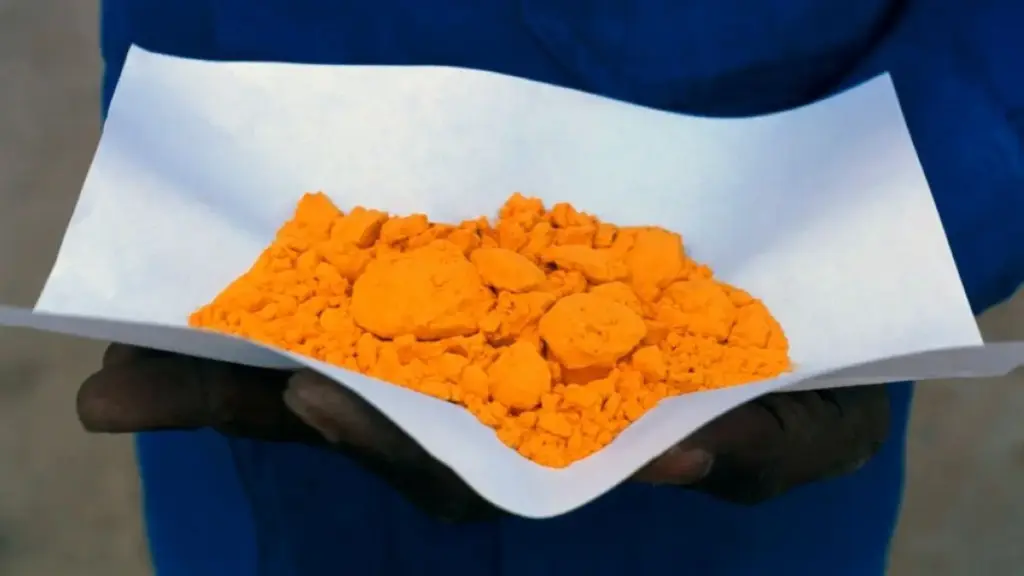
Two years after the final departure of U.S. military personnel from Niger, Washington is reestablishing its presence in the West African nation through an entirely different channel. Gone are the surveillance drones, newly constructed military compounds, and dedicated counterterrorism missions that once defined the bilateral relationship. Instead, the U.S. International Development Finance Corporation (DFC) has approved up to $414 million in financing for Global Atomic’s Dasa Project, a development centered on one of Africa’s highest-grade uranium deposits located in Niger’s remote Agadez Region.
For much of the past decade, the relationship between Washington and Niamey was viewed primarily through a security lens. American forces operated strategic hubs out of Niamey and Agadez, utilizing surveillance and intelligence operations to monitor armed groups across the broader Sahel region. However, that security architecture collapsed in September 2024 when the last U.S. troops withdrew from the country.
In the time since that military exit, the geopolitical landscape of the Sahel has shifted significantly. Niamey has cultivated closer diplomatic and security ties with Russia, redefined its historical uranium relationship with France—symbolized notably by the nationalization of the SOMAIR venture—and forged deeper economic and political cooperation with its neighbors, Mali and Burkina Faso.
Yet, the Dasa decision demonstrates that the diplomatic and economic relationship between Washington and Niamey did not evaporate alongside the military withdrawal. The fundamental question is no longer whether the United States is returning to Niger, but rather what the nature of that relationship can and will look like moving forward. Today, Niamey operates with a diverse portfolio of international partners, granting the government substantially more room to negotiate and a much stronger voice in the management of its strategic natural resources.
A Different Kind of Return
The mechanics of the Dasa financing point toward an entirely new trajectory for bilateral engagement. The DFC is neither a military institution nor a traditional humanitarian aid agency; rather, it utilizes financial instruments such as loans, loan guarantees, and equity investments to support private-sector development abroad while simultaneously advancing broader U.S. economic and strategic objectives. In approving the package for the Dasa Project, the agency explicitly linked its financial backing to reliable global energy markets, critical infrastructure development, and the fortification of secure supply chains.
This institutional mandate elevates the $414 million package far beyond a standard commercial mining loan. It signals that economic statecraft is stepping into the geopolitical weight class once dominated by security cooperation and military partnerships.
This financial engagement does not restore the status quo of the pre-2024 era. Washington is no longer Niger’s dominant security partner, and Niamey has demonstrated no inclination to revert to past security arrangements. Nevertheless, both governments have identified a vital intersection where their economic and strategic interests overlap. Consequently, the Dasa Project is best understood not as a nostalgic return to the past, but as a test of whether a sustainable, modern partnership can be constructed on entirely new terms.
Uranium Returns to Strategic Prominence
At the heart of this renewed economic engagement is the mineral itself. Uranium has reclaimed its strategic importance on the global stage as nuclear energy experiences a renaissance in national power generation plans and worldwide electricity demand continues to surge. Recognizing this shifting reality, the United States formally added uranium to its official list of critical minerals in 2025, while accelerated efforts to reduce and eliminate dependence on Russian enriched uranium have driven up the value of alternative, secure supply chains.
Over the past five years, global uranium prices have nearly tripled. Simultaneously, Washington is racing to expand domestic enrichment capacity before existing waivers on Russian nuclear materials expire in 2028.
The timing of the Dasa Project aligns closely with these market pressures. According to Global Atomic’s revised technical studies, the mine is projected to yield 68.1 million pounds of U3O8 over a 23-year operational lifespan. Furthermore, the company reports that 90% of the uranium slated for production during the first seven years of offtake agreements has already been secured by U.S. utility companies.
For Niger, this dynamic drastically increases the leverage attached to the ore beneath its soil. The designated transportation routes, the sources of project financing, and the identities of long-term international buyers have all become central components of the bargaining power associated with the country’s natural wealth.
More Partners, Not One Bloc
Niger’s recent foreign policy maneuvers are frequently characterized in international commentary as a simple, definitive turn away from the West. While that narrative captures a portion of the geopolitical reality, it overlooks a more complex and pragmatic pattern of diplomacy.
Niamey has deepened its security cooperation with Moscow, solidified the Alliance of Sahel States alongside Mali and Burkina Faso, and improved diplomatic and logistical ties with neighboring Algeria. Yet, simultaneously, an official public finance institution of the United States government is preparing to inject hundreds of millions of dollars into a major infrastructure and mining project in which the Nigerien state itself maintains a direct financial stake.
The ownership structure of the Dasa Project is a critical element of this shifting dynamic. Global Atomic retains an 80% controlling interest in the venture, while the government of Niger holds the remaining 20% equity. This structure ensures that Niamey is not merely functioning as a passive host government collecting taxes from a foreign corporation, but is instead acting as an active shareholder in the enterprise.
This model contrasts sharply with historical resource extraction frameworks in the region. In 2025, Niger nationalized SOMAIR, the long-standing uranium extraction venture previously operated in partnership with France’s Orano, arguing that the nation deserved a greater share of the wealth generated by its natural endowments. That move sparked an international dispute and led the parties into formal arbitration proceedings.
By contrast, the Dasa Project presents a different paradigm where foreign capital remains welcome, but the state’s visibility and ownership are institutionalized, and the operational terms are disassociated from legacy arrangements.
This structural shift explains why the American-backed investment should not be interpreted as Niger choosing Washington over Moscow, Paris, or any other international actor. Russia can remain a crucial security partner, regional allies like Mali and Burkina Faso can integrate military strategies, Türkiye can expand defense and commercial partnerships, Algeria can serve as a vital political and logistical gateway, and U.S. finance can successfully fund a uranium extraction project. In Niamey’s current diplomatic calculus, these relationships are not mutually exclusive.
Not a French Replacement
It is easy to draw parallels and conclude that Washington is simply stepping into the geopolitical vacuum left by the diminishing presence of France. While understandable given the historical context, that comparison overlooks fundamental differences in the operational models of the two Western powers.
France’s historical role in Niger’s uranium sector evolved over many decades, resulting in French firms becoming deeply and comprehensively integrated into the domestic industrial fabric. Over time, that arrangement grew politically sensitive amid rising public debates concerning national sovereignty and the equitable distribution of resource revenues.
The contemporary U.S. approach is notably more restrained and transactional. Washington is not positioning an American mining conglomerate in direct operational control of Nigerien uranium resources; rather, it is providing financial backing to a Canadian-led corporate entity operating within a framework where the sovereign state of Niger retains a 20% equity stake.
This arrangement affords both nations greater operational flexibility. The United States successfully secures a foothold within a critical mineral supply chain without needing to reconstruct a burdensome military footprint in the region. Meanwhile, Niger attracts essential Western capital and technological investment without reversing the broader sovereign foreign policy decisions it has pursued in recent years.
This distinction may well offer a preview of how Western diplomatic and economic engagement in the Sahel will evolve. Traditional military access and basing rights are no longer the sole metric or mechanism of geopolitical influence; instead, critical minerals, infrastructure investments, energy projects, and targeted finance are generating entirely new channels of international interaction.
The Logistics Route Through Algeria
One of the most consequential logistical questions facing the Dasa Project is the physical pathway by which its uranium will be transported out of landlocked Niger. Traditional export routes have historically relied on access corridors through coastal West African neighbors. However, Global Atomic has also actively explored a northern transport corridor running through Algeria, which would carry the uranium across the Sahara Desert directly toward Mediterranean ports.
While a final decision regarding the export route has yet to be finalized, utilizing an Algerian corridor would provide Niger with a vital alternative channel to global maritime markets. Furthermore, such a logistics network would inject a powerful economic dimension into the recently improved diplomatic relations between Niamey and Algiers.
For the government in Niamey, geography is rapidly transforming into an additional instrument of national leverage. By diversifying its transit options, Niger secures enhanced authority over who invests in its extractive industries and how those strategic commodities ultimately reach international markets.
Washington’s New Door
The financing of the Dasa Project does not signal a return of the United States to the Sahel in its former institutional guise. There are no American combat or support troops returning under the auspices of this agreement, no resurrection of the legacy counterterrorism architecture, and no indication that Niamey is altering its broader foreign policy trajectory.
Instead, Washington is leveraging public finance to re-engage economically with Niger, while Niamey is keeping its doors open to selective U.S. investment while relentlessly prioritizing national sovereignty and resource control.
This hybrid approach may well become a defining blueprint for international relations across the broader Sahel region. Governments throughout the territory are increasingly signaling a desire to compartmentalize their partnerships—securing security alliances with one partner, critical infrastructure from another, and financial investment from a third—thereby maintaining the necessary diplomatic space to negotiate each bilateral relationship strictly on their own terms.
The Dasa Project remains a single commercial undertaking, yet it captures this sweeping regional shift with remarkable clarity. Uranium has unlocked a new channel for U.S. engagement in Niger, but this time around, the keys to the enterprise remain firmly in the hands of Niamey.