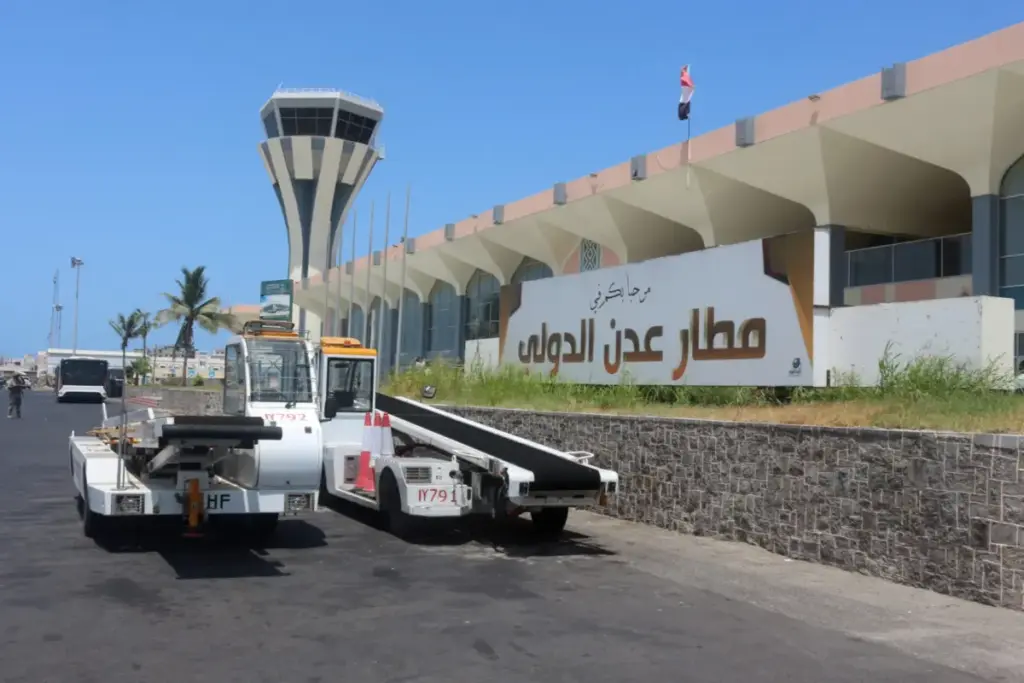
Yemen’s internationally recognised government has reported that Houthi forces launched a barrage of missiles targeting the international airport in the temporary capital of Aden. The assault comes just a day after a separate, deadly attack struck the city’s presidential palace, marking a dramatic and violent escalation in the country’s reignited civil war.
Yemeni Information Minister Moammar al-Eryani confirmed that two missiles landed near the active runway at Aden International Airport on Friday. According to the minister, the impacts occurred approximately 500 metres (1,640 feet) away from a commercial aircraft that was actively preparing for takeoff.
Miraculously, all passengers and members of the flight crew emerged unharmed. Taking to social media platform X, Minister al-Eryani thanked "divine providence" for averting what he described as a potential "horrific humanitarian catastrophe." He strongly condemned the strikes, characterising the targeting of civilian aviation infrastructure as a grave violation of international laws and established global norms.
Conversely, the Houthi movement offered a contrasting account of Friday’s military operations. In a statement attributed to a military source and reported by the AFP news agency, the group claimed responsibility for launching a targeted strike against "the Saudi forces’ command headquarters in the Badr camp in Aden province," alongside a nearby weapons depot.
The intensifying violence in Aden—which serves as the seat of power for the Saudi-backed, internationally recognised administration—unfolds against a backdrop of fierce and widening military engagements across multiple frontlines in Yemen.
Government Offensives and Heavy Clashes in Marib and Taiz
The latest assault on the port city coincided with claims from Yemeni government forces that loyalist troops had achieved substantial territorial advances in the strategic Marib province, situated northeast of the historic capital of Sanaa.
Military spokesman Majed al-Nazili announced on Friday that government forces, bolstered by crucial air support, had secured significant territorial gains in the eastern expanses of the oil-rich province. According to al-Nazili, loyalist troops successfully seized and secured several "key positions" from Houthi control.
Furthermore, the military spokesman reported staggering casualty figures, asserting that government operations had "neutralised" more than 430 Houthi fighters within a volatile 24-hour window. During the same period, loyalist forces reportedly destroyed or disabled more than 100 Houthi vehicles and essential military assets.
Parallel to the offensive in Marib, the contested Taiz governorate has rapidly emerged as one of the most critical and bloody battlegrounds of the renewed conflict. Yemeni government forces stated that they had successfully repelled a series of "large-scale" Houthi assaults in the region, inflicting severe casualties on the advancing fighters.
In a notable tactical victory within the Taiz sector, loyalist forces claimed to have captured a specialised drone warfare team directly affiliated with the Houthi movement.
Over recent weeks, Houthi units have tightened a military encirclement around Taiz, Yemen’s third-largest urban centre. By severing the city’s vital southern highway connecting it directly to Aden, the blockade has triggered widespread displacement among civilian populations and critically exacerbated an already dire humanitarian crisis in the region.
Missiles Over Riyadh and Regional Diplomatic Tensions
The escalation was not confined to Yemen’s borders. Elsewhere on Friday, the Saudi-led military coalition operating in support of the Yemeni government announced that its air defense systems had successfully intercepted and downed incoming missiles and explosive drones targeting Riyadh and other strategic areas within the Kingdom of Saudi Arabia.
Riyadh has repeatedly accused Iran of orchestrating and encouraging the Houthi campaign against the Saudi kingdom, pointing to the sustained supply of advanced weaponry, ballistic missile technology, and tactical training provided to the armed group.
Tehran, however, has vehemently denied these allegations. The Iranian Ministry of Foreign Affairs issued a statement on Friday rejecting any direct complicity, maintaining that the Iranian government has played no role in directing or executing Houthi military operations. At the same time, the ministry reiterated a standing diplomatic proposal to act as a mediator between the Houthi leadership and the Saudi-led coalition to help broker a political resolution.
The Long Shadow of Yemen’s Civil War
The current military escalation represents a severe regression for a country that has endured years of devastation. The overarching conflict in Yemen erupted in late 2014, when the Houthi movement—formally known as Ansar Allah, meaning "Supporters of God"—swept down from their northern strongholds, seized the capital city of Sanaa, and forced the legitimate government into hasty exile.
In March 2015, a multinational military coalition spearheaded by Saudi Arabia intervened directly in the conflict to restore the internationally recognised government, sparking a protracted military stalemate marked by profound human suffering and the destruction of critical national infrastructure.
A fragile turning point was reached in 2022, when a United Nations-backed nationwide truce successfully halted the vast majority of large-scale combat operations. However, regional tensions have surged to dangerous new levels since July, when the Houthis declared a unilateral naval blockade targeting Saudi Arabian ports and commercial shipping transiting the vital Bab al-Mandeb Strait.
The situation deteriorated further in September, when Houthi forces launched a rapid ground offensive on Mocha, successfully pushing back loyalist troops from the strategic Red Sea port city. Throughout the same month, insurgent units advanced aggressively along Yemen’s western coastline, consolidating control over critical maritime choke points and ultimately seizing the strategically vital Mayyun Island located within the Bab al-Mandeb Strait.