By Musheera Ashraf
Saharanpur, Uttar Pradesh: India’s national narrative is overwhelmingly digital. Every single day, millions of people complete seamless financial transactions via UPI, access essential government services through mobile applications, and rely on digital infrastructure for everything from healthcare records to public welfare distribution. Government schemes are routinely linked to smartphone apps, and the prevailing national story celebrates a hyper-connected nation moving rapidly into the future.
Yet, far away from this gleaming vision of technological progress, a starkly different reality unfolds in rural villages. In places where smartphones are shared among multiple family members, passwords are often guessed or forgotten, and digital literacy remains severely constrained, women continue to stand at the margins. They find themselves navigating a complex digital world that has shifted faster than they could possibly follow, leaving them to grapple with systemic exclusion, dependency, and fear.
The Morning Journey and the Cost of Connectivity
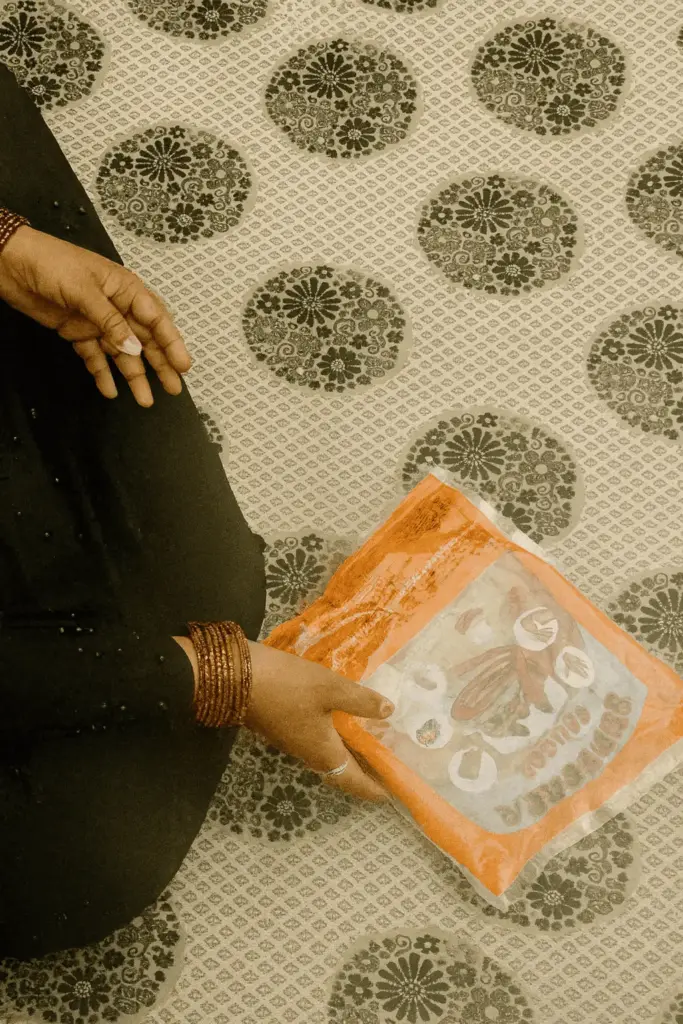
This disconnect is vividly apparent in villages just a few kilometers outside Saharanpur in western Uttar Pradesh. Thirty-five-year-old Musayyada, a widow living in a rural pocket roughly ten kilometers from the city, begins her day long before the urban centers wake up. She boards a crowded local tempo at the break of dawn to visit her local gas agency. Her mission is simple yet frustrating: she needs to find out why her government-mandated cooking gas cylinder subsidy has not been credited to her account for three consecutive months. By the time she arrives at the agency office, a long queue has already formed outside the gate.
When her turn finally arrives, the agency staff inform her that she will only receive her pending subsidy if she purchases a new gas pipe, which they insist is entirely “mandatory.” Musayyada blinks in disbelief, struggling to understand the logic. “I changed the pipe just a month ago. I do not need it,” she tells them. The reply from the staff is flat, rehearsed, and unyielding: “It is mandatory. Even if you do not need it now, you can use it later.”
The pipe costs her two hundred rupees—a significant financial burden that roughly equals the cost of a day’s meals for her family of four. For Musayyada, every rupee counts, making forced and unnecessary purchases a painful blow to her household economy.
Her relationship with mobile technology mirrors this struggle. She carries a second-hand smartphone that she managed to purchase for twenty-five hundred rupees, a sum she paid off in difficult installments. “A phone is necessary now. Even if we skip a meal, we have to keep a phone,” she explains. However, her practical use of the device is severely limited. She can only use it to receive incoming calls and dial her daughter, who lives in another village. For everything else—including booking her essential LPG cylinder—she has to rely on the shopkeeper next door.
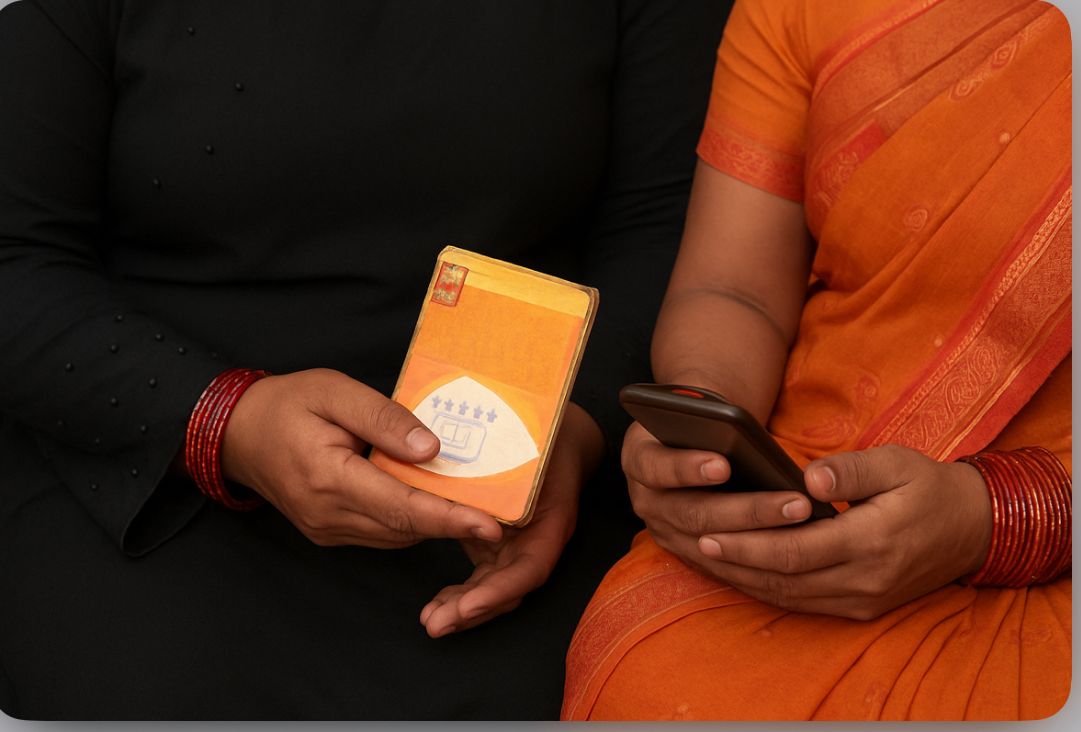
When asked how she manages to remember her daughter’s phone number without being able to read or write, she laughs shyly and points out a simple mnemonic: “Akhir me do zero hain” (There are two zeroes at the end).
Trust, Vulnerability, and the Gendered Digital Gap
Across rural India, women routinely depend on neighbors, local shopkeepers, and male family members to perform the most basic digital tasks. These hands—predominantly male—handle everything from booking LPG cylinders to checking government welfare subsidies and updating bank accounts. While trust inevitably fills the massive gap left by a lack of digital literacy, it introduces profound risks and vulnerabilities.
In another local family, an elderly woman found herself constantly harassed by mysterious phone calls from strangers. It later emerged that a male relative had casually used her personal phone number to register multiple online accounts without her knowledge or consent. “I had no idea why people were calling me by someone else’s name,” recalls sixty-two-year-old Savitri. Incidents like this may seem minor against the backdrop of India’s massive digital push, but they powerfully illustrate how easily the boundary between community trust and personal vulnerability can blur for rural women.
Ten years into the ambitious Digital India mission, a persistent gendered digital divide continues to dictate who gets to fully participate in the modern economy and who must remain locked outside the door. Data indicates that nearly forty percent fewer rural women own smartphones compared to men. Even among the women who do manage to own devices, a large number have little to no actual control over how those phones are used or maintained.
This divide grows even sharper when examining digital finance. Men are significantly more likely to perform UPI transactions, with a gender gap stretching to 13.7 percentage points. Official national UPI statistics frequently fail to reflect this gaping disparity because transaction data is rarely disaggregated by gender. However, professionals working directly within the digital payments ecosystem readily acknowledge the underlying imbalance. In 2023, a senior Google Pay official noted that women constituted less than thirty percent of total UPI users. In 2024, a representative from the National Payments Corporation of India (NPCI) shared a similarly low estimate. These already low numbers plummet even further when researchers look specifically at semi-urban and rural demographics.
Fear and the Barrier of Confidence
For many rural women, reluctance to use digital tools is not born out of a simple lack of awareness, but rather out of a deep-seated fear of making irreversible mistakes. A fifty-year-old schoolteacher in Saharanpur has a fully functional UPI payment application installed on her smartphone, yet she steadfastly refuses to use it. “What if the money goes to the wrong person? Who will return it to me?” she asks. Instead, she routinely hands her phone over to her son whenever she needs to settle a bill. “If something goes wrong, I will be blamed. Better not to try,” she adds.
Fear has become an unseen but formidable barrier in the daily lives of these women. They have heard unsettling stories of financial fraud, stolen passwords, accidental transaction reversals, and phones getting permanently blocked after too many failed verification attempts. For families living on the absolute margins, a digital mistake feels infinitely heavier and more consequential than a physical one.
Sita, a thirty-year-old newly married woman, sums up the sentiment simply. She has never booked her own LPG cylinder. “My husband does it. I do not have a phone,” she says. When she does use a device, it is her husband’s phone, which she occasionally borrows just to watch videos on YouTube. “If something goes wrong, I will have to hear from everyone,” she explains, pointing to the social policing and criticism that often accompany women’s errors.

This pervasive fear of doing something wrong is far from imagined. It is carefully shaped by years of being instructed to exercise extreme caution, of being disproportionately blamed for household errors, and of having very little room to experiment or learn from mistakes. Meanwhile, government and corporate digital services continue to expand at a relentless pace. Welfare schemes are constantly linked to mobile apps, subsidies require online status updates, SIM cards demand periodic revalidation, and banks rigidly insist on Know Your Customer (KYC) compliance. Each newly added digital step demands a level of confidence and technical fluency that many rural women have never been permitted or supported to build.
Identity and the Path Toward Empowerment
Online content creators frequently capture other layers of this socio-digital reality. Recently, an Instagram creator using the handle @lifeofpuja spoke candidly in a video, noting that “no matter how much she works or how many followers she earns, she is still known as someone’s wife or daughter-in-law.” Rural women echo this exact sentiment in quieter, more subdued ways. They rarely receive recognition or validation for learning new technological skills, and their primary social identity remains firmly tied to the domestic sphere rather than their personal capabilities.
Experts working in the field emphasize that the core issue extends far beyond basic literacy into the realm of autonomy and protection. Sarvothanam, a Delhi-based organization specializing in online safety and digital training programs, highlights the dangers of forced dependence. “Women who do not know how to use their phones rely on others. But the same people can misuse their access. Personal photos, messages, even their OTPs are shared without them knowing what is happening,” explains an organization member.
Despite these formidable hurdles, pockets of grassroots change are slowly beginning to unfold. In a village situated near Deoband, Rahima—the very first university graduate in her family—takes time out of her schedule to teach basic digital tasks to her mother and neighboring women. “I tell them how to open SMS messages, how to find saved contacts, and how to identify suspicious links,” Rahima shares. It is undeniably slow, meticulous work, but it is driven fundamentally by care and community solidarity rather than fear.
Parveen, a social worker operating in the rural expanses of Saharanpur in western Uttar Pradesh, argues that the path forward requires a dedicated commitment to patient handholding, localized community training workshops, and women-led digital learning circles. “Digital empowerment is not only about giving a device. It is about making women feel safe, confident and in control,” notes a digital rights volunteer active in the same region.
India’s broader digital journey is racing ahead at full speed, but a significant portion of its population is still walking cautiously behind. The women in these villages are not resisting technology out of stubbornness; rather, they are desperately trying to navigate a fast-paced world that moved forward long before their access, their digital confidence, and their trust could catch up.
For them, autonomy is not measured in the number of mobile apps installed on a screen or the volume of digital transactions successfully completed. Instead, it is measured in quiet, hard-won victories: answering a text message without asking for help, checking a subsidy status independently for the very first time, or daring to press a mobile button without the paralyzing fear of failure. Until these small victories become entirely ordinary, India’s digital future will continue to leave its women behind.
(Musheera Ashraf is a Laadli Media Fellow. The opinions and views expressed are those of the author. Laadli and UNFPA do not necessarily endorse the views.)