Winters in Afghanistan are notoriously brutal. Across the rugged terrain, temperatures can often plummet to -25 degrees Celsius for months at a time, accompanied by unrelenting heavy rain and thick snowfall. While the annual winter snowfall plays an undeniably vital role in supporting the country’s agricultural sector by replenishing vital water sources, it simultaneously unleashes chaos across rural landscapes. For remote communities scattered throughout the mountains and valleys, the weather acts as an isolating barrier, cutting residents off entirely from basic services, medical care, and supply chains.
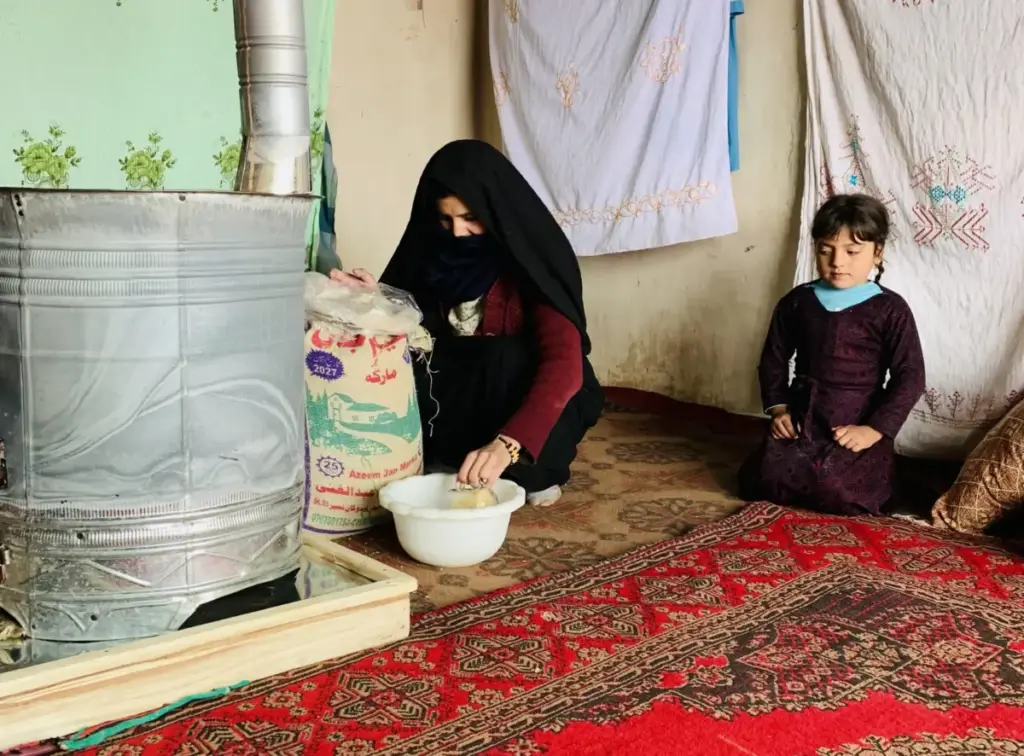
Living in one of those acutely vulnerable and isolated regions is 30-year-old Marzia, a resident of Masgara Village in Ghor Province. Every year, as winter tightens its grip, her village is completely cut off from the outside world when heavy snowfall renders mountain roads entirely impassable, often leaving families stranded for months on end.
The physical and psychological toll of this seasonal isolation is immense. Without access to functional roads or local markets, basic survival becomes a daily struggle.
"When snow blocks the roads, I cannot buy food," Marzia explains, reflecting on the harsh realities of her seasonal confinement. "We often run out of firewood, and our home becomes very cold. There is no clinic nearby, and if someone gets sick, we must walk for hours in the snow or wait. Despite these hardships, I stay strong for my children and pray for a better future."
The challenges Marzia faces are compounded by profound personal hardship. After her husband passed away a few years ago, she was left as the sole provider and caregiver for her two young children: 13-year-old Ramin and 10-year-old Rabiha. In a traditional society where economic opportunities for women are severely constrained, Marzia has no steady source of income. Her household survives largely without a reliable financial safety net, relying entirely on occasional, unpredictable assistance from kind-hearted neighbors who share what little they have.
This precarious existence is severely exacerbated by the biting chill of the Afghan winter, which tests the limits of human endurance. The geographical and architectural reality of rural homes in places like Ghor Province leaves families exposed to the elements.
"The cold is very strong, and our house is not well protected against snow and wind," Marzia notes, describing the vulnerability of their living space. "My children often ask me to heat the house, but most of the time I do not have firewood or heating materials. This is very painful for me because I want to protect them, but I cannot."
Vital Assistance Amidst Adversity
Despite the grim outlook that defines winter for thousands of families in remote Afghan villages, targeted humanitarian intervention provides a crucial lifeline. Marzia is among more than 5,300 vulnerable individuals across Afghanistan who received essential support last winter through Islamic Relief’s dedicated Winterisation Programme.
The overarching objective of the Winterisation Programme is to ease the immense seasonal burden on marginalized households and boost their resilience, enabling them to survive the harshest months of the year with dignity. Rather than imposing rigid, pre-packaged relief items that may not fully meet individual needs, the program utilizes a flexible cash assistance model. By providing financial resources directly to vulnerable individuals like Marzia, the initiative grants families the autonomy and freedom to choose the goods and supplies that best benefit their specific domestic circumstances.
For Marzia, receiving this timely support transformed her family’s prospects for the winter season.
"After receiving the winter cash assistance, I was able to buy a stove, firewood, rice, oil, blankets, and other winter essentials," Marzia shares, detailing how the funds directly addressed her family’s most urgent needs.
The tangible relief provided by the program extends far beyond physical warmth and nourishment, bringing a profound sense of psychological security to mothers who otherwise carry the heavy burden of helplessness in the face of extreme weather.
"Now, I feel much more confident and relieved, and I believe that with this support, my children and I will be able to pass the winter with more comfort and safety," she says. "I sincerely thank Islamic Relief for supporting women like me who are very vulnerable. Your help has made a big difference in our lives, and I hope you continue supporting families like ours in the future."
As communities across Afghanistan brace for the ongoing cycle of harsh weather, humanitarian organizations continue to emphasize the critical need for sustained donor support. Ensuring that families in remote areas have access to heating materials, warm clothing, and food supplies remains a matter of survival, making the continuation of such seasonal assistance programs vital for safeguarding vulnerable lives in the region.