On October 11, 2025, singer Katerina García stepped beneath the magnificent wooden framework of the historic Torrijos Ceiling at the V&A East Storehouse to deliver a deeply evocative musical performance. The event, titled Focus On: Torrijos Ceiling, formed part of a multi-disciplinary programme celebrating the rich art, history, and craftsmanship of the monumental structure. Through a curated repertoire of five Medieval and Early Modern songs, García brought the acoustic properties of the ornate wooden masterpiece to life, transporting a contemporary audience back to the cultural intersections of late-15th-century Iberia.
The Torrijos ceiling itself is an extraordinary legacy of Castilian aristocracy. Originally designed and crafted to adorn the spaces of the Palace of Torrijos—built for Gutierre de Cárdenas and Teresa Enríquez, the lord and lady of the estate—the structure served as a lavish backdrop for elite gatherings. Designed to impress the most select members of the Castilian court, the ceiling reflects a historical moment suspended between the twilight of the Middle Ages and the dawn of Modernity. By performing beneath its intricate carvings and latticework, García sought to explore the acoustic resonance of the woodwork while honouring the vibrant cross-pollination of cultures that characterized the era.
The Sources of Courtly and Popular Musical Traditions
Music occupied a central place in the entertainment culture of the courts of Castile and Aragón. Historical chronicles and modern musicological studies show that the Catholic Monarchs, Isabel I of Castile and Ferdinand II of Aragón, whose joint reign spanned from 1476 to 1504, surrounded themselves with a dynamic community of poets and composers. This environment built upon a long-standing peninsular tradition of royal patronage, drawing heavily on international influences from Catalan, Occitan, French, and Italian spheres.
Rather than existing in isolation, the royal courts of late-15th-century Iberia operated as multicultural and multilingual hubs driven by prestige, transnational marriage alliances, and political ambition. This refined courtly taste naturally influenced the households of the high aristocracy, including the Palace of Torrijos. Among the most prestigious literary and musical figures of this milieu were Juan del Encina (1468–1529), a pioneering playwright, poet, and composer; Francisco de Peñalosa (1470–1528), a master of sacred and profane polyphony; and Juan de Anchieta (1462–1523), a royal chapel master and singer.
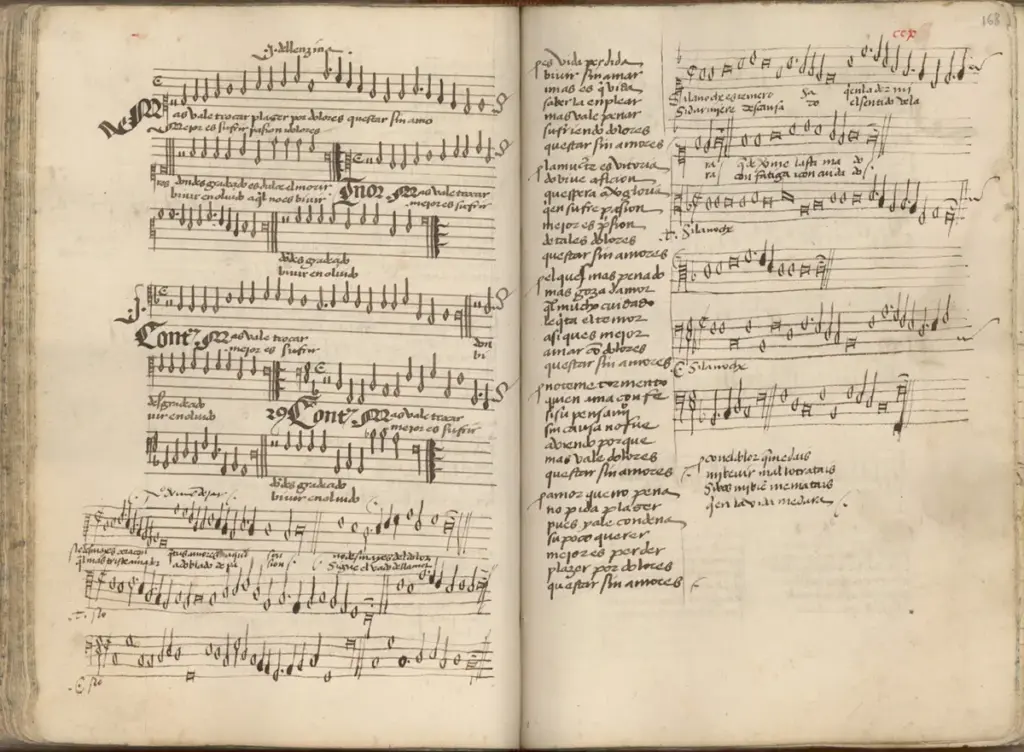
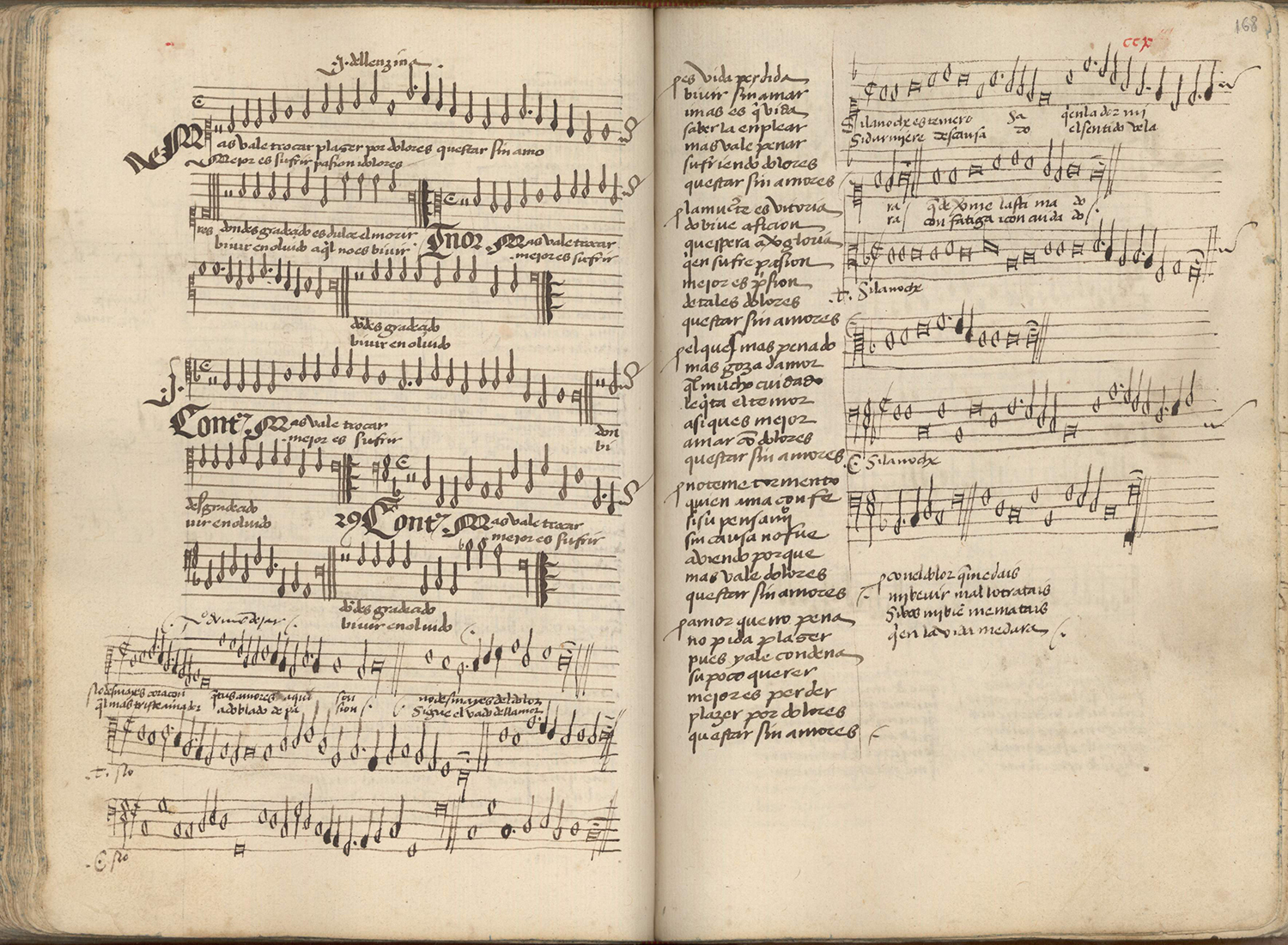
The artistry of these figures is preserved in the Cancionero Musical de Palacio, or Palace Songbook, the most important musical document of the period. Discovered in 1870 by musicologist Francisco Asenjo Barbieri in the library of the Royal Palace in Madrid, the manuscript is catalogued as MS II–1335 and is fully accessible in a digitized format via the Real Biblioteca. Compiled between the mid-1470s and the first two decades of the 16th century, the songbook contains 458 sacred and profane musical pieces, primarily polyphonic compositions for up to four voices.
While the majority of the lyrics are in Castilian, the collection also features Italian, Catalan, Occitan, Latin, Portuguese, and two pieces in Basque. This linguistic diversity underscores the international flavour of the courtly environment. Alongside high art music, the Cancionero demonstrates a distinct appreciation for popular forms, heavily featuring the villancico—literally meaning "song of peasants"—and the romance, or Hispanic ballad. For her performance, García selected pieces representing both genres to bridge elite courtly culture with the broader Hispanic oral tradition.

Exploring the Repertoire
García’s performance was structured around five distinct pieces, each highlighting different facets of Iberian history, courtly life, and the subsequent diaspora. Accompanied solely by a sustained chord produced on a shruti box to anchor and amplify her voice, García performed each song monophonically, paying homage to both historical vocal traditions and the resonant acoustics of the Torrijos ceiling.
The first piece, Juan del Encina’s Más vale trocar plazer por dolores (It is better to trade pleasure for torment), is a quintessential villancico from the Cancionero Musical de Palacio. Featuring a strophic structure with a refrain, the song explores a timeless dilemma favored by courtly poets: whether to lead a serene, loveless existence or to succumb to the sweet and turbulent passions of love and its inevitable torments.
The second selection, also by Encina, was Qués de ti, desconsolado? (What has become of you, bereaved one?). This political romance was composed to celebrate the capitulation of Granada on January 2, 1492, and its capture by the Catholic Monarchs, whom Encina portrayed as agents of Divine Providence. The song directly addresses the last Muslim ruler of Granada, Abu Abdallah Muhammad XI, known in Christian sources as Boabdil, urging the fallen monarch to embrace the Christian faith to redeem his soul. Encina employed anaphora and complex parallelisms typical of Castilian popular ballads, creating a compelling narrative even when performed by a solo voice.

The third piece, the anonymous villancico Tres morillas m’enamoran en Jaén (Three Moorish maidens captivate me in Jaén), remains one of the most enduring works from the Cancionero. Formatted as a zajal—an Andalusi poetic style composed in dialectal Arabic with strophic structures—the song evokes the cultural encounters of the Iberian frontier. It tells the story of a singer captivated by three Moorish maidens, named Aisha, Fatima, and Mariam, who travel to Jaén to harvest olives and apples. The song’s sensual undertones and alliterative wordplay have resonated through the centuries, inspiring later artists such as the poet Federico García Lorca, who famously adapted its melody.
Bridging History and the Sephardic Diaspora
The final two pieces of García’s performance shifted focus from courtly composition to the orally transmitted traditions of the Sephardic Jews, who were expelled from the Crowns of Castile and Aragón in 1492 by a decree signed by the Catholic Monarchs immediately following the conquest of Granada. Within the Sephardic diaspora across North Africa and the Eastern Mediterranean, Hispanic romances were preserved across generations as vital markers of cultural identity, while new songs, or kantigas, emerged in dialogue with inherited musical patterns.
The fourth piece performed under the ceiling was the Romance de Abenámar (The ballad of Abenámar), drawn from the Moroccan Sephardic tradition. Based on a frontier ballad first published in 1595, the song recounts a fictionalized encounter between the Nasrid sultan Yusuf IV ibn al-Mawl and King Juan II of Castile. Set on a hill overlooking the Alhambra, the Christian king asks the Moorish leader to describe the beauty of Granada truthfully. While earlier Christian versions cast Granada as a captive city destined for conquest, the Sephardic variant strips away this metaphor, focusing instead on the virtue of truthfulness and a vivid description of the city’s architectural splendour.

García concluded her performance with Morena me yaman (They call me the Dark One), a traditional Sephardic wedding song, or kantiga. Drawing on the imagery of the Dark Maiden from the Song of Solomon, the song bridges the opening theme of love with the rituals of Sephardic marriage ceremonies, referencing traditional bridal attire and customs. Documented in various forms across the diaspora, it stands as a striking example of Hispanic-Jewish intertextuality.
By juxtaposing courtly masterworks with the resilient oral traditions of the Sephardic diaspora, García’s performance resonated deeply within the V&A East Storehouse. As the music echoed beneath the intricate domes of the Torrijos ceiling, the historic woodwork fulfilled its original purpose once more: serving as an awe-inspiring architectural canvas that brought centuries-old cultural intersections vividly back to life.