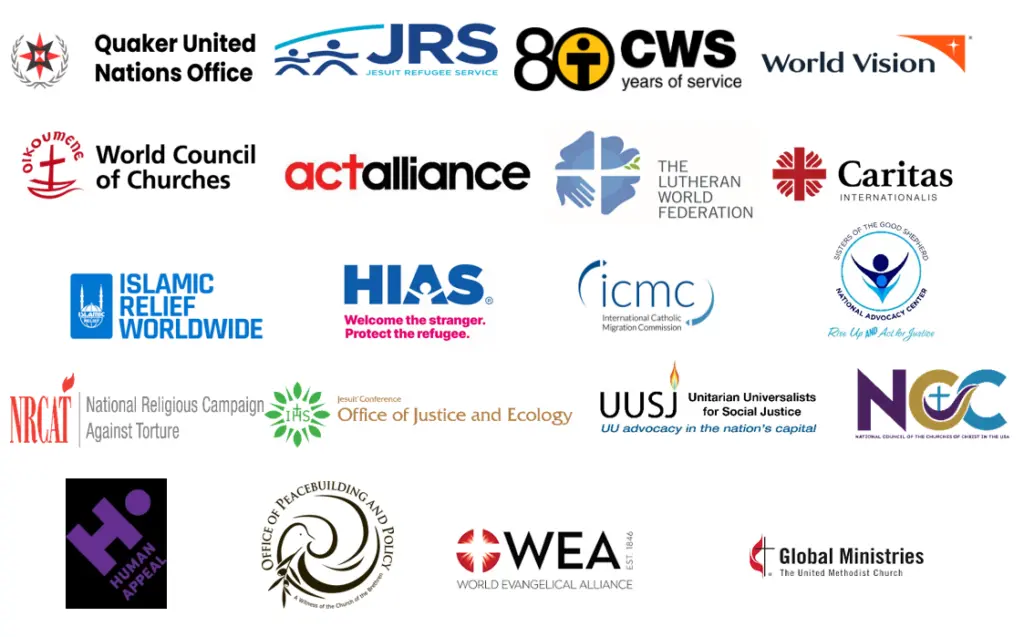
September 22, 2026 — As global leaders convene for the High-Level Week of the United Nations General Assembly, Islamic Relief has joined forces with twenty other prominent faith-based organizations to issue an urgent appeal to governments worldwide. The coalition is pressing international leaders to robustly protect the rights of displaced people and firmly uphold the landmark 1951 Refugee Convention as it marks its milestone 75th anniversary year.
Representing communities that witness the daily realities of forced migration firsthand, the participating faith-based organizations expressed profound apprehension regarding the widespread and ongoing human rights violations experienced by refugees, asylum seekers, and other forcibly displaced individuals across the globe. According to the coalition, people fleeing severe persecution and violence frequently encounter insurmountable barriers when attempting to access essential protection. Many are summarily denied their fundamental right to seek asylum, subjected to dangerous refoulement, detained arbitrarily without due process, torn apart from their families, and left dangerously exposed to severe exploitation and abuse.
At the same time, the organizations highlighted a troubling global shift in resource allocation. They noted that increasing militarization and surging military expenditures are failing to make the world any safer or more peaceful. Instead, these escalating defense budgets are actively diverting critical resources away from vital humanitarian efforts aimed at protecting human rights, preventing displacement at its roots, and supporting sustainable, durable solutions for those who have been forced to flee their homes.
The coalition emphasized that whether individuals are displaced across international borders or remain trapped within their own countries as internally displaced persons—whether they have been formally recognized as refugees or are still navigating complex processes to seek protection—every human being possesses inherent human rights simply by virtue of being human. These rights are fundamentally inalienable and are grounded firmly in intrinsic human dignity. They do not depend in any way on a person’s nationality, legal status, or geographic location.
In framing their appeal within the foundational principles of international diplomacy, the organizations underscored that the United Nations Charter explicitly recognizes respect for human rights as an indispensable pillar of global peace and security. Human rights do far more than merely shield vulnerable individuals from harm; they actively create the essential conditions required for peaceful societies and effective international cooperation. Furthermore, refugee protection, which is firmly anchored in international law and sustained through principled multilateral action, serves to safeguard the rights of those forced to flee violence and persecution while simultaneously promoting a fair sense of shared responsibility among sovereign States.
The international refugee protection regime, which includes the 1951 Refugee Convention alongside broader frameworks of international human rights law, rests upon deeply rooted ethical principles that span centuries of human history. Across major global cultures and religious traditions—ranging from Hinduism, Judaism, Buddhism, Islam, and Christianity, to foundational philosophical traditions in ancient Babylon, China, India, Rome, and Classical Greece—humanity has long shared core ethical principles regarding how human beings should treat one another. This is considered especially vital when dealing with individuals who are vulnerable, displaced, or seeking refuge. These enduring values of human compassion, hospitality, solidarity, and intrinsic human dignity ultimately found formal expression in contemporary human rights and refugee law.
Consequently, the coalition argued that rejecting the rights of refugees and asylum seekers amounts to a wholesale rejection not only of the international legal framework meticulously constructed in the devastating aftermath of past global conflicts, but also of humanity’s shared moral foundations and common identity. Faith-based organizations that accompany displaced communities every day witness firsthand how the steady weakening of protection systems and the deliberate undermining of human rights inevitably lead to amplified human suffering, deeper global insecurity, and tragic loss of life.
Marking this significant 75th anniversary year of the Refugee Convention, Islamic Relief and its partner faith-based organizations are issuing a direct call to action. They are encouraging all faith-based organizations globally to unite with them in defending the Refugee Convention. Furthermore, they are urging all States to firmly reaffirm their enduring commitment to the Convention and other vital international human rights instruments. The coalition stresses that governments must ensure dignity, solidarity, robust protection, and genuine responsibility-sharing remain at the very center of all global responses to forced displacement, ultimately upholding the rights of refugees to pave the way toward a more just, peaceful, and humane world.