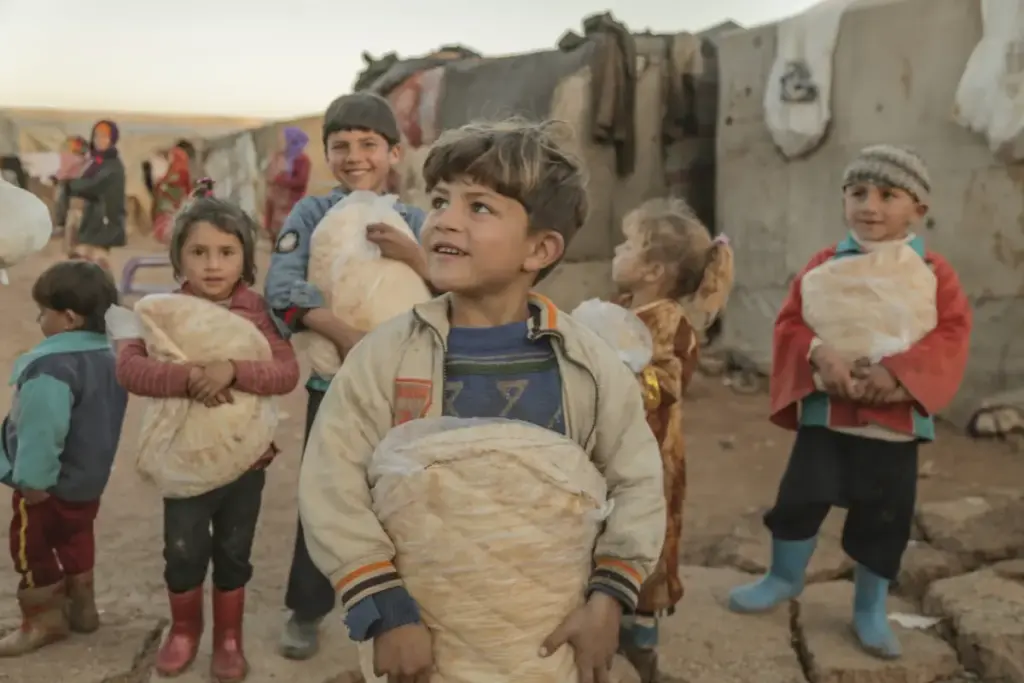
LONDON — In the Islamic tradition, the care and protection of orphaned children hold a position of profound significance, rooted deeply in the teachings of the Qur’an and the Sunnah of the Prophet Muhammad. Across Muslim communities worldwide, the mandate to safeguard the rights of society’s most vulnerable—ensuring both their material and emotional well-being—remains a cornerstone of faith, social responsibility, and ethical conduct.
This high status of orphaned children is perhaps most intimately understood through the life of the Prophet Muhammad himself, who experienced the trials of orphanhood from his earliest days. Born after the passing of his father, Abdullah ibn Abdul Mutallib, and losing his mother, Amina bint Wahb, by the age of six, the Prophet was left to the care of his grandfather. This personal history imbued the Islamic framework for orphan care with an acute empathy for the loneliness, hardship, and neglect that vulnerable children so often face in broader society.
Who is Considered an Orphan?
Within the context of Islamic social welfare and jurisprudence, an orphan is defined as a child who has lost one or both parents and is subsequently left without adequate support, financial stability, or structural protection. In numerous societies throughout history and the modern era, such children are disproportionately exposed to poverty, social isolation, and exploitation.
To counter these systemic vulnerabilities, Islam commands believers to treat orphans with unwavering dignity, affection, and justice. The Qur’an frequently associates the plight of orphans with that of the poor and the needy, underscoring their elevated status in the divine hierarchy. In Surah Ad-Duha, Allah declares: "So as for the orphan, do not oppress him."
This verse serves as a direct rejection of the exploitative practices that characterized pre-Islamic Arabia, where the vulnerable rights of fatherless children were frequently disregarded. Historical analysis of 7th-century Arabia indicates that the mistreatment of orphans was a widespread social failing. The Qur’an actively rebuked society for these shortcomings, positioning the defense and care of orphans as a definitive marker of righteousness. This ethos is further echoed in Surah Insan, which praises the righteous: "And they give food—in spite of love for it—to the needy, the orphan, and the prisoner."
A Path to Paradise
Beyond societal obligation, caring for an orphan carries the promise of immense spiritual reward in the Hereafter. The tradition of the Prophet Muhammad draws a direct and extraordinarily close connection between those who look after orphans and the Prophet himself in Paradise.
In a well-documented narration, the Prophet Muhammad stated, "I and the one who cares for an orphan will be together in Paradise like this," holding up his index and middle fingers together to illustrate the physical closeness and intimacy of that bond. This profound assurance has historically motivated generations of believers to establish endowments, foster children, and dedicate resources to orphan welfare.
Comprehensive Care in the Modern Era
Translating these spiritual directives into practical, large-scale humanitarian action, international organizations continue to address the critical needs of vulnerable children across the globe. Islamic Relief, a prominent global humanitarian agency, currently supports over 85,000 orphans and vulnerable children across 27 countries through its dedicated Orphan Sponsorship Programme.
The initiative is designed to move beyond short-term relief, focusing instead on long-term sustainability, community support, and holistic development. By providing regular access to education, comprehensive healthcare, and nutritious food, the programme seeks to restore a sense of normalcy and hope to children whose lives have been disrupted by conflict, poverty, and displacement.
The scope of these operations is particularly evident in regions facing acute humanitarian crises. In Gaza alone, Islamic Relief currently sponsors more than 21,000 orphans, addressing severe infrastructural and economic deficits that leave children uniquely exposed to trauma and deprivation. Organization officials emphasize that managing such extensive sponsorships is a heavy moral responsibility, undertaken with the awareness that donors are utilizing the charity as a means to fulfill the prophetic vision of spiritual proximity in the Hereafter.
Charity and the Circulation of Wealth
Within Islamic economic philosophy, the act of giving charity is not viewed as a depletion of resources, but rather as a catalyst for growth and blessing. Donating to support orphans is frequently cited as a specific mechanism for inviting divine blessings into a believer’s daily life.
Citing traditional narrations, scholars note the saying: "Blessed is the wealth of the Muslim, from which he gives to the poor, the orphan and the wayfarer."
This perspective holds that provision—known as rizq—is ultimately controlled by the Divine, and that sharing one’s wealth purifies it. Contributing even modest amounts to support orphans is widely regarded as a practical expression of gratitude for one’s blessings, an active demonstration of rahma (mercy), and a tangible contribution to the solidarity of the global Muslim community, or Ummah.
As humanitarian organizations continue to appeal for public support, advocates stress that the underlying philosophy of the faith remains anchored in compassion. For millions of believers, opening hearts and resources to orphaned children continues to serve as a vital embodiment of the patience, generosity, and mercy championed in prophetic teachings.