By Musheera Ashraf
Saharanpur, Uttar Pradesh: India’s contemporary narrative is routinely told through the prism of its staggering digital metrics. Observers point to the millions of Unified Payments Interface (UPI) transactions recorded every single minute, the seamless integration of online public utilities, and the wide array of government welfare schemes linked directly to mobile applications. Yet, far removed from this high-speed vision of progress, inside rural settlements where smartphones are communal assets and passwords remain guarded secrets, women continue to occupy the margins of a technological revolution that has outpaced their access and participation.
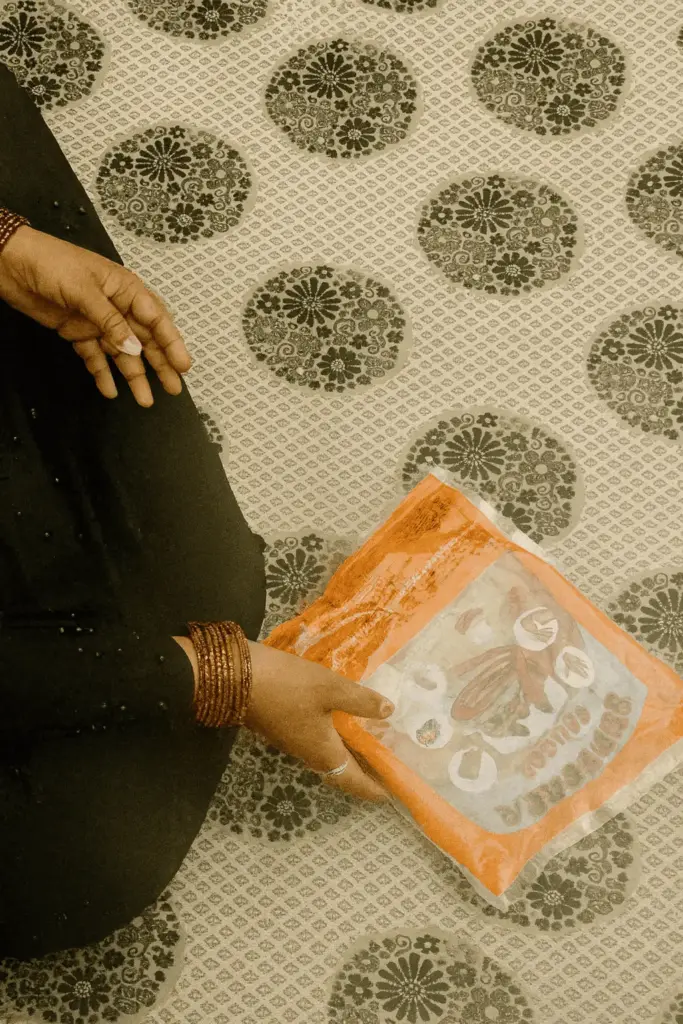
This reality is evident just ten kilometres outside Saharanpur in western Uttar Pradesh, where thirty-five-year-old Musheera begins her daily routine long before the urban centre wakes up. As a widow navigating the bureaucratic maze of rural welfare, she routinely boards a crowded public tempo at dawn to visit the local gas agency. Her mission is singular: to find out why her cooking gas cylinder subsidy has failed to credit to her account for three consecutive months. By the time she arrives, a lengthy queue has already formed outside the agency’s gates.
When her turn finally arrives, staff members inform her that the subsidy will only be released if she purchases a new gas pipe, which they claim is strictly mandatory. Musheera responds with a mixture of confusion and disbelief. She explains that she had replaced the connecting pipe merely a month prior and has no operational need for another. The response from the agency staff, however, is flat and rehearsed. They insist that the purchase is a mandatory condition, telling her that even if she does not require it immediately, she can store it for future use.
The pipe costs her two hundred rupees—an amount roughly equivalent to a full day’s food budget for her family of four.
Musheera carries a second-hand smartphone that she acquired for twenty-five hundred rupees, paying for the device in small, staggered instalments. For women in her position, acquiring a mobile phone is no longer viewed as a luxury, but as an unavoidable economic burden. Even if it means skipping meals, she notes, maintaining a phone has become a fundamental necessity.
Despite owning the device, her usage is severely limited. She can receive incoming calls and dial her daughter, who lives in a separate village, but for nearly all other digital functions, she is forced to rely on the local shopkeeper next door—even for something as routine as booking an LPG cylinder. When asked how she manages to remember her daughter’s phone number without being able to read or write, she offers a shy laugh, explaining that she relies on a simple mnemonic: the number ends with two zeros.
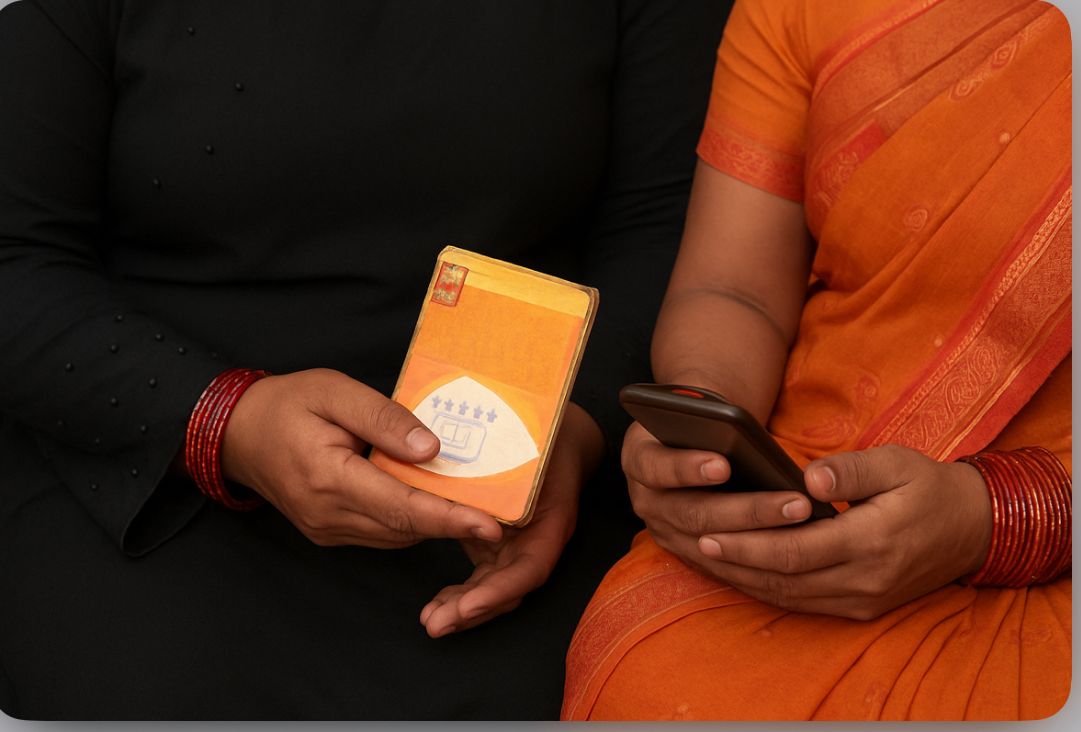
Across rural landscapes in India, women frequently depend on neighbours, local vendors, and male family members to execute the most elementary digital tasks. These trusted hands, predominantly male, handle everything from scheduling cooking gas deliveries to verifying the status of government financial assistance. While social trust temporarily bridges the gap left by low digital literacy, this arrangement introduces profound vulnerabilities.
In another household within the region, a sixty-two-year-old woman named Savitri experienced the unsettling consequences of poorly managed digital identities. She found herself subjected to a barrage of phone calls from complete strangers because a relative had utilized her mobile number to register multiple online accounts without her knowledge or informed consent. Savitri recalls being entirely baffled as to why callers were addressing her by unfamiliar names. Incidents of this nature may appear isolated against the backdrop of India’s massive digital expansion, but they underscore how effortlessly the boundary between interpersonal trust and personal vulnerability can dissolve.
Ten years into the overarching Digital India mission, a persistent gendered digital divide continues to dictate the terms of civic and economic participation. Statistical assessments reveal that nearly forty per cent fewer rural women own smartphones compared to their male counterparts. Among the women who do manage to secure ownership of a device, a significant portion exercises little to no control over its actual usage or contents.
This divide becomes even more pronounced within the realm of digital finance. Men hold a distinct advantage in executing UPI transactions, outpacing women by a margin of 13.7 percentage points. Official state and corporate statistics concerning UPI usage frequently obscure these disparities because transaction data is rarely disaggregated by gender. Nevertheless, professionals operating within the digital payments ecosystem readily acknowledge the underlying imbalance.
In 2023, a senior executive at Google Pay publicly estimated that women accounted for less than thirty per cent of total UPI active users. A representative from the National Payments Corporation of India (NPCI) shared a comparable estimate the following year. These already low figures drop precipitously when observations are restricted to semi-urban and rural demographics.
A fifty-year-old schoolteacher residing in Saharanpur provides a clear illustration of this hesitation. Although she has a UPI application installed on her mobile phone, she consistently refuses to utilize it. She questions what would happen if funds were mistakenly transferred to an unintended recipient, and wonders who would bear the responsibility of recovering the money. Instead, she routinely hands her device over to her son whenever she needs to settle a financial transaction, fearing that any mistake on her part would invite immediate blame and censure. For her, avoiding digital tools altogether is a safer strategy than risking an error.
Psychological barriers, rooted in apprehension, play a formidable role in shaping these behaviors. Numerous rural women express a strong preference for physical cash transactions not out of ignorance, but due to a profound lack of confidence. They frequently share cautionary tales concerning digital fraud, compromised passwords, reversed transactions, and locked mobile devices resulting from repeated failed authentication attempts. Within their economic reality, the consequences of a digital mistake feel significantly heavier and more punishing than physical errors.
Sita, a thirty-year-old newly married woman in the region, encapsulates this sentiment directly. Having never booked an LPG cylinder on her own, she explains that her husband handles the task entirely because she does not own a personal phone. She is permitted to use his device strictly for viewing video content on platforms like YouTube. She notes that attempting anything beyond that risks drawing criticism from household members if anything goes wrong.

The apprehension felt by these women is far from imaginary; it is shaped by years of social conditioning that emphasizes caution, assigns swift blame for administrative errors, and offers minimal margin for experimentation. Meanwhile, the broader administrative apparatus continues to accelerate its digital integration. Welfare schemes are systematically linked to mobile applications, subsidy disbursements require continuous online verification, SIM cards demand periodic revalidation, banking institutions insist on rigorous Know Your Customer (KYC) compliance, and energy distributors direct customers to check their service status through digital portals. Every newly introduced administrative layer demands a baseline of technological confidence that many rural women have never been supported or permitted to cultivate.
Online content creators frequently capture parallel dimensions of this societal structure. Recently, an Instagram creator operating under the handle @lifeofpuja remarked in a video broadcast that regardless of her professional output or the size of her follower base, she remains identified primarily through her domestic relationships as someone’s wife or daughter-in-law. Rural women echo this sentiment through quieter lived experiences, where their acquisition of new competencies often goes unrecognized, and their fundamental identity remains tethered to the domestic sphere rather than their evolving digital capabilities.
Representatives from Sarvothanam, a Delhi-based civil society organization specializing in online safety and digital literacy training, emphasize that the core obstacle extends far beyond basic literacy to issues of autonomy and dependency. According to organizational members, women who lack independent proficiency with their mobile devices must inevitably surrender control to intermediaries. This reliance exposes them to potential exploitation, where personal photographs, private messages, and sensitive One-Time Passwords (OTPs) can be accessed and shared without their informed understanding.
Despite these systemic obstacles, localized efforts are slowly generating incremental change. In a village situated near Deoband, Rahima, who holds the distinction of being the first university graduate in her family, dedicates her time to instructing her mother and neighboring women in foundational digital tasks. She guides them through the processes of reading short message service (SMS) notifications, locating saved contact directories, and identifying suspicious or fraudulent web links. While progress is gradual, her initiative is fuelled by community care rather than institutional mandates.
Parveen, a social worker active among rural communities in western Uttar Pradesh, argues that meaningful advancement requires sustained community engagement, intensive handholding, and the establishment of women-led digital learning circles. Digital empowerment, she suggests, cannot be reduced to the simple distribution of hardware; it requires cultivating an environment where women feel secure, self-assured, and genuinely in control of their tools.
As India’s broader digital transformation continues to press forward at high speed, a substantial portion of its population continues to navigate the landscape with cautious steps. The women inhabiting these rural villages are not engaged in an ideological resistance against technology; rather, they are attempting to find their footing in an ecosystem that evolved far ahead of their personal access, institutional support, and foundational trust.
For these women, true autonomy is not calculated by the number of applications installed on a screen or the volume of digital transactions completed. Instead, it is measured in quiet, personal victories: successfully answering a text message without outside assistance, checking a welfare subsidy status independently for the very first time, or mustering the confidence to press a digital button free from the paralyzing fear of failure. Until such milestones become an ordinary part of daily life, the nation’s digital future risks leaving a significant segment of its population behind.
(Musheera Ashraf is a Laadli Media Fellow. The opinions and views expressed are those of the author. Laadli and UNFPA do not necessarily endorse the views.)