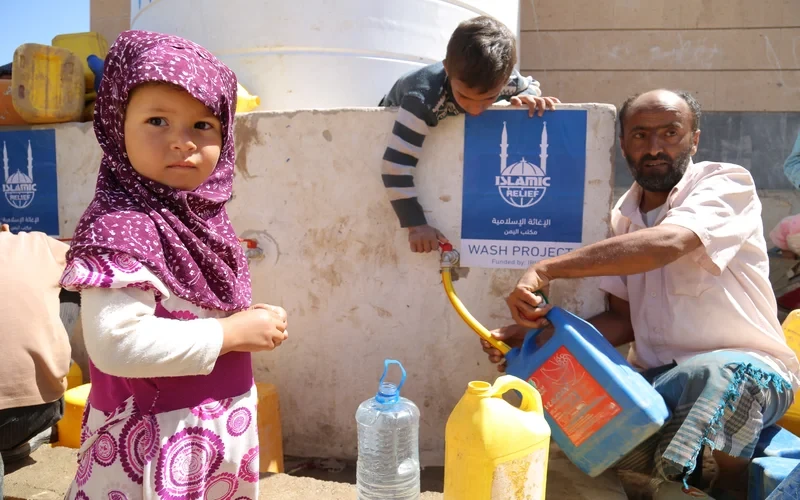
Thousands of families are fleeing a sharp and alarming military escalation across parts of Yemen, prompting urgent warnings from humanitarian agencies that the country stands on the precipice of a renewed catastrophe. According to aid organizations on the ground, intensifying airstrikes, heavy artillery shelling, and active armed clashes have forced wave after wave of civilians to abandon their homes in search of safety. Many are escaping with little more than the clothes on their backs, leaving behind vital belongings, shelter, and livelihoods.
Islamic Relief, one of the major international humanitarian organizations operating within the country, has reported that the displacement crisis is worsening by the day. Aid workers stationed in the crucial southern and southwestern governorates of Taiz, Lahj, and Aden describe a chaotic and deeply distressing environment where thousands of families are uprooted daily. These newly displaced populations are arriving in makeshift or overcrowded hosting areas entirely unequipped to receive them, lacking basic necessities such as adequate shelter, clean drinking water, sufficient food supplies, appropriate clothing, and access to essential medical care. Islamic Relief is currently working to mobilize emergency aid packages to reach these vulnerable families, but humanitarian responders warn that the scale of the crisis threatens to overwhelm existing response capacities.
The fresh outbreak of violence risks unravelling what little stability has been achieved in the country over recent years. Yemen has long endured one of the most severe and protracted humanitarian crises in the modern world. Years of relentless conflict, coupled with a devastating economic collapse, have pushed the nation’s infrastructure to its absolute breaking point. Official estimates indicate that approximately 22 million people—amounting to roughly two-thirds of the entire national population—are currently reliant on some form of humanitarian assistance to survive. While a fragile truce brokered in 2022 brought a temporary reduction in large-scale combat and fostered cautious improvements for weary civilians, aid agencies emphasize that these fragile gains are now in immediate danger of being rapidly reversed by the latest military maneuvers.
Compounding the unfolding emergency is a backdrop of systemic institutional and financial strain. Essential public services, particularly healthcare networks and municipal water supply systems, have been severely overstretched for years. Recently, these critical lifelines have faced further degradation due to sweeping global aid cuts, which have forced vital facilities and specialized services to shut down entirely or drastically scale back their operations. Without adequate resources, local systems are ill-equipped to absorb the sudden shock of mass displacement.
International humanitarian advocates argue that immediate, decisive action from the global community is vital to prevent the current skirmishes from widening into a full-scale catastrophe that would plunge millions of Yemenis back into acute suffering. According to preliminary reports compiled by the United Nations, more than 80,000 individuals have already been displaced across the governorates of Taiz, Lahj, and Aden alone since the latest hostilities escalated. However, local community leaders and field monitors caution that official tallies may significantly underestimate the true scale of the movement, as many displaced families are sheltering in remote rural areas or staying with distant relatives beyond the reach of formal registration desks.
Khanzad Shah, Islamic Relief’s acting head of programmes in Yemen, described the harrowing conditions witnessed by relief teams on the ground as the situation continues to deteriorate rapidly.
"Thousands more families have fled their homes in the past 24 hours, and the number is rising every day," Shah said. "Many of them don’t have enough food or water as they had to flee with whatever they could carry. In some areas, whole villages have reportedly emptied."
Highlighting the disproportionate impact of the conflict on the most vulnerable sectors of society, Shah added that the burden inevitably falls heaviest on those least equipped to bear it.
"When the fighting escalates, it is always the poorest civilians who suffer most of all. The situation is increasingly desperate and people urgently need aid," Shah noted, before issuing a broader critique regarding global attention toward the ongoing crisis. "The crisis in Yemen has been largely forgotten by the world, and this is a wake-up call that the people of Yemen are still suffering and the crisis could get even worse."
In response to the escalating emergency, Islamic Relief is issuing an urgent appeal to all parties involved in the conflict to commit to immediate de-escalation, prioritize the protection of civilians in line with international humanitarian law, and guarantee safe, unhindered humanitarian access to all populations in need. Simultaneously, the organization is calling upon the wider international community to step up financial contributions to humanitarian response plans and intensify diplomatic efforts aimed at securing a sustainable, long-term peace agreement for the country.
Islamic Relief has maintained a continuous operational presence in Yemen since 1998, implementing a wide range of development and relief projects designed to improve public access to safe water and sanitation, strengthen sustainable community livelihoods, support orphaned children, and deliver rapid emergency relief during times of crisis. The organization coordinates its activities by working closely with a network of local partner organizations embedded within communities across the country.