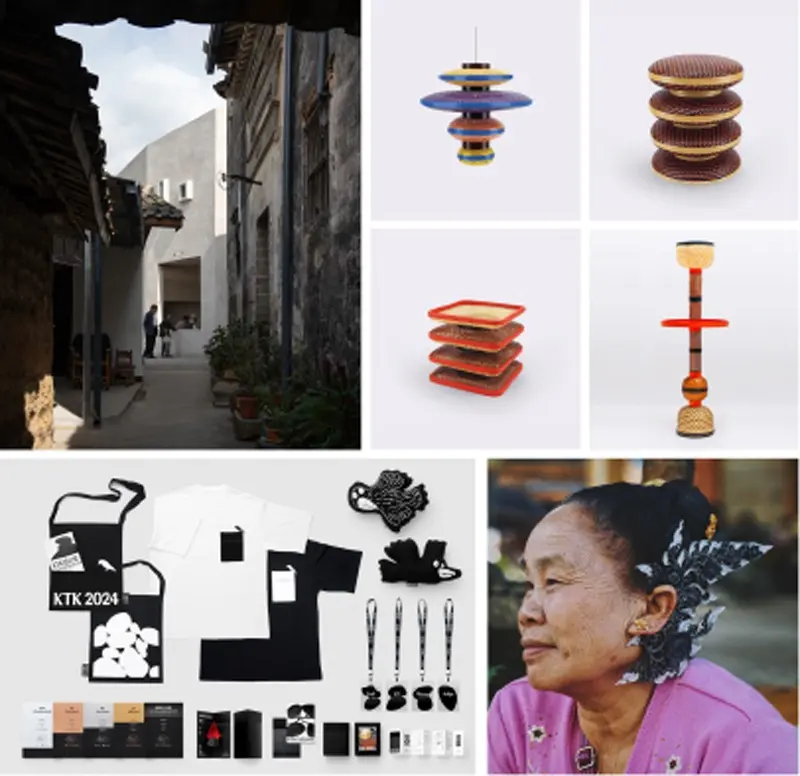
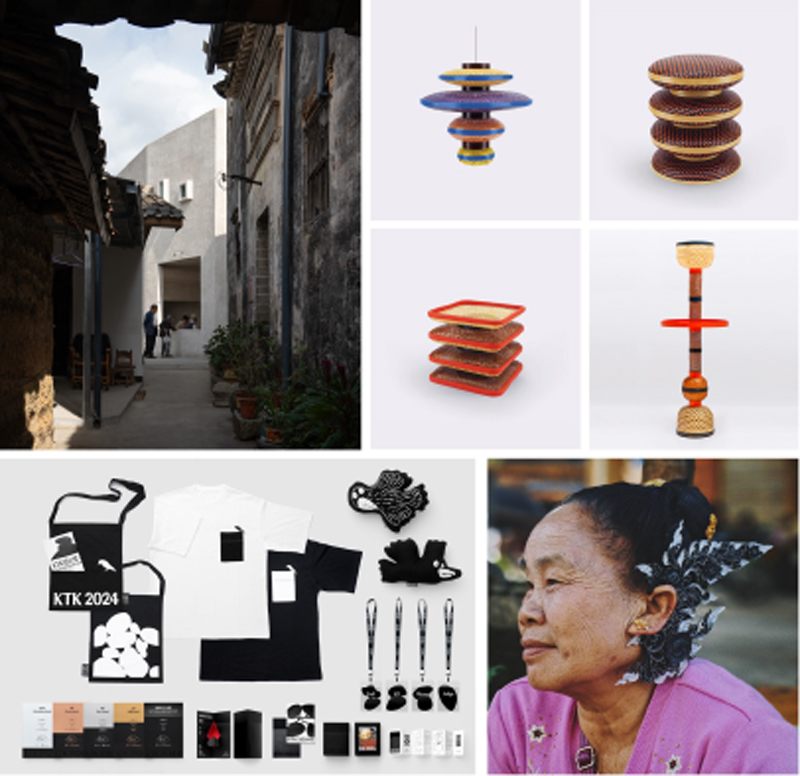
From a community gathering space rising from the ruins of a historic village home to contemporary jewelry inspired by flowers worn at the ear, the inaugural Design Values Award has announced its four visionary Grand Prize winners. Selected from a competitive pool of 20 overall winners, these standout projects demonstrate how contemporary design can give familiar materials, local customs, and historic places dynamic new possibilities for the future.
Announced on October 27, 2026, the award program was established in 2024 through a collaborative partnership between Design Society in Shenzhen and the Victoria and Albert Museum (V&A) in London. The initiative was created to celebrate the cutting edge of contemporary Chinese design, with an intentional and sustained focus on critical global themes: sustainable development, meaningful cultural dialogue, and the elevation of overall quality of life. The four Grand Prize projects explore these multifaceted ideas across a diverse array of disciplines, including architecture, fashion, jewelry, product design, furniture, lighting, and graphic design.
IARA – FW JI·The Rural Memory Museum
Grand Prize in Architecture and Environmental Design
In Fengwu Village, located in eastern China, an old and cherished residence known as Yingfengli had long since disappeared. Its absence left behind a small, exposed square that offered little to no protection from the harsh elements, robbing the immediate neighborhood of its focal point. Confronted with this site, architecture practice IARA chose to approach the location not merely as an empty lot, but as a rich record of village history layered with the profound potential to serve its contemporary community.
Built precisely over the historic foundations of the former house, the resulting project—named FW JI·The Rural Memory Museum—makes extensive use of local materials to seamlessly connect the new physical structure with its immediate surroundings. Rather than imposing a foreign aesthetic, the architects designed a covered communal space that provides a deeply sheltered gathering place for local villagers. In doing so, the architecture allows the faint traces and physical memory of a former home to directly shape and nurture a vibrant new public space for generations to come.
The expert international jury recognized the project for its remarkably sensitive approach to collective memory. They praised the architects for successfully creating a covered communal space that breathes new life into daily village routines while honoring the deep historical roots of the land.
Zhang Yu – Whisper
Grand Prize in Fashion, Textile and Jewellery Design
The traditional Dai custom in which women gracefully adorn their ears with fresh flowers served as the conceptual and emotional starting point for designer Zhang Yu’s striking project, Whisper. Eschewing traditional materials alone, Zhang employs modern industrial elements—specifically aluminum, brass, and polycarbonate—to meticulously translate this ephemeral, organic form of personal adornment into durable contemporary jewelry.
Zhang’s broader design practice is deeply grounded in rigorous field research into the diverse cultures and traditional crafts of Yunnan province, with a particular and sustained focus on Dai cultural traditions. Through Whisper, the designer draws urgent public attention to a vanishing custom and the rich cultural knowledge it carries. The project successfully translates a tradition that the designer describes as steadily fading into the lexicon of contemporary jewelry, making heritage wearable and relevant once again.
The judging panel celebrated the work for its striking visual impact, its clever material innovation, and its exceptional craftsmanship. They also commended its sensitive, forward-looking contemporary interpretation of Dai cultural heritage, proving that ancient customs can find powerful new expressions through modern design language.

Mingyu Xu – Motuo Bamboo Forest
Grand Prize in Product Design
Bamboo has served as the central pillar of Mingyu Xu’s creative practice since 2016, anchoring his exploration of sustainable materials. For his Grand Prize-winning project, Motuo Bamboo Forest, Xu draws profound inspiration from the ancient Menba bamboo-weaving tradition of Motuo in Tibet. He applies these time-honored techniques to a sophisticated, modular collection of contemporary furniture and lighting.
Encompassing pendant lamps, sturdy stools, functional coffee tables, and elegant floor lamps, the collection skillfully extends the structural and aesthetic possibilities of woven bamboo across a wide range of domestic objects. Xu, who founded the London-based MINGYU XU STUDIO, continually explores how traditional weaving skills can break free from historical constraints and find fresh, commercially viable applications in contemporary interior design.
The jury lauded the collection for its highly experimental yet practical use of bamboo, its remarkable sustainability potential, and the undeniable strength and beauty of its lighting designs. The pieces demonstrate that sustainable design solutions can be deeply rooted in regional heritage without sacrificing modern sophistication.
Liao Bofeng – KTK 2024
Grand Prize in Visual Communication and Interactive Design
Tasked with developing the visual identity for the 2024 Jin Daiqiang Design Award, Shenzhen-based graphic designer Liao Bofeng looked far beyond digital shortcuts, finding his inspiration instead in the classic fable The Crow and the Water. In this well-known story, a thirsty crow cleverly drops stones into a vessel until the water level rises high enough within reach to quench its thirst.

Liao explored the narrative’s central theme of human ingenuity by constructing a tangible, handmade physical installation, which he then carefully photographed to generate the final graphic assets. By stepping away from the computer screen to construct and photograph physical objects, the designer critically examines the creative potential of simple, everyday materials. At the same time, his process gently questions modern designers’ overdependence on digital tools, making physical experimentation the absolute core of the finished graphics.
The competition jury found that the project stood out exceptionally well through its innovative form, conceptual content, and overall impact, successfully pushing far beyond conventional visual-identity formats and digital tropes.
Rigorous Evaluation and Judging Standards
The selection of these standout works was overseen by four distinct category juries, which brought together a diverse cohort of leading designers, visionary architects, and influential curators from both China and the international community. Every single entry submitted to the awards program was rigorously assessed against four core criteria: creativity and aesthetics; practicality and commercial value; sustainability and environmental impact; and cultural interpretation and local identity.
Throughout the evaluation process, the juries carefully considered not only the baseline technical and aesthetic quality of the designs, but also the nuanced ways in which each project actively engaged with Chinese cultural elements and localized traditions.

Alongside the four celebrated Grand Prize winners, the inaugural Design Values Award program also recognized 12 Category Winners and four Student Winners distributed across the four participating disciplines of architecture, fashion and jewelry, product design, and visual communication. These additional honoresses further underscore the breadth, depth, and exciting future trajectory of contemporary design talent operating within the cultural landscape.