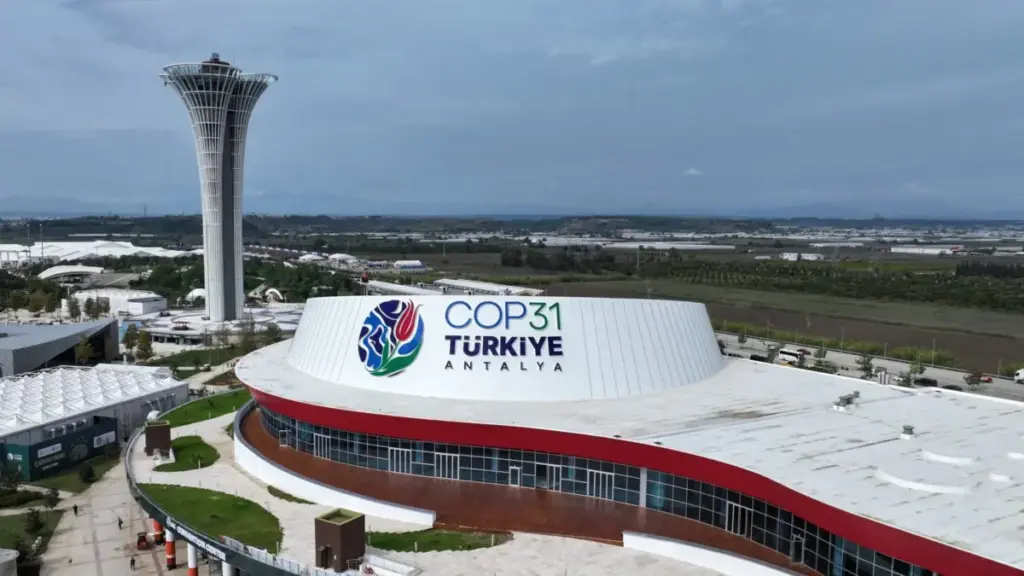
As Türkiye finalizes its preparations to host the United Nations Climate Change Conference, COP31, in the Mediterranean hub of Antalya next week, leading Turkish academics have issued a collective call for the summit to move beyond rhetoric and deliver measurable, actionable results. Specifically, experts are urging the global community to address critical systemic threats—namely water security, food waste, and comprehensive climate mitigation—insisting that international declarations must now translate into tangible, ground-level improvements.
For the scientific and academic community in Türkiye, the upcoming summit represents a pivotal opportunity to pivot away from purely symbolic awareness campaigns. Instead, they argue, COP31 must foster practical solutions, enhance international cooperation, and secure firm commitments that are thoroughly backed by adequate climate financing and rigorous scientific evidence. As the world confronts intensifying environmental disruptions, Turkish researchers emphasize that the window for theoretical debates is closing rapidly, making execution the central mandate of the Antalya conference.
Rethinking Food Waste as a Frontline Climate Crisis
Addressing the multifaceted dimensions of modern sustainability, Dr. Büşra Yusufoğlu, an assistant professor in Istanbul Technical University’s Department of Chemistry, contends that food waste can no longer be categorized merely as a localized waste-management issue. Rather, she stresses that it must be confronted directly as a major driver of the global climate crisis.
Citing comprehensive data from the United Nations Environment Programme (UNEP), Yusufoğlu pointed out the staggering scale of the problem: approximately 1.05 billion metric tons of food were wasted worldwide in 2022 alone. Furthermore, the combined impact of global food loss and waste is estimated to account for roughly 10% of total global greenhouse gas emissions.
The environmental and economic consequences of this systemic inefficiency extend far beyond the immediate sight of discarded meals. The vast natural resources consumed during the agricultural production, processing, storage, and long-distance transportation phases are entirely squandered when food goes uneaten. Compounding the issue further, as discarded organic matter decomposes in municipal landfills, it releases massive quantities of methane, a greenhouse gas whose potency in trapping atmospheric heat far outstrips that of carbon dioxide over a short-term horizon.
"Reducing food waste is one of the most effective strategies for combating climate change, with results that can be achieved in the short term," Yusufoğlu noted, highlighting the immediate mitigation potential inherent in reforming global supply chains and consumption habits.
To harness this potential, she is calling on national governments participating in COP31 to establish strict, measurable food-loss and waste-reduction targets, integrating these specific metrics directly into their revised national climate action plans. Among the practical interventions she highlighted are the modernization of cold-chain and storage infrastructure, the innovative conversion of food-industry byproducts into higher-value commercial goods, the organized redistribution of surplus food that remains entirely fit for human consumption, and the rapid expansion of advanced technologies such as artificial intelligence-assisted demand forecasting to prevent overproduction.
Achieving these systemic transformations, Yusufoğlu added, will require unprecedented levels of synergy and cooperation among academic institutions, the private food industry, local municipal governments, and high-level policymakers. Such collaboration is essential to transforming abstract scientific research into scalable, real-world solutions.
"My main expectation from COP31 is that it moves beyond awareness-raising efforts and produces measurable and actionable international commitments backed by scientific data and defined financing mechanisms," Yusufoğlu stated. She emphasized that preventing food waste would simultaneously alleviate pressures on increasingly scarce natural resources, bolster regional and global food security, and facilitate the transition toward genuinely sustainable food systems.
Securing Türkiye’s Water Future Amid Rising Climatic Pressures
While food systems require urgent structural reform, the immediate existential threats posed by changing hydrological cycles demand equal attention. Dr. İsmail Dabanlı, an associate professor in Istanbul Technical University’s Department of Civil Engineering and a recognized specialist in hydrology, water resources, and climate change, warns that water scarcity, prolonged droughts, and sudden, destructive floods have evolved from distant projections into tangible, everyday threats to Türkiye’s future stability.
Because Türkiye is geographically situated within the Mediterranean basin—widely identified by climatologists as one of the global regions most intensely exposed and vulnerable to climate change—these hydrological challenges carry an extraordinary sense of urgency.
"Droughts and floods are not random events," Dabanlı explained, explicitly linking increasingly erratic and disruptive water patterns to cumulative global greenhouse gas emissions and the fundamental alterations those emissions have forced upon the Earth’s climate system.
He argued that COP31 must serve as a diplomatic and operational catalyst to bring water security to the absolute center of the global climate agenda. In practical terms, this means fostering robust international cooperation, facilitating critical technology transfers from developed nations to developing regions, and unlocking substantial financing mechanisms dedicated specifically to modernizing municipal and agricultural water infrastructure.
Dabanlı drew direct attention to widespread inefficiencies plaguing urban water distribution networks, traditional agricultural irrigation practices, and industrial water usage—all of which require urgent, large-scale modernization. To rectify these shortcomings, he outlined several vital engineering and administrative measures, including the systematic renewal of aging, leaky underground pipelines, the accelerated adoption of water-saving drip irrigation systems across agricultural heartlands, the large-scale treatment and reuse of wastewater in farming, and the widespread deployment of smart water management systems powered by real-time data analytics.
Implementing these sweeping modernization efforts is fundamentally dependent on adequate climate finance, particularly for developing economies struggling to shoulder the immense financial burdens of infrastructure overhauls while simultaneously adapting to shifting environmental baselines. Dabanlı emphasized that Türkiye should use its prominent platform as the host of COP31 to urge developed nations to honor and strengthen their climate finance commitments, ensuring that funds flow directly into vital investments for water efficiency, agricultural resilience, and climate-proof infrastructure.
Furthermore, he reiterated that safeguarding the hydrological cycle cannot be decoupled from broader decarbonization efforts. Reducing baseline greenhouse gas emissions through an accelerated transition toward renewable energy sources and systematically improving energy efficiency within commercial and residential buildings remain indispensable components of any comprehensive adaptation strategy.
Advancing an Action-Oriented Approach to Climate Diplomacy
Complementing these technical and environmental priorities, Dr. Şuay Nilhan Açıkalın, an associate professor at Ankara Hacı Bayram Veli University, highlighted the broader geopolitical and diplomatic significance of Türkiye’s presidency at the upcoming Antalya summit. According to Açıkalın, Türkiye’s leadership offers a unique opportunity to advance a distinctly action-oriented approach to global climate diplomacy, one that deliberately broadens participation and ensures a wider spectrum of countries and stakeholders possess a genuine voice in international environmental decisions.
"Until now, important decisions have been made at COP summits, and processes leading to important decisions have been established," Açıkalın observed, reflecting on the historical trajectory of U.N. climate negotiations. "But under Türkiye’s hosting, with the leadership and strong approach of our president, there is an expectation that COP31 will translate many of these decisions into action and deliver concrete outcomes."
She noted that Türkiye’s evolving climate diplomacy has matured concurrently with the nation’s domestic institutional capacity and targeted policy frameworks. In this context, she pointed to the nationwide Zero Waste Movement—pioneered years ago under the auspices of first lady Emine Erdoğan—as well as Türkiye’s formal ratification and implementation of the Paris Agreement, as foundational domestic achievements that lend credibility to the country’s international climate posture.
Açıkalın also underscored inclusivity as a defining philosophical and practical pillar of Türkiye’s diplomatic strategy. She argued that effective global climate governance must avoid the pitfall of focusing exclusively on the narrow priorities and financial capabilities of wealthy, developed nations.
"Türkiye’s climate diplomacy is highly inclusive," she stated, explaining that the nation’s diplomatic framework intentionally seeks to bridge divides and bring together a diverse array of international actors, with a particular emphasis on amplifying the voices of developing nations that have historically found themselves relegated to the periphery of global climate debates.
For Açıkalın, the true historical significance of COP31 will ultimately be measured by its ability to merge Türkiye’s inclusive diplomatic ethos with actionable, binding outcomes capable of meeting the varied and urgent needs of a multifaceted global community. As delegates prepare to convene in Antalya, the collective message from Turkish academia remains clear: the time for deliberation has passed, and the era of measurable, financed, and scientifically grounded implementation must begin.