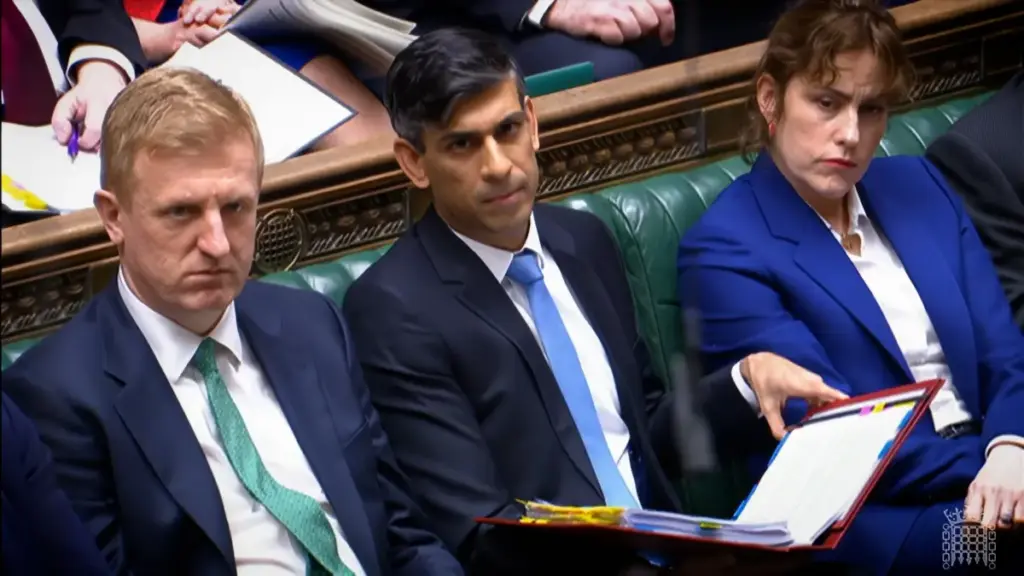
During a heated session of Prime Minister’s Questions on Wednesday, Prime Minister Rishi Sunak faced fierce interrogations and sharp rebukes from multiple members of parliament regarding the British government’s ongoing diplomatic and military support for Israel amid the devastating war in Gaza.
Lawmakers from across the opposition benches pressed the Prime Minister on various aspects of the humanitarian catastrophe unfolding in the besieged Palestinian enclave, challenging him to explicitly condemn actions by Israeli forces and questioning the moral responsibility of the UK government for its diplomatic alignment with Israel’s military campaign.
The parliamentary confrontation reached an early and dramatic peak when Labour MP Tahir Ali took to the dispatch box and delivered a scathing assessment of the UK’s diplomatic posture. Addressing the Prime Minister directly, Ali posed a blunt and severe question that reverberated across a tense House of Commons.
"Is it not time for the Prime Minister to admit that he has the blood of thousands of innocent people on his hands?" Ali asked, capturing the profound anger felt by many critics of the government’s foreign policy stance.
The question underscored a growing rift within British politics regarding the proportionality of the military response in Gaza and the humanitarian toll inflicted upon the civilian population, which has seen widespread destruction of infrastructure, mass displacement, and severe shortages of food, clean water, and medical supplies.
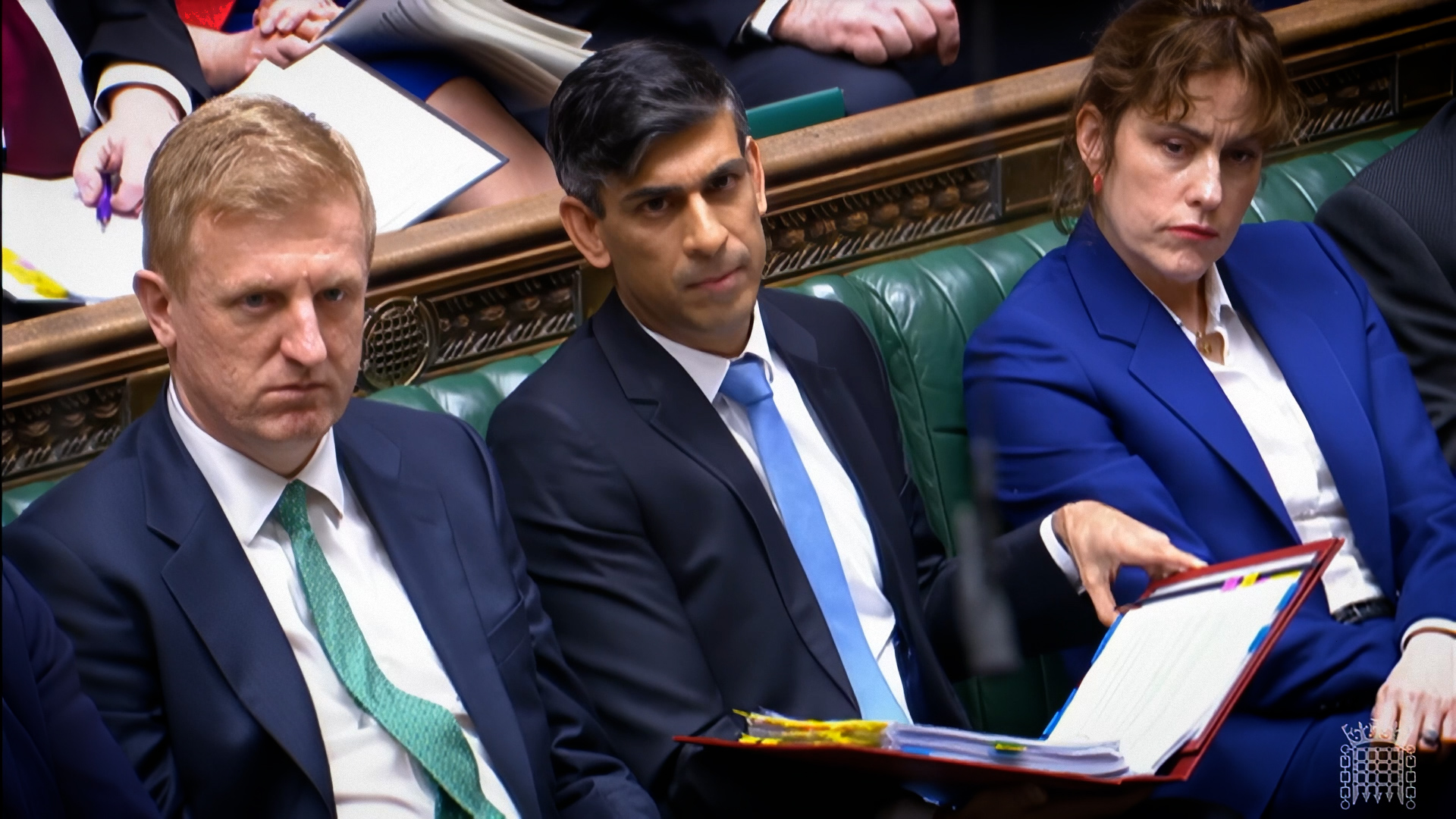
The questioning continued with Scottish National Party MP Anum Qaisar, who focused her intervention on the acute humanitarian crisis and the alarming levels of hunger and deprivation gripping the Gaza Strip. Qaisar pressed the Prime Minister on the leverage held by international actors, specifically highlighting the responsibilities of the Israeli government in facilitating the entry of desperately needed aid.
"The Israeli government has the power to end this starvation crisis—does it not, Prime Minister?" Qaisar asked during the exchange.
However, rather than providing a direct answer to the specific query regarding the power of the Israeli government to alleviate the blockade and halt the escalating starvation crisis, Sunak’s response appeared to pivot away from the core of the question, leading to accusations of deflection from opposition MPs who argue that the government is routinely dodging accountability on international law and human rights violations.
The tension further escalated when SNP Westminster leader Stephen Flynn stood up to question the Prime Minister about a specific, highly publicized incident broadcast just a night prior. Flynn referenced a disturbing report aired by ITV News, which showed footage of the shooting of an unarmed Palestinian man walking under a white flag in Gaza, a symbol universally recognized under the Geneva Conventions as a plea for protection and a sign of civilian status.
Flynn directly asked the Prime Minister whether the fatal shooting of an unarmed civilian displaying a white flag constituted a war crime under international law.
In his reply, Sunak stated that he had "made the point" to Israeli officials that international humanitarian law should be respected and upheld during the conduct of military operations. However, the Prime Minister stopped short of labeling the specific incident captured on camera as a war crime, prompting immediate frustration from the benches opposite.

Dissatisfied with the evasive nature of the response, Flynn rose again to challenge the Prime Minister’s reluctance to give a straightforward legal and moral assessment of the captured footage. Expressing disbelief at the administration’s cautious language, Flynn delivered a sharp critique of the Prime Minister’s failure to address the question clearly before the British public and the international community.
"Mr Speaker, I don’t think it’s unreasonable to expect the Prime Minister of the UK to rise to that dispatch box and tell the people of these isles—that shooting an unarmed man under a white flag is a war crime," Flynn stated, emphasizing the gravity of the incident and the perceived failure of British leadership to stand unequivocally by foundational principles of international humanitarian law.
The exchanges during Wednesday’s Prime Minister’s Questions reflect a deepening domestic political crisis in the United Kingdom over the government’s handling of the Gaza conflict. As public protests continue to draw hundreds of thousands of demonstrators onto the streets of British cities demanding an immediate ceasefire and an end to arms exports to Israel, pressure has increasingly mounted on Westminster politicians.
Opposition MPs like Tahir Ali, Anum Qaisar, and Stephen Flynn are channeling these intense public demands into parliamentary pressure, continually forcing the government to defend its diplomatic alignment with Israel. Despite repeated calls from human rights organizations, international legal experts, and backbench parliamentarians to adopt a harder line against alleged violations of international law, the government has largely maintained its support for Israel’s right to self-defense while urging adherence to humanitarian norms.
Wednesday’s fiery exchanges demonstrate that the humanitarian situation in Gaza and the UK’s complicity in the conflict will remain a central, contentious battleground in British politics, with lawmakers vowing to hold the executive branch accountable for its policy decisions on the international stage.