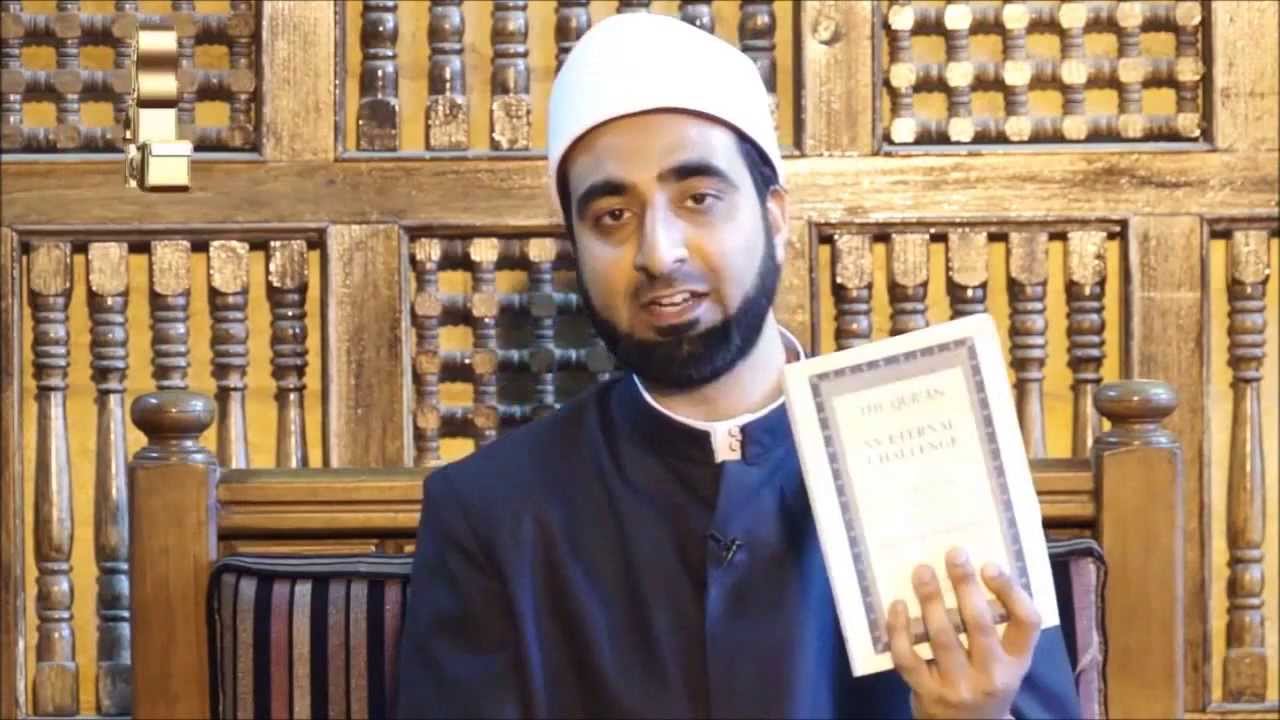
The ongoing debate surrounding the origins of the Quran and the divine nature of its revelation remains a central theme in Islamic scholarship. In a recent installment of his widely followed video series, "The Eternal Challenge," prominent scholar Sheikh Sohaib Saeed tackles one of the most fundamental questions regarding early Islamic history: Who actually taught Prophet Muhammad the Quran?

Addressing viewers from a rigorous academic and theological perspective, Sheikh Saeed systematically deconstructs historical and modern allegations suggesting that the Prophet of Islam was tutored by contemporary religious clergymen or that he merely compiled and quoted material from earlier Abrahamic scriptures. Through the episode, the scholar provides deep contextual analysis aimed at clarifying how the Quran was transmitted, emphasizing its unique linguistic, historical, and spiritual standing.
The discussion forms part of a broader exploration within the series, which critically examines the divine authenticity of Islam’s holy book. By looking closely at the socio-political and cultural landscape of 7th-century Arabia, the program invites audiences to weigh historical evidence against claims regarding the authorship and external influences on the text.

Examining Prophecies and Historical Proofs
A significant portion of the episode is dedicated to an analysis of prophecies embedded within the Quran. In theological discourse, a prophecy is defined as foretold news concerning future events that lies entirely beyond the realm of human foresight, drastically distinguishing it from an educated, calculated, or wise guess.

Sheikh Saeed highlights that these predictive elements serve as one of the most vital empirical and spiritual proofs for assessing the truthfulness—or lack thereof—of prophets throughout history. By examining specific instances where the Quran foretold historical developments and future outcomes that materialized precisely as described, the series posits that such accuracy points directly to a divine source of knowledge rather than human fabrication or contemporary speculation.
The episode builds upon earlier discussions in "The Eternal Challenge," which have sought to unpack the nature of the Quran itself. Previous installments in the educational series have explored fundamental questions about the identity of the text, investigating what the Quran truly represents and analyzing the profound relationship between the Prophet Muhammad and the Book of Allah. Rather than viewing the Prophet merely as an author, the series emphasizes the transformative impact of the revelation, illustrating how the theological narrative positions the Quran as the active, shaping force behind the Prophet’s mission rather than a product of his own making.
Continuing Scholarly Discourse
Sheikh Sohaib Saeed, known for his scholarly work in Quranic studies and tafsir (exegesis), utilizes digital media platforms such as his dedicated social media channels to make complex theological and historical arguments accessible to a global audience. "The Eternal Challenge" series continues to draw engagement from students of comparative religion, historians, and believers alike who are interested in the intellectual foundations of Islamic theology.
As the series progresses, it maintains its focus on addressing skeptical inquiries head-on, offering structured counter-arguments to longstanding polemical claims. By grounding the discussion in textual analysis, historical context, and the distinctive nature of Quranic prophecies, the program aims to provide viewers with a comprehensive understanding of the traditional Islamic position regarding the revelation of the Quran.
The latest episode, along with preceding installments such as "The Eternal Challenge: What is the Quran?", "Eternal Challenge: Prophet and Book of Allah," and explorations into whether the Prophet Muhammad authored the text, remains accessible online for audiences seeking deeper insights into Islamic scriptural studies and the historical verification of prophetic traditions.