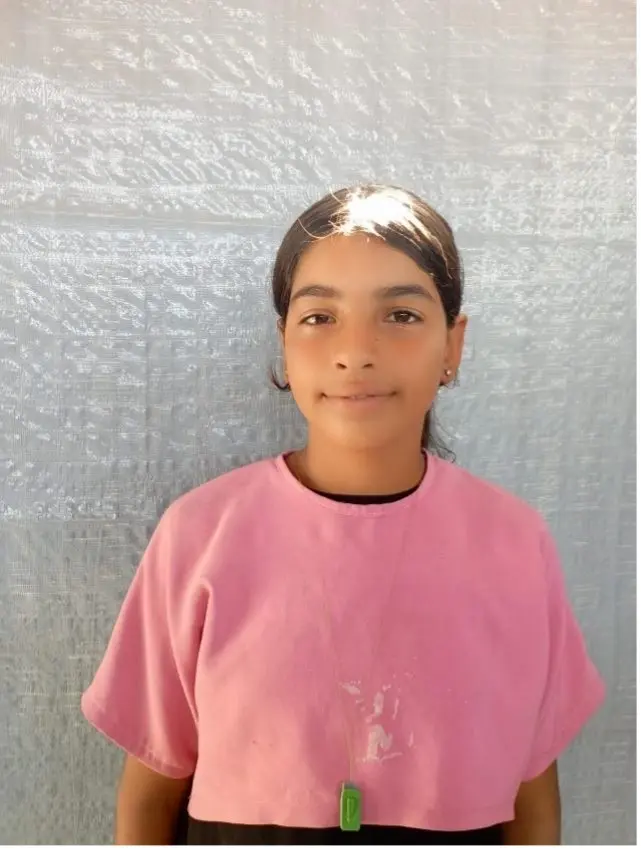
At just 12 years old, Amira has already confronted an unimaginable cascade of grief, displacement, and the total destruction of her family home. Yet, despite enduring circumstances that would test the resilience of any adult, she steadfastly continues her education and clings to a singular, resolute dream: growing up to become a nurse.
Amira’s world shifted fundamentally when she was only nine years old and lost her father to cancer. In her memories, he remains a profound source of love, safety, and unwavering strength—a foundational pillar of her early childhood. His passing altered the trajectory of her young life, introducing a deep sense of sorrow before she had even entered her teens. Then, when the devastating conflict in Gaza erupted, Amira and her grieving family were plunged into yet another profound chapter of loss, upheaval, and unrelenting fear.
Forced to Leave Their Home
Before the escalation of the conflict, Amira lived a relatively stable life alongside her mother, Manal, and her siblings in the Al-Salam neighbourhood of Rafah. Like countless other families caught in the widening spiral of the war, they were ultimately forced to flee their neighborhood as danger drew near, leaving behind the familiar comforts and possessions of their daily lives. When they packed up to leave, they could only carry a bare minimum: a few sets of clothes, some bedding, and basic kitchen utensils.
At the time, they held onto the fragile hope that their displacement would be temporary, believing they would soon be able to return to their doorstep. Instead, that hope was shattered when they learned their house had been completely destroyed. With no home to return to and no permanent sanctuary available, the family remained displaced, eventually establishing a makeshift tent to shelter themselves.
Life inside the tent presented an extraordinary daily struggle. The structure offered virtually no protection against the punishing extremes of the regional climate. During the searing heat of summer, the tent trapped the hot air, turning into an uncomfortable furnace. In contrast, the winter months brought bitter cold, biting winds, and torrential rains. Rainwater routinely leaked through the fabric, while the surrounding earth frequently dissolved into thick, impassable mud, making basic movement difficult and uncomfortable.
Beyond the physical discomfort of their shelter, securing the most fundamental necessities of daily survival became an exhausting ordeal. The family frequently struggled to access clean water and adequate food, often spending hours waiting in long lines to collect water from passing distribution trucks. When they could no longer afford basic food items independently, they were forced to rely entirely on community kitchens for their meals, illustrating the deeply precarious nature of their day-to-day existence.
Losing Everything Again
Just as the family was beginning to adjust to the grueling realities of tent life, disaster struck once more. They suffered another major, demoralizing blow when their tent accidentally caught fire, completely engulfing the structure and everything inside it.
The fire reduced their few remaining possessions to ash. Their last sets of clothing, essential cooking equipment, and any remaining personal belongings were entirely destroyed in the blaze.
"Everything we owned was turned to ashes," Manal shares, describing the sheer devastation of watching their meager safety net vanish in moments. The incident left the family once again stripped of the most basic items required for daily life, amplifying their vulnerability as they faced an uncertain future without adequate supplies.
In the aftermath of the fire, their immediate needs multiplied exponentially. They found themselves in desperate need of sturdier, more secure shelter materials and waterproof coverings to protect against future weather hazards. Furthermore, they required basic sanitation infrastructure, including a functional bathroom, alongside replacement cooking equipment, clothes, and shoes to help restore a fraction of normalcy to their daily routine.
Continuing to Study Despite Displacement
Despite the crushing weight of these continuous hardships, Amira has refused to let her circumstances derail her intellectual development. Operating under profoundly dire conditions, she continues her education online, working hard to keep pace with her peers as she navigates the seventh grade.
Without access to reliable electricity or modern conveniences like a washing machine, Amira also contributes significantly to the household labor, pitching in to wash clothes by hand to assist her mother. Amid these grueling daily responsibilities, she nurtures a bright vision for her future, holding tightly to the dream of studying nursing so she can one day help others in need.
Outside of her academic pursuits, Amira harbors a love for drawing, though the ongoing crisis means she is currently deprived of the basic materials and art supplies she needs to practice and develop her creative skills. Her most pressing personal requirements remain basic winter clothing, proper undergarments, and shoes to keep her warm and protected as the seasons shift.
Supporting Orphaned Children in Gaza
The structural challenges facing Amira and her family reflect a wider, systemic humanitarian crisis affecting thousands of minors across the region who have lost parents, homes, and any foundational sense of security. To address these profound vulnerabilities, organizations like Islamic Relief have worked on the ground to provide targeted, consistent aid.
Islamic Relief has a long-standing history of supporting orphaned children in Gaza, having operated its dedicated Orphan Sponsorship Programme since 1999. The initiative functions through a one-to-one sponsorship model, directly matching individual donors with a child in need. Through this connection, the child’s guardian receives a regular monthly financial payment, providing a vital economic cushion.
In Gaza, the flexibility of this program is crucial: families are empowered to allocate the financial support toward the specific needs they consider most urgent at any given moment, whether that includes purchasing food, securing seasonal clothing, covering healthcare expenses, or funding education.
In response to the escalating humanitarian emergencies of the current crisis, Islamic Relief has significantly expanded the scale and reach of the sponsorship programme. Today, more than 25,000 children across Gaza are receiving regular sponsorship support, though an overwhelming backlog of over 5,000 children remains on the waiting list, highlighting the sheer scale of the ongoing need.
Where logistical conditions and access allow, sponsored families also receive supplementary seasonal assistance. This broader support package often includes specialized food parcels distributed during Ramadan and Qurbani, celebratory Eid gifts for the children, and essential winter items designed to help families withstand the harshest months of the year.
Holding on to Hope
Amira’s journey encapsulates the stark, difficult reality confronting a generation of children in Gaza who have experienced profound personal loss and displacement. Yet, remarkably, her story is not defined solely by hardship, but by her enduring refusal to abandon her education and her forward-looking mindset.
Her aspirations remain grounded and deeply human: she hopes to finish her schooling, train to become a nurse, and ultimately live in a safe, stable environment surrounded by her family. Through targeted humanitarian interventions like Islamic Relief’s Orphan Sponsorship Programme, individuals around the world have the opportunity to offer regular, meaningful support to vulnerable orphaned children and their families in Gaza, helping to preserve their futures amidst ongoing uncertainty.