JIGJIGA — When a parent dies, the shockwave through a household reaches far beyond the immediate grief of the family left behind. For widowed mothers and elderly grandparents who suddenly find themselves solely responsible for caring for orphaned children, the loss of a primary breadwinner often acts as a devastating catalyst, pushing already vulnerable families deeper into cycles of entrenched poverty.
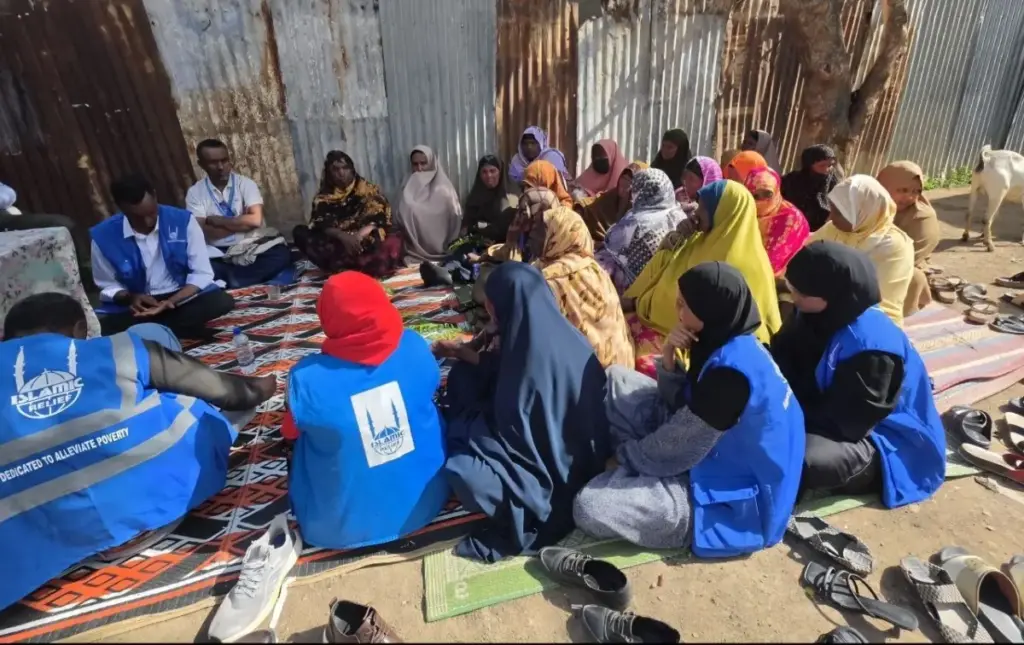
To witness how humanitarian interventions are shifting the narrative from crisis management to long-term stability, two members of Islamic Relief Worldwide’s Global Monitoring, Evaluation, Accountability, and Learning (MEAL) team—Claire Bedwell-Thomas and Osob Osman—journeyed to the Somali Region of Ethiopia in May. Their mission was to evaluate recent and ongoing community projects designed to support widowed mothers as they work to boost household incomes, secure sustainable livelihoods, and build resilient futures for their children.
Islamic Relief’s long-standing Orphan Sponsorship Programme (OSP) has served as a vital lifeline across the region, helping families cover essential day-to-day needs such as nutritious food, appropriate clothing, and school supplies. However, during their recent field visits to communities in Jigjiga, the MEAL team observed a critical evolution in how aid is delivered. They witnessed firsthand how pairing traditional orphan sponsorship with Women’s Economic Empowerment initiatives creates a powerful catalyst, helping vulnerable caregivers transition from merely surviving day-to-day to actively building long-term security, financial independence, and new opportunities.
A Foundation for Children’s Futures
Across every family visited during the evaluation trip, a singular, resounding message emerged from caregivers: sponsorship is keeping children in school and providing households with essential breathing space during periods of immense hardship. Many caregivers shared that education remains their absolute highest priority. Even amid significant economic challenges, families consistently prioritize investing in their children’s learning, viewing education as the ultimate pathway out of poverty.
At the same time, caregivers spoke candidly about the harsh realities of rising living costs and inflation. While sponsorship funding remains an indispensable foundation, families frequently require complementary opportunities to strengthen their independent earning power and bolster their overall household resilience. This is precisely where the Women’s Economic Empowerment project steps in to bridge the gap, transforming temporary relief into lasting self-sufficiency.
Turning Support into Long-Term Assets
One of the most striking and inspiring examples encountered by the MEAL team during their time in Jigjiga was Nimco, a resilient widow currently raising seven children. Following the untimely death of her husband, Nimco and her family were confronted with unimaginable hardship. There were painful periods when the household went completely without food, and Nimco struggled daily to find ways to provide for her children’s most basic needs.
When the family was accepted into the sponsorship programme, the regular financial assistance provided an essential lifeline. Yet, Nimco possessed a clear vision for her family’s future that extended far beyond immediate relief. Recognizing that local inflation would inevitably erode the long-term purchasing power of standard cash savings, she made the strategic decision to invest her resources into physical, enduring assets.
By carefully combining her regular sponsorship funds, occasional donor gifts, income generated from small livelihood activities, and targeted assistance from the women’s empowerment project, Nimco gradually accumulated essential building materials. Over time, through sheer determination and prudent financial management, she successfully constructed a brand-new house.
Nimco’s strategic planning does not stop with the completion of her new home. Once minor renovations to her original dwelling are finalized, she plans to rent out the newly constructed property. This enterprise will generate a reliable, sustainable source of independent income, ensuring ongoing financial security for her family in the years to come.
Nimco’s journey powerfully illustrates what becomes possible when immediate humanitarian support is thoughtfully paired with opportunities for economic empowerment. As she articulated to the visiting team, sponsorship helps families survive the immediate aftermath of a crisis, while livelihood support creates the vital opportunities needed to fundamentally transform their life circumstances.
More Than Income
While increasing household income is an obvious objective of economic programming, the women participating in the Jigjiga initiative spoke with equal passion about something far less tangible, yet equally transformative: confidence.
Before joining the project, many of these women operated small informal businesses in isolation, possessing little access to structured guidance, professional training, or peer support. Through the establishment of self-help groups and cooperative networks facilitated by the project, participants have developed robust support systems that allow them to share lived experiences, discuss daily business challenges, and learn collaboratively from one another.
One participant summarized the profound impact of this collective approach with a striking metaphor: “Before I was just using one brain. Now there are 20 brains.”
These cooperative groups meet on a regular schedule to pool their savings, review financial progress, discuss the operational health of their respective micro-enterprises, and hold one another mutually accountable. Women enthusiastically described gaining practical knowledge across a variety of crucial disciplines, including financial management, basic leadership, business planning, and household decision-making. Beyond the financial acumen, participants repeatedly highlighted the deep friendships and enduring solidarity that have naturally blossomed within these groups.
What initially started as structured project activities has organically evolved into powerful support networks where women actively encourage one another, troubleshoot problems collaboratively, and celebrate each other’s professional and personal successes.
Building a Pathway Out of Poverty
During a focus group discussion held with one of the local women’s cooperatives, participants repeatedly returned to the central theme that the project had fundamentally expanded their horizons. They described receiving extensive training and mentorship, speaking with immense pride about their ability to apply new business skills directly to their daily lives. Many women demonstrated a high level of financial literacy, confidently explaining how they calculate profit margins, deduct operating expenses, and manage household savings—clear proof that acquired knowledge is already translating into practical, real-world results.
Perhaps the most resonant reflection occurred when the visiting team asked the women to evaluate the importance of the livelihood component relative to orphan sponsorship alone.
Refusing to reduce their progress merely to monetary terms, the women spoke eloquently about knowledge, confidence, and opportunity. Summarizing the collective sentiment of the group, they explained simply and powerfully: “Our brains are widened.”
Looking Ahead
The stories documented by the MEAL team in Jigjiga serve as a compelling reminder that complex social challenges like poverty cannot be effectively resolved through a single, isolated intervention.
Orphan sponsorship provides a critical, non-negotiable foundation, ensuring that children can remain enrolled in school and that struggling families can consistently meet their immediate, daily survival needs. Economic empowerment builds directly upon that foundation by equipping caregivers with the essential skills, self-confidence, professional networks, and economic opportunities required to drive lasting, generational change.
Together, these integrated approaches empower families to do far more than simply cope with hardship. They enable widows, grandparents, and other vulnerable caregivers to establish viable businesses, accumulate long-term assets, increase their economic resilience, and invest securely in brighter futures for the children in their care.
As Bedwell-Thomas and Osman prepared to leave Jigjiga, one overarching conclusion was unmistakable: these women are not passively waiting for circumstances to improve. Provided with the right support, resources, and collaborative networks, they are actively creating change with their own hands.
Islamic Relief’s Orphan Sponsorship Programme continues to provide critical support to tens of thousands of vulnerable children and their families worldwide, bridging the gap between immediate relief and long-term empowerment.