By Midhat Samra
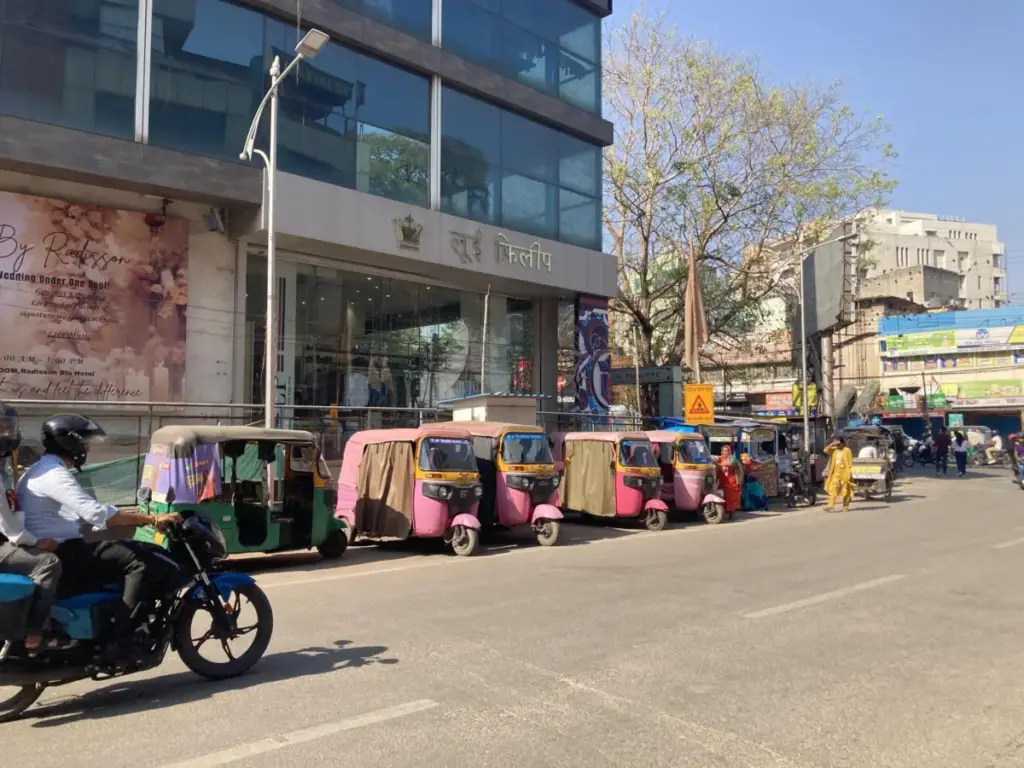
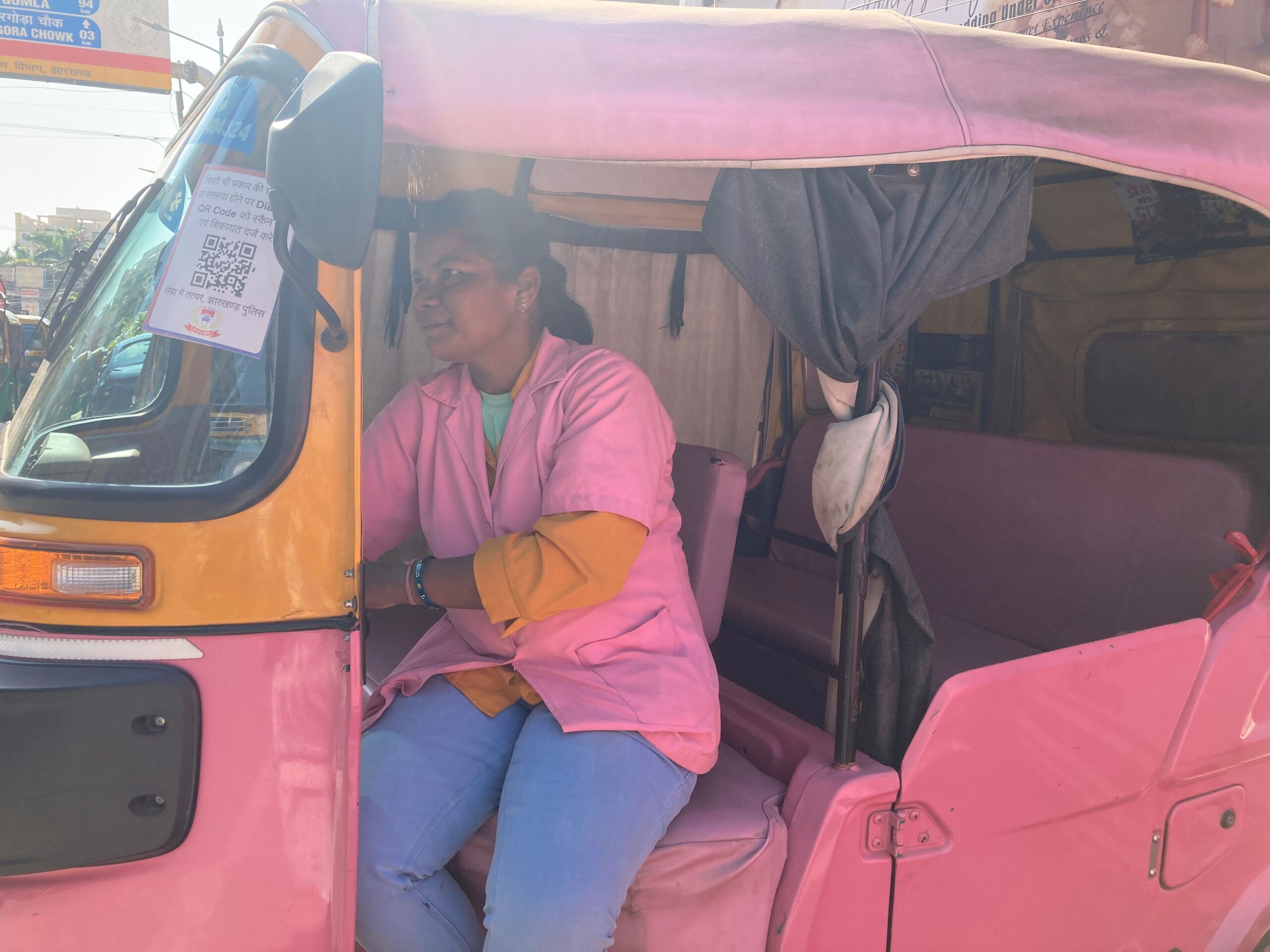
Ranchi: Suman Devi watched closely as I raised my camera to photograph her pink auto-rickshaw. Before I could lower the lens, she offered a perspective that cuts straight to the heart of daily urban reality in Jharkhand’s capital. People come here all the time to click pictures, she remarked, because the bright, vibrant color fascinates them. Yet, very few ever bother to understand the gritty, exhausting struggles of the women who actually sit behind the steering wheel.
Launched with much fanfare in 2013 in the wake of the nationwide outrage following the Nirbhaya case, the pink auto scheme was envisioned as a beacon of hope for women’s safety and empowerment in Jharkhand. The initiative was designed to tackle escalating safety concerns while simultaneously offering financial independence and employment to women. To ensure passenger security, the vehicles were outfitted with modern technological interventions, including panic buttons and Global Positioning System (GPS) tracking.

The initial rollout promised two hundred specialized autos across the city. However, when only a fraction of women initially signed up for the program, authorities pivoted by appointing men as drivers to fill the quotas. Today, twelve years later, the landscape has dramatically contracted. Ranchi is left with a mere forty pink autos on the road, and the systemic situation for the women driving them has barely evolved from its infancy.
Throughout the city, the drivers report a profound absence of basic infrastructural facilities. Their designated stand is nothing more than an open, unpaved patch of land running alongside a busy road, plagued by accumulated litter and entirely devoid of natural shade. There is no protective shelter, no overhead lighting, and not even a simple bench to sit on during long breaks between fares. To compound matters, whenever a VIP motorcade passes through the area, these women are routinely pushed out and ordered to relocate on short notice. Meanwhile, male auto-rickshaw drivers enjoy the luxury of proper, designated lanes and established stands.
“We sit here exposed to the blazing sun and pouring rain,” said Reena, capturing the daily misery of their working conditions.
Yet, from the perspective of daily commuters, the service remains a vital lifeline. Kiran Tirkey, a young college student navigating the city, expressed a clear preference for traveling exclusively with women drivers, particularly after dark. She noted that she feels entirely at ease when surrounded solely by women, adding that she harbors a deep aversion to being trapped in a closed space with unknown men. The lingering fear of being touched inappropriately or of an auto taking an unauthorized, dangerous route remains a very real part of urban commuting. Her parents, she shared, experience immense relief whenever she manages to secure a ride with a woman driver.
Official figures underscore the urgency of these safety concerns, with police records revealing that twenty-two rape cases were reported in Ranchi in March 2025 alone, illustrating just how precarious the safety environment has become for women in the city.
Echoing these sentiments, frequent commuter Shabana Perveen stated that she would always choose to share an auto with women because it provides a baseline of comfort that she simply does not find elsewhere.
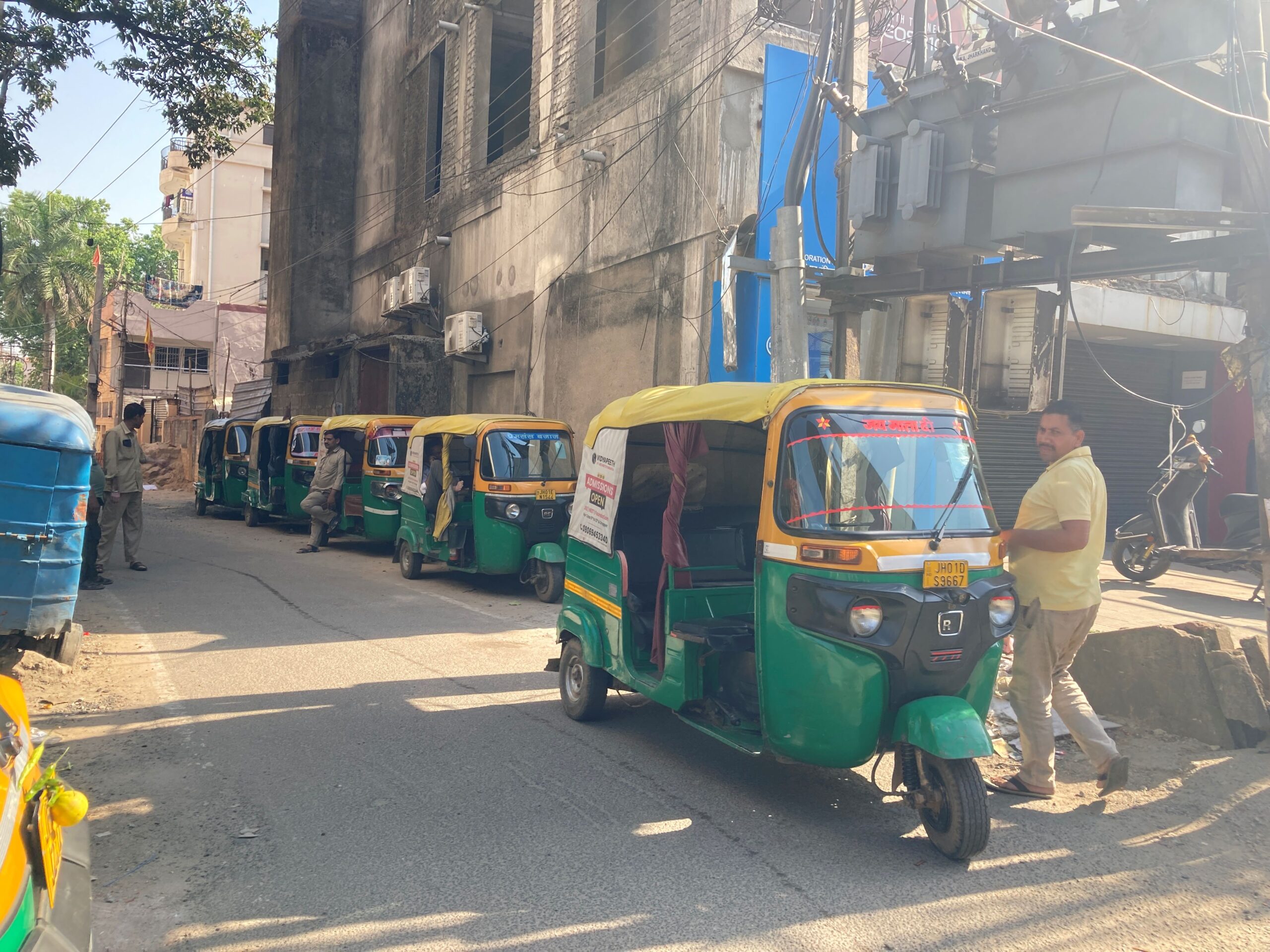
However, while commuters find refuge and peace of mind inside these vehicles, the women behind the wheel face a relentless barrage of harassment from male counterparts on the road. Shobha Kindo, a thirty-five-year-old driver, described the compounding pressures of her daily existence. Their income has steadily plummeted, making it increasingly difficult to sustain a household. Men frequently intercept and take away potential customers. At work, these drivers must constantly contend with hostile male competitors, while at home, they face the burden of dealing with unemployed and frequently intoxicated husbands. Furthermore, Shobha pointed out a complex social friction: some women commuters actively choose male-driven autos out of a sense of underlying jealousy that female drivers are out earning a living independently.
Despite these hurdles, resilience runs deep among the drivers. Suman Devi noted that intimidation is an everyday occurrence, but one she has learned to shrug off. She is not afraid of the men, having spent a decade dealing with their persistent hostility. She understands that while these men attempt to make female drivers feel small, their actions stem from a deeper fear that women will successfully claim a share of their livelihoods. As a widow who raised her children completely on her own, Suman knows intimately how to stand up to bullies.
For the drivers, perhaps the most degrading daily hardship is the complete lack of accessible sanitation facilities. Reena pointed out that it has been twelve years since the scheme’s inception, yet the government has failed to construct a single functional toilet for them. Left with virtually no alternatives, the women are frequently forced to use nearby bushes out of sheer desperation. Although a public washroom was ostensibly built for the area, it remains almost permanently locked, having reportedly been opened only on the single day it was officially inaugurated.
Dinesh Soni, president of the Jharkhand Pradesh CNG Auto Chalak Association, confirmed that the union has repeatedly written to municipal and state authorities demanding basic infrastructure. They have persistently raised the demand for a clean, working toilet, but have never received any substantive response. In his view, the government simply refuses to listen, leaving them to wonder why they are forced to pay toll taxes when they receive zero civic return. The union has even appealed directly to the chief minister’s office, yet those letters have likewise gone unanswered.
Unlike in states like Tamil Nadu, where women auto drivers are organized and protected under structured cooperative unions, the women in Ranchi operate entirely on their own. Gudia, who has spent more than a decade driving an auto in the city, explained that they do not work under any formal union umbrella. They purchased their own vehicles independently and navigate the challenges of the streets single-handedly. Had they been part of an active union, she noted, they would have had a collective platform to voice their demands. Instead, they have lodged complaints with reporters, police officers, and government officials, only to find that nothing ever changes. She added that no local non-governmental organizations have stepped forward to champion their cause, leaving most of the women largely unaware of their legal rights or formal grievance redressal platforms.
Recalling her journey into the profession, Gudia shared that her husband initially hesitated to let her work, but eventually threw his support behind her after she insisted on achieving self-sufficiency. Today, she takes immense pride in being able to pay for her daughter’s education at an English-medium boarding school. While she misses her child every single minute of the day, she remains fiercely committed to securing a better trajectory for her. “I walked so that my daughter could run,” she reflected.
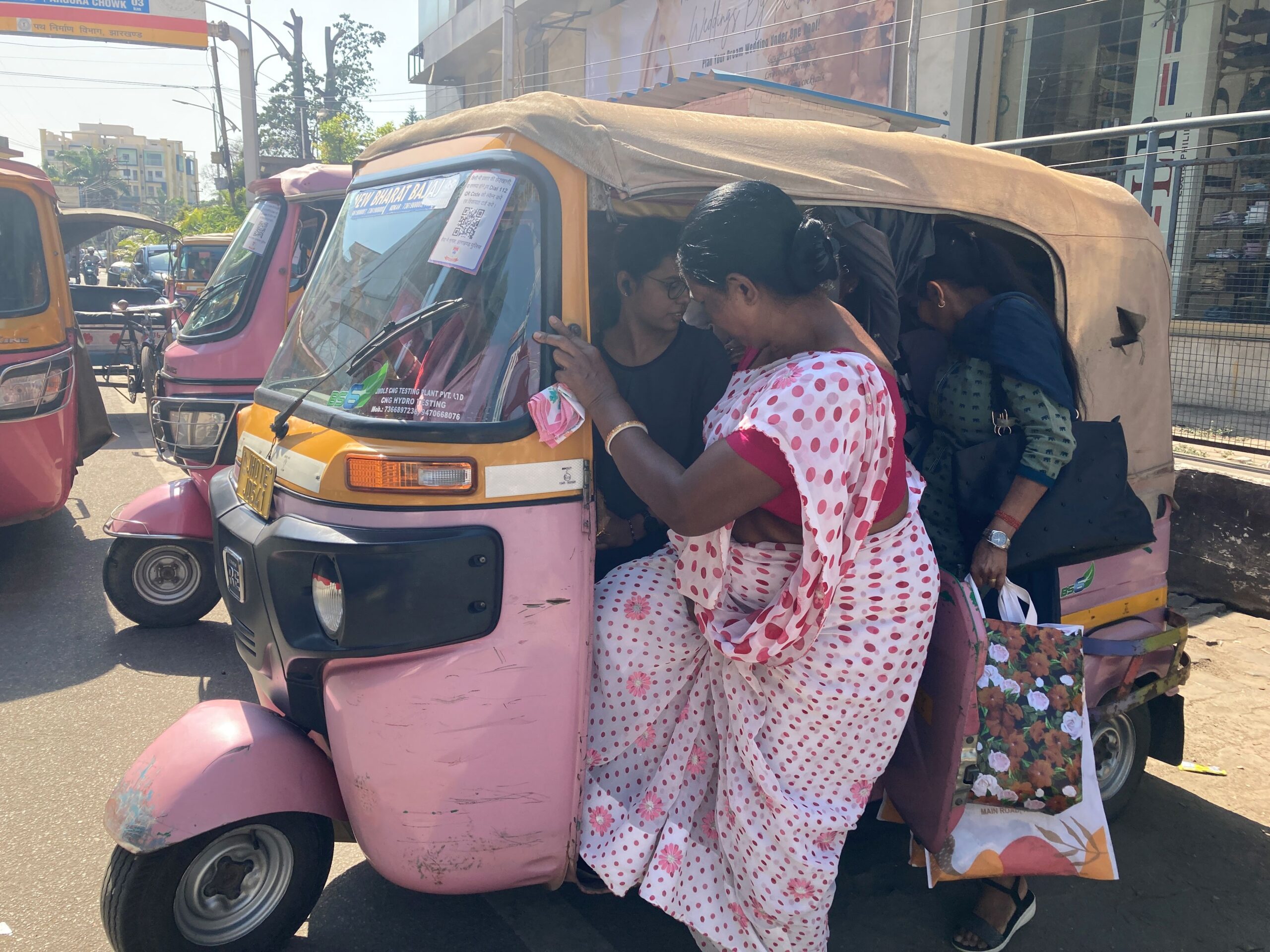
Many of her peers share a similar narrative of grit, having entered the profession not out of luxury, but out of survival—emerging from abusive domestic relationships, dead-end low-paying jobs, or the sheer imperative to feed their families.
Even so, hope refuses to dim among the drivers. When asked what changes they would demand if given a seat at the table, their list is remarkably grounded: permanent auto stands, clean and accessible washrooms, legal protection from the ongoing harassment inflicted by male drivers, and official recognition or financial backing from the government.
As Reena firmly stated, they are not looking for handouts or special favors. They simply want the basic amenities of labor: a proper space to park, and an open, functioning public washroom.