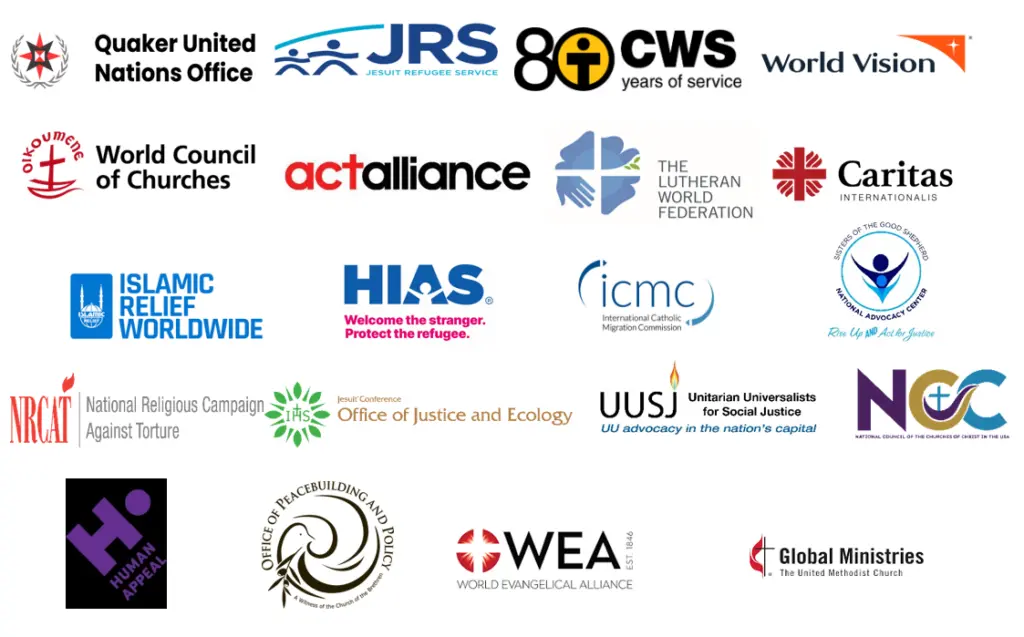
New York — As world leaders gather in New York for the High-Level Week of the United Nations General Assembly, a coalition of prominent faith-based organizations, led by Islamic Relief alongside 20 international partners, has issued a powerful and urgent call to governments worldwide. The alliance is demanding that nations fiercely protect the fundamental rights of displaced people and staunchly uphold the Refugee Convention as it marks its significant 75th anniversary year.
Against a backdrop of escalating geopolitical tensions, widespread human displacement, and rising global military expenditures, the coalition’s appeal serves as a moral and legal reminder of the international community’s obligations to the world’s most vulnerable populations. Representatives from these faith-based groups argue that current global responses to the refugee crisis are falling woefully short of both legal standards and foundational humanitarian ethics.
A Deep Concern Over Ongoing Human Rights Violations
Speaking on behalf of the coalition, humanitarian leaders voiced profound alarm regarding the continuous and systemic human rights violations inflicted upon refugees, asylum seekers, and other forcibly displaced individuals around the globe. According to the organizations, people who are forced to flee their homes due to war, violence, and persecution routinely encounter insurmountable barriers when attempting to access safety and basic protection.
In many regions, individuals are systematically denied their fundamental right to seek asylum, are subjected to unlawful refoulement—the forced return of refugees to countries where they face torture or persecution—and find themselves facing arbitrary detention. Furthermore, displaced populations frequently experience harrowing conditions that include forced family separation, extreme exploitation, and physical abuse.
The coalition highlighted that these humanitarian crises are being exacerbated by broader shifts in global spending and security priorities. The growing global trend toward militarization and escalating military budgets is failing to make the world a safer or more peaceful place. Instead, these massive financial resources are being diverted away from crucial humanitarian efforts, human rights protection, the prevention of displacement, and the funding of durable, long-term solutions for those who have been forced to abandon their homelands.
Universal Human Rights and the Foundations of Global Peace
Emphasizing the universality of human rights, the faith-based organizations stressed that whether individuals are displaced across international borders or internally within their own countries—and whether they have been officially recognized as refugees or are still actively seeking protection—every human being possesses inherent rights simply by virtue of being human.
These human rights are fundamentally inalienable and grounded securely in inherent human dignity. They do not depend upon nationality, legal standing, official documentation, or where a person happens to find themselves at any given moment.
This perspective is deeply embedded in the founding principles of the United Nations. The UN Charter explicitly recognizes that respect for human rights is essential to maintaining international peace and security. Human rights do more than merely protect isolated individuals from harm; they actively create the necessary socio-political conditions for peaceful societies and foster effective international cooperation.
Refugee protection, which is firmly grounded in international law and sustained through principled multilateral action, safeguards the rights of those compelled to flee violence and persecution while simultaneously promoting a framework of shared responsibility among sovereign States.
Shared Ethical Foundations Across Cultures and Religions
The international refugee protection regime, which includes the vital 1951 Refugee Convention alongside broader frameworks of international human rights law, rests upon principles that can be traced far back through human history. The coalition pointed out that across major world cultures and religious traditions—spanning Hinduism, Judaism, Buddhism, Islam, and Christianity, as well as ancient philosophical traditions found in Babylon, China, India, Rome, Classical Greece, and beyond—there exists a remarkable convergence of shared ethical principles.
These historical traditions consistently dictate how human beings ought to treat one another, placing a particular emphasis on the duty of care toward those who are vulnerable, displaced, or actively seeking refuge. These enduring values of human compassion, hospitality, solidarity, and human dignity ultimately found formal expression in contemporary human rights treaties and international refugee law.
Consequently, the coalition argues that rejecting the rights of refugees and asylum seekers amounts to a wholesale rejection not only of the international legal framework meticulously established in the painful aftermath of devastating global conflicts, but also of our shared moral foundations and common humanity.
Faith-based organizations, which work directly on the front lines and accompany displaced communities every single day, bear witness to the devastating human toll of these policy failures. They warn that weakening protection systems and systematically undermining human rights inevitably lead to greater human suffering, deepening regional insecurity, and tragic loss of life.
A 75th Anniversary Call to Action
Marking the 75th anniversary year of the Refugee Convention, the coalition is issuing a broad mobilization appeal. They are calling upon all faith-based organizations worldwide to join forces with them in robustly defending the Refugee Convention and its vital protections. Furthermore, they are urging all States to reaffirm their unwavering commitment to the Refugee Convention and other core international human rights instruments.
Governments must ensure that human dignity, global solidarity, active protection, and equitable responsibility-sharing remain firmly at the very center of all responses to forced displacement. Only through such a collective commitment can the international community hope to uphold the rights of refugees and steer the world toward a more just, peaceful, and humane future.