
Last month, acclaimed filmmaker, director, and photographer Gabriel Moses took the stage at the V&A East Museum for a special installment of the institution’s ongoing series, A Life in the Work of Others. The event invites prominent artists to pull back the curtain on their creative processes, offering deep insight into the people, places, and formative experiences that continue to shape their celebrated portfolios. During the evening, Moses shared five of the most profound inspirations behind his trajectory, tracing a line from his mother’s vibrant flower-arranging habits and south London’s football culture to encounters with industry titans like Virgil Abloh.

For Moses, the foundation of his artistic sensibility was laid long before he ever picked up a professional camera. Growing up, his immediate environment was steeped in visual culture, largely driven by the women in his household. Because the family television was kept in his sister’s bedroom, Moses spent countless hours playing games in a space lined with torn-out pages from publications like Vogue and Dazed, surrounded by the varied design and fashion references his sister collected as part of her studies.
Meanwhile, his mother fostered an early, deep-seated appreciation for aesthetics, color, and storytelling. Describing his mother’s bold and often outrageous color choices as an early masterclass in visual impact, Moses noted that those daring palettes still influence how he approaches color in his own imagery today. Archival documentation was equally central to his upbringing. The household was constantly filled with family photo albums chronicling his grandparents’ and mother’s lives in Nigeria, as well as the childhoods of his siblings. Immersed in these visual histories from a young age, Moses developed an enduring fascination with the power of documenting everyday life.

That familial support extended far beyond artistic inspiration into his professional risks. When Moses decided to drop out of university following his first commercial film project with Nike, he faced a quiet, uncertain five-month stretch. Yet, his mother—who had built a life in London after arriving in the city at the age of 18 and witnessing countless people carve out their own paths—offered unwavering support. Trusting his drive and ambition, she simply let him work through the transition. Moses often encourages other young creators facing skepticism from their support systems to communicate openly, noting that even if it requires putting together a formal presentation to explain one’s vision, clarity and transparency are essential for building trust.
Growing up in south London provided an additional layer of inspiration, serving as a vibrant ecosystem where success in sport and entertainment felt uniquely tangible. Moses recalled regularly spotting footballers like Rio Ferdinand at the local petrol station, reminders that individuals from his neighborhood could reach the highest levels of the Premier League. Closer to home, a local figure named Andy Ansah became a neighborhood legend. Transitioning from professional football to choreography, Ansah worked closely with global icons like Ronaldinho and Ronaldo before turning his talents toward commercial production. By casting local neighborhood kids as extras in his advertisements, Ansah offered Moses and his peers an early, firsthand look at the commercial production world, proving that a background in sports could be leveraged into creative experimentation.

Despite these early brushes with media production, Moses initially harbored ambitions shared by many of his peers: he wanted to be a professional footballer. That trajectory shifted during his first year of university when his mother shared news of an illness. Driven by a sudden, urgent desire to make her proud, Moses began evaluating his alternative strengths. Recognizing that he had no inherent entitlement to a career in visual arts, he adopted a trial-and-error approach, testing his ideas to see what resonated.
Drawing inspiration from the high-energy Nike Joga Bonito commercials he watched as a child, Moses reached out to footballer Fikayo Tomori—then playing for Chelsea and now with AC Milan—with a proposal to document his personal journey. Over the course of six hours, Moses and his friends produced a short documentary and published it on YouTube. For an 18-year-old, the simple act of releasing a creative project into the world was a transformative milestone, even if he humorously describes the final product as a terrible film in hindsight.

That initial experiment was followed by a similar project with Joe Gomez, who grew up in Catford and supported one of Moses’s early endeavors after recognizing the young director’s determination. Shortly after releasing his second video, Nike approached Moses to direct a series of commercials for their new Tiempo football boot line. Stepping onto professional sets at just 18 years old, Moses masked his youth with unwavering professional confidence, pushing his creative visions forward. Drawing directly from his own demographic, he designed commercials centered on what he and his friends actually wanted to see on screen.
This fearless entry into the industry was underpinned by a mentality forged in sports. Moses frequently compares the creative industries to athletics, noting that just as a player cannot fake their way into the Premier League, a creator must ultimately rely on the strength of their output. In his view, consistently producing compelling work is the ultimate equalizer.
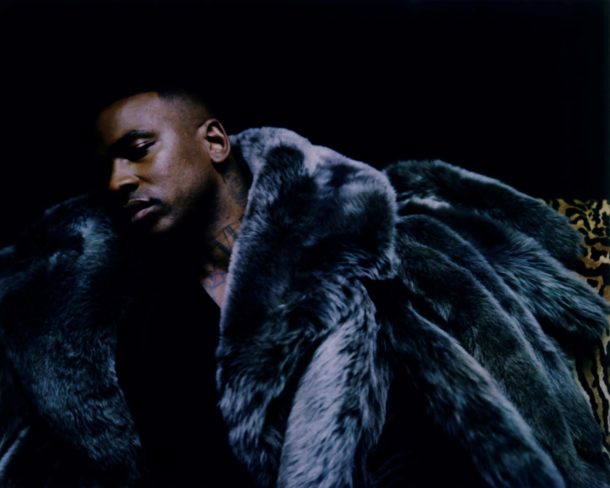
As his career gained momentum, Moses crossed paths with visionary designers and artists who further expanded his creative boundaries. Through photographer Fabien Montique, Moses was introduced to the late Virgil Abloh at the Off-White studio. Although Moses was initially unfamiliar with the broader scope of Abloh’s empire, he was well aware of his groundbreaking Nike collaboration. In the studio, Abloh afforded the young creator the space simply to exist, learn, and document fitting sessions, backstage moments, and runway shows featuring high-profile models like Bella Hadid.
What left the most lasting impression on Moses, however, was Abloh’s profound humility and accessibility. Despite managing a global luxury empire, Abloh would routinely respond to messages within the day, offering words of encouragement accompanied by simple rocket emojis. For a 19-year-old navigating the upper echelons of the fashion world, those small gestures acted as powerful catalysts, reinforcing the belief that creative boundaries were meant to be broken and that excellence could be achieved without pretense.

Today, Moses finds his primary inspiration not just in high fashion or elite sport, but in the creativity of everyday people. Whether observing internet culture, where ordinary individuals build massive followings through phone-shot skits and organic content, or spotting fresh talent for major commercial campaigns, Moses consistently seeks to inject authentic representations of everyday life into high-budget productions. When working with global brands, he frequently challenges traditional casting conventions, advocating for perspectives and faces that commercial entities might initially hesitate to embrace.
Reflecting on his early days working with agents, Moses recalled frequently turning down lucrative opportunities not out of arrogance, but out of a desire to protect his creative control. He often preferred working with halved budgets if it meant retaining the freedom to dictate the creative direction over securing traditional billboard placement. By treating his creative vision as standard practice rather than the exception, Moses aims to normalize artistic autonomy for the next generation of filmmakers and photographers.

Concluding his conversation at V&A East, Moses offered a final piece of advice to aspiring young creatives: authenticity is paramount. When an artist’s influences are genuine and rooted in their own lived experiences, the process of research, reference gathering, and artistic development becomes natural. Throughout his own journey, Moses made a habit of writing down a new concept every single day, viewing creative ideas as the ultimate form of currency. By consistently training the brain to recognize and capture personal preferences, creators can build a sustainable, authentic foundation that withstands the pressures of the modern creative industries.