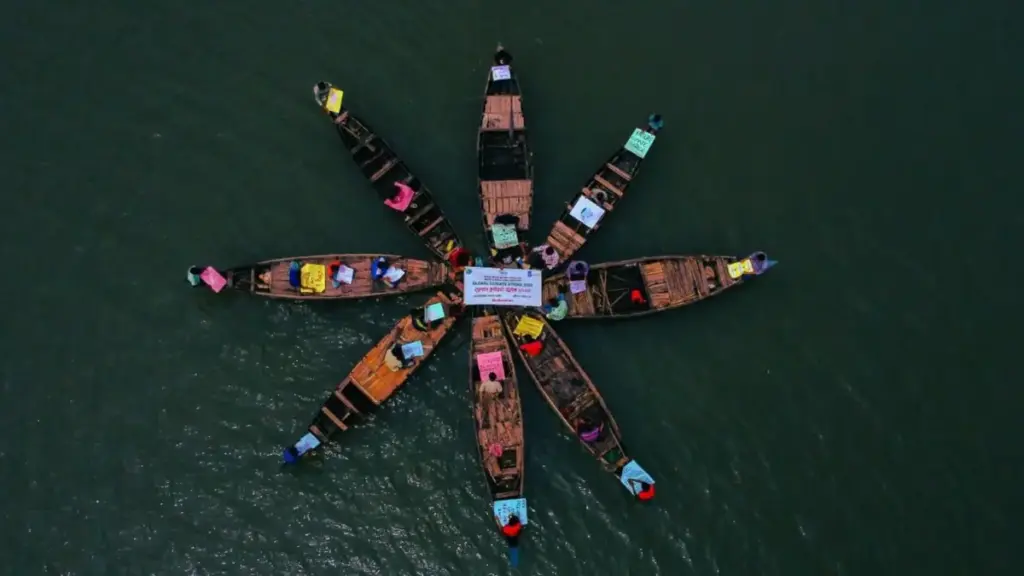
As world leaders and delegates gather in Türkiye for the annual global climate summit, COP31, international humanitarian organization Islamic Relief has issued an urgent warning that millions of people worldwide are already being pushed deeper into hunger and poverty. The driving force behind this escalating crisis is the El Niño climate phenomenon, which is currently unfolding as the strongest event of its kind in four decades, with some scientific studies projecting it to be the most severe in a thousand years.
The El Niño phenomenon occurs every few years when a vast expanse of the Pacific Ocean heats up more than usual. This significant rise in ocean temperature disrupts weather systems across the globe, triggering extreme droughts in some regions and devastating floods in others.
According to United Nations estimates, up to 50 million people globally could be plunged into acute hunger over the next six to nine months alone. This looming catastrophe is driven by widespread crop destruction and surging food prices. However, humanitarian teams on the ground from Islamic Relief report that the impact is not merely a future projection—vulnerable populations are already suffering the consequences today.
These severe impacts are expected to multiply exponentially over the coming months as the intensity of El Niño peaks, affecting dozens of countries across multiple continents. In response to the unfolding crisis, Islamic Relief is using the COP31 platform in Türkiye to demand immediate, decisive action to save lives and protect fragile livelihoods. Public health and humanitarian research consistently demonstrates that timely interventions to help communities prepare for and mitigate extreme weather events are not only far more effective at saving lives, but also significantly more cost-effective than providing emergency aid after a disaster has already peaked.
Jamie Williams, Senior Policy Advisor at Islamic Relief Worldwide, emphasized the urgent need to bridge the gap between political rhetoric and tangible action at the global summit.
"COP climate summits have always been full of talk, but action is needed more urgently than ever. The last decade has been the hottest on record," Williams said. "As extreme weather increases as a result, livelihoods and food security become more threatened for people already challenged by poverty, conflict, and displacement."
Williams highlighted the extraordinary scale and severity of the current climate disruption, noting its disproportionate impact on the world’s most vulnerable populations.
"The El Niño event we are currently witnessing is building up to be the largest in at least 1,000 years. For people in Asia and Africa, El Niño will bring either too little rain or too much rain. This can lead to droughts, floods, crop losses, water shortages, disease outbreaks, and rising food prices," Williams explained. "El Niño also brings increased heat, affecting agriculture and outside livelihoods, and people’s health, especially in cities. And it is the poorest people who are the most vulnerable."
Furthermore, Williams pointed out that this unprecedented weather phenomenon is compounding an existing global emergency. "The El Niño comes on top of the climate crisis. This is caused by pollution from fossil fuels which must be phased out as previous COPs have agreed, and rapidly. At the same time, promised funding from the rich countries must reach the most vulnerable and marginalised people so they can adapt to this new world."
To address the cascading threats posed by El Niño and long-term climate change, Islamic Relief is calling on governments and international bodies to substantially increase adaptation financing. Developing nations will require an estimated $310 billion to $365 billion a year for climate adaptation by 2035. Despite these staggering needs, international public adaptation finance has actually declined in recent years, currently accounting for less than 10% of the total resources required.
Compounding the funding shortfall is the structure in which financial assistance is delivered. The vast majority of current climate finance is provided in the form of loans rather than grants. This practice traps countries that are already suffering the worst impacts of the climate crisis in cycles of long-term debt. Islamic Relief is strongly urging that all new climate funding be distributed as grants and non-debt financing to prevent further economic destabilization.
The organization also stresses that financial resources must reach grassroots communities, with the decisions on how funds are utilized being made directly by local populations. Climate adaptation is proven to be most effective when it is locally led, because the individuals directly experiencing the impacts possess the most accurate understanding of their unique local conditions and immediate needs. Historically, marginalized groups—such as women, youth, people with disabilities, and displaced populations—have been sidelined in these processes, yet Islamic Relief maintains they must be placed at the very heart of decisions regarding climate adaptation.
Equity in the allocation of climate finance is another critical demand. Currently, the populations most at risk are receiving the least amount of support. In recent years, the most fragile states—those most vulnerable to escalating climate crises—received the equivalent of only $2 to $10 per person from major international climate funds. In stark contrast, more politically and economically stable countries received an average of $162 per person.
While the effects of El Niño are projected to touch every continent, the poorest communities across vast regions of Africa and Asia will bear the heaviest burden. In East Africa, Islamic Relief anticipates that alternating cycles of severe droughts and catastrophic floods will decimate crops and livelihoods. This creates a severe risk of surging acute malnutrition across the region, with Ethiopia, Somalia, and South Sudan facing the gravest threats. The African Development Bank estimates that the economic damage inflicted by El Niño across African nations will total between US$10 billion and US$20 billion.
Meanwhile, in Southeast Asia, prolonged drought and extreme heat are already damaging agriculture and sparking severe air pollution driven by massive, uncontrolled wildfires. The arrival of this severe El Niño phenomenon coincides with a time when social safety nets designed to protect vulnerable people worldwide have already been weakened by widespread international funding cuts.
Amid these mounting challenges, Islamic Relief is actively working on the ground to help vulnerable communities prepare for weather shocks. In Somalia, the organization is collaborating with local farmers to strengthen their resilience against climate breakdown by improving greenhouses, upgrading irrigation infrastructure, and facilitating community knowledge sharing to boost crop production. These agricultural initiatives also extend support to internally displaced people who have been forced to abandon their native lands due to environmental and conflict pressures.
In Ethiopia, Islamic Relief is expanding essential water services to improve community nutrition and public health. In Indonesia, the organization is providing vulnerable families with targeted cash grants to help protect household food security against the economic shocks of rising food prices and failed harvests.
As world leaders continue discussions at COP31, the message from humanitarian organizations remains clear: without immediate financial commitments, structural debt relief, and locally led adaptation strategies, the combined pressures of El Niño and the broader climate crisis threaten to reverse decades of development progress and leave millions of lives hanging in the balance.