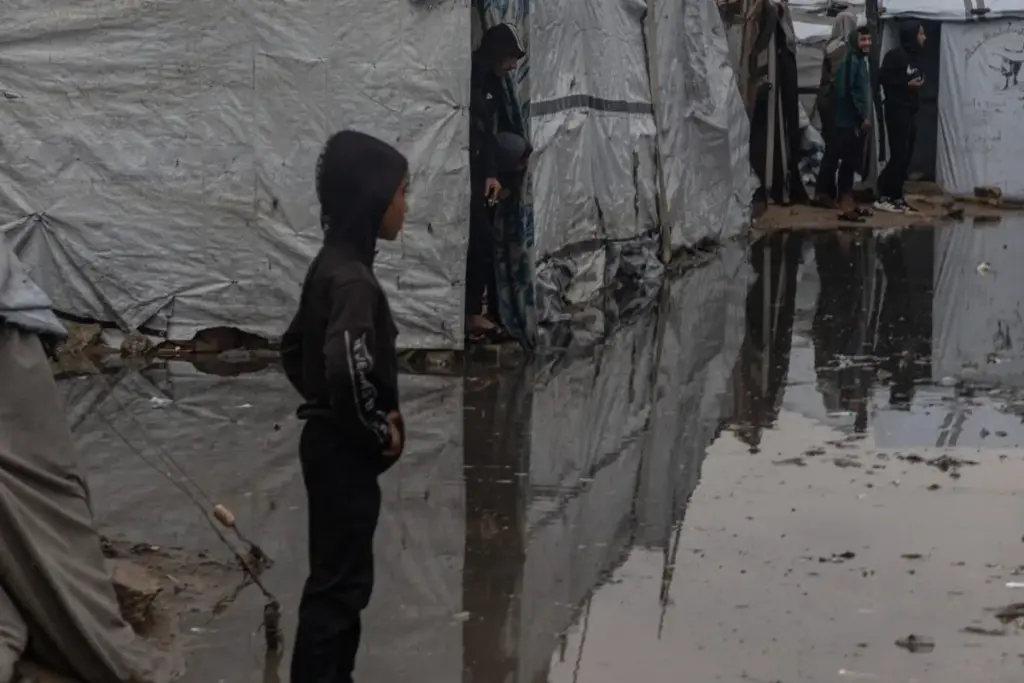
Here in Gaza, we no longer pray for the rain to come! We pray that it won’t destroy what is left!
This heart-wrenching declaration comes from an Islamic Relief aid worker in the Gaza Strip, where heavy winter rains have flooded numerous tent camps and makeshift shelters over the weekend. For months, families across the enclave have endured relentless military attacks, severe shortages of food, clean water, and medical supplies, and constant displacement. Yet, the arrival of winter has introduced an entirely new layer of misery and hardship, leaving hundreds of thousands of vulnerable people exposed to freezing temperatures, biting winds, and torrential downpours.
Islamic Relief aid worker Layla, whose name has been changed to protect her safety, describes the dire, unlivable conditions currently unfolding on the ground.
With winter on the doorstep in Gaza, people should ideally be welcoming the change in seasons. Traditionally, this is supposed to be a period of joy and comfort—the cozy weather that relieves a heavy heart. Hearing the gentle pattering of water on doors and windows, feeling stray droplets on your face, and experiencing a sense of quiet introspection are things that usually evoke a strange, comforting feeling.
"But here in Gaza, it is not like a normal winter season," Layla explains.
Instead of offering respite, the seasonal weather brings floods, tears, sunken tents, and deeper displacement. It does not bring comfort or joy; it brings raw fear. It is a terrifying ordeal defined by uncertainty: fear of the winter storms, fear of rising floodwaters, and panic over where to flee next. Families desperately try to salvage whatever fragments remain of their past lives and figure out how to protect their shivering children. Even their clothes are perpetually soaked through. The collective psychological weight of the crisis has stripped away any possibility of feeling happy about the arrival of winter or the rain.
In the past, residents enjoyed the rain, gathering with family and friends under a warm, secure roof. Now, those gatherings are impossible. Everyone is simply running to protect what little they can, desperately attempting to save their fragile shelters from being completely submerged by rising water.
Witnessing people endure such harsh and miserable conditions makes humanitarian workers’ hearts ache, as it appears that all of Gaza is effectively drowning. Residents feel they do not deserve to live in a cold, relentless nightmare like this.
Reflecting on the psychological toll, Layla shares a personal moment from the previous day. She had stepped out into the rain to visit a doctor, instinctively grabbing her phone with the initial intention of capturing the winter atmosphere and the falling rain. But as she looked around, she immediately closed her phone, unable to bear the sight of people frantically trying to save their flooded tents and waterlogged belongings. How strange, she thought, for her—someone who used to capture every single winter drop that fell from the sky—to be repelled by the rain.
For observers watching from afar, the heart might ache from viewing social media feeds and news outlets broadcasting footage of rubble and collapsing buildings. But for those living through the reality on the ground in Gaza, every stone that falls, every wall, every shelf, and every raindrop destroys whatever fragments remain of their souls. How could it not, when those shelves once held cherished memories, domestic warmth, and the physical pieces of who they used to be? This is not merely an isolated tragedy affecting a single household; it is a massive humanitarian catastrophe unfolding in real-time before the eyes of the world.
Recent assessments from United Nations agencies paint a grim picture of the scale of the emergency. Nearly 1.98 million people—representing approximately 94 percent of Gaza’s total population—are in urgent need of shelter. Among them, roughly 950,000 displaced Palestinians are currently residing in makeshift sites that face medium to high risks of severe flooding.
During just the first day of the recent rainstorm, local emergency reports confirmed that approximately 70,000 worn-out, flimsy tents sheltering tens of thousands of displaced families were inundated and flooded. Simultaneously, dozens of cracked walls and weakened roofs collapsed upon those desperately seeking temporary cover from the elements.
Behind every single one of those staggering statistics is a real family shivering in the mud, watching the relentless rain wash away the very last vestiges of their dignity and safety.
Yesterday’s rain did not wash away the collective pain of the population; it only made the existing rubble heavier and the environmental cold deeper.
People look up at the grey sky, no longer wishing for a cozy afternoon or a warm cup of coffee by a secure window. Instead, they simply wish for the storm clouds to pass gently, for the muddy ground to eventually dry, and for the day when rain in Gaza can become just rain once again—rather than yet another life-threatening storm they are forced to survive.
Despite these overwhelming obstacles, Islamic Relief staff and local partners in Gaza are working tirelessly to continue delivering humanitarian aid under extremely difficult and dangerous conditions. The aid workers themselves face the very same hardships as the communities they serve; they are frequently displaced, grieving losses of their own, and struggling to feed their own families. Every single day, the response teams are forced to adapt their operational plans and activities based on the latest security developments and the severe scarcity of goods available in local markets.
Despite the immense magnitude of the challenges, throughout the course of this protracted crisis, aid workers have consistently found ways to deliver vital assistance to those in desperate need.
The ongoing delivery of lifesaving aid relies heavily on daily adaptation to dangerous conditions, widespread displacement, profound personal loss, and severe supply shortages. Humanitarian organizations emphasize that public solidarity and generosity remain a vital lifeline for the population. Organizations continue to urge the international community to stand with the people of Gaza by supporting ongoing emergency relief appeals as the harsh winter weather deepens across the enclave.