By Aditya Sharma
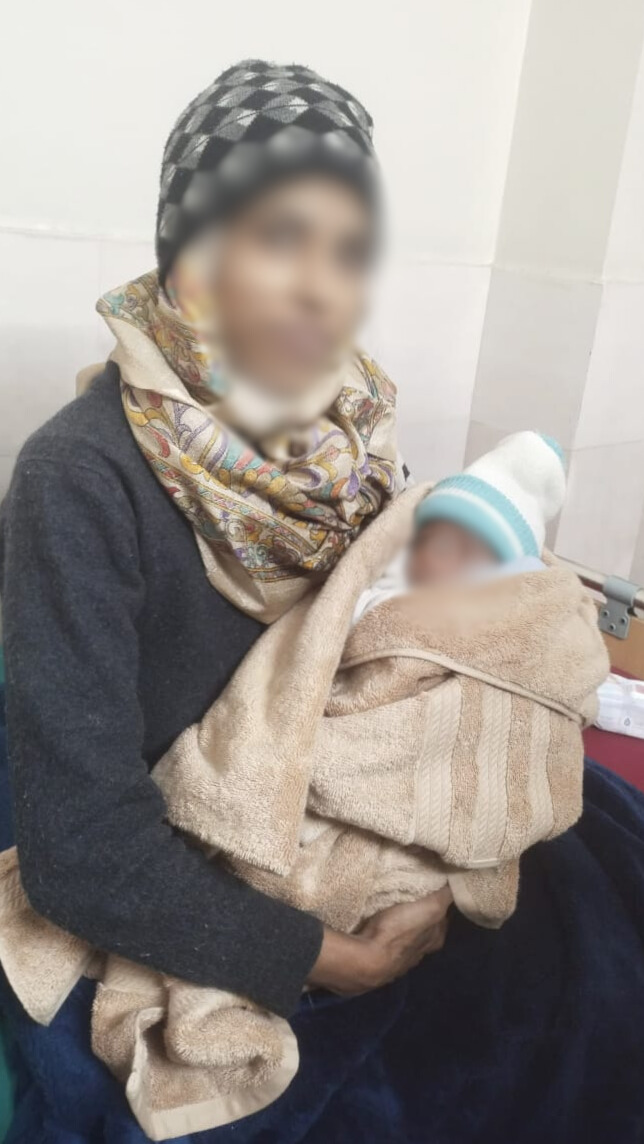
NEW DELHI: When 33-year-old Khushboo Jaiswal walked into a private hospital in Delhi, she was expecting a calm and natural childbirth filled with gentle pushes and the rhythmic, exhausting journey of natural labor. Instead, within a matter of hours, she found herself flat on her back under the blinding, clinical lights of an operating table, bracing herself for major abdominal surgery she had neither planned nor anticipated.
"I was admitted to a hospital in Burari, Central Delhi, when my water broke at home," Jaiswal recalled, reflecting on a life-altering afternoon. "The doctor said my labor was taking too long, and a normal delivery would not be possible. Therefore, they would conduct a Cesarean section. My family agreed. Before I knew it, I was in the operation theater."
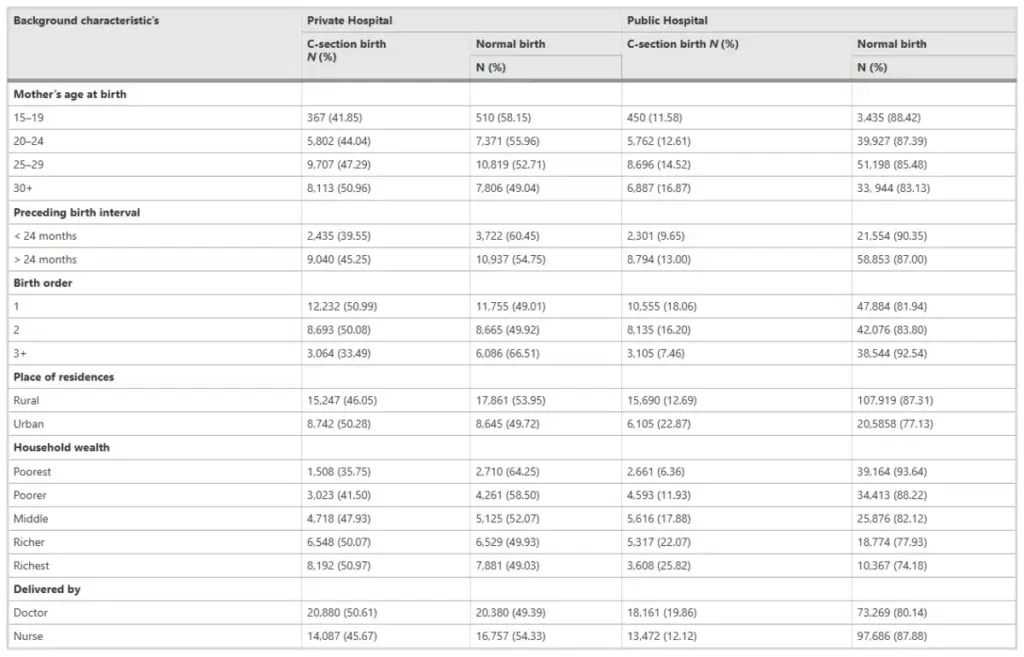
Her experience is far from an isolated medical anomaly; rather, it has become an increasingly common narrative for expectant mothers across India. According to the comprehensive data compiled in the National Family Health Survey-5 (NFHS-5, 2019–21), nearly half of all births occurring in private healthcare facilities—roughly 48 percent—happen through surgical interventions. By comparison, that number stands at 14.3 percent in government-run hospitals, a figure that already edges above the World Health Organization’s (WHO) internationally recognized guideline of 10 to 15 percent for medically necessary C-sections.
Jaiswal alleges that women walking through the doors of private clinics are frequently psychologically manipulated and persuaded toward surgery under the guise of medical urgency. "Nurses and doctors scare you in such a way that they would say something that would make you nervous and try to persuade you for a Caesarean since it is a quick 50-to-60-minute process and is expensive, whereas normal delivery takes four to six hours and is cheaper than a Caesarean," she alleged. "I feel they just want to make money, and so they prefer only Caesarean. Even one of my relatives went through the exact same situation."
This sentiment is echoed by seasoned medical professionals who have watched the landscape of Indian obstetrics transform over recent decades. Dr. Sadhana Kala, a senior obstetrician and gynecologist with years of clinical experience, notes that a significant portion of the crisis stems from systemic financial incentives embedded within private medicine.
"A large part of the problem stems from profit-driven incentives," Dr. Kala explained. "Hospitals and doctors often earn more from surgical deliveries than from normal births." She added that the evolution is also cultural: "There is also a shift in medical culture. Many obstetricians today prefer surgical interventions over waiting through prolonged labor."
Childbirth across the country is now profoundly influenced by a complex web of income, geography, and systemic access. India’s overall Caesarean birth rate has climbed steadily over the past decade. The latest data from NFHS-5 reveals that 22 percent of all births nationwide are now conducted via surgery, a notable jump from 17 percent just five years prior.
While the sharpest spike is concentrated in private institutions—where nearly one in every two babies is delivered surgically—government hospitals report significantly lower rates. Medical experts widely agree that C-sections remain an absolute lifesaver during complicated, high-risk pregnancies. However, comprehensive health data clearly indicates that a vast number of these surgeries are performed routinely, even when clinical indications do not warrant them.
The divide extends deeply into demographics. Approximately one in every three births in urban centers now happens through surgery, compared to roughly one in five in rural areas. Furthermore, data indicates that wealthier women are five times more likely to undergo a C-section than women from lower-income households. Education level also plays a definitive role, with women possessing higher levels of schooling experiencing more surgical births than those with minimal or no formal education.
Geographically, the pattern varies wildly across India’s diverse states. Southern states record some of the highest reliance on surgical delivery in the world, led by Telangana at 60.7 percent and Tamil Nadu at 44.9 percent. Conversely, states like Bihar at 9.7 percent and Nagaland at 5.7 percent report some of the lowest figures in the country. Once an entirely natural biological process, childbirth in India increasingly serves as a stark mirror reflecting class divisions, geographical disparities, and unequal access to healthcare.
Shabnam, a 29-year-old mother from a Delhi suburb, shared a chillingly similar ordeal. During her labor, she was informed by medical staff that her unborn baby’s heartbeat had begun to slow down, triggering an immediate panic.
"There was no real discussion, and I was really scared for my baby," Shabnam said. "I was taken straight into surgery. I was pressurized by nurses, or scared, I would say. It was a difficult situation for me."
Reflecting on the speed with which her consent was gathered, she added, "The doctor said my baby’s heartbeat was slowing. I did not know what questions to ask."
Dr. Sunita Tandulwadkar, president of the Federation of Obstetric and Gynecological Societies of India (FOGSI), argues that the nationwide rise in C-sections must be evaluated within a broader, multi-dimensional context.
"According to data from national health surveys and institutional reports, the overall rate has increased in both public and private sectors, although the proportion remains higher in private facilities," Dr. Tandulwadkar said. "It is important to recognize that this trend is multifactorial and reflects evolving clinical, demographic, and social realities rather than a single cause."
Among the primary drivers, Dr. Tandulwadkar pointed to the growing demographic of women who have previously undergone a C-section. For valid medical reasons and patient safety, these women frequently require repeat Cesareans for subsequent pregnancies. Additionally, she notes that patient expectations are shifting dramatically.
"Many women, especially in metropolitan areas, now prefer planned deliveries to avoid prolonged labor or emergency situations," she said. "Such preferences must be balanced with sound clinical judgment."
Her primary focus moving forward rests on strict medical justification and informed decision-making. "Every C-section must be based on evidence, with proper counseling and auditing," she explained. "The goal is safe motherhood, ensuring that every woman receives the right mode of delivery for her specific condition."

The Hidden Costs for Mothers and Babies
While surgical intervention saves countless lives when complications arise, unnecessary C-sections carry severe, long-term medical and emotional risks for both mother and child. Women undergoing major abdominal surgery face significantly longer recovery periods, higher rates of surgical-site infections, and dangerous complications in subsequent pregnancies, such as uterine rupture or placental abnormalities.
The fallout extends to newborns as well. A pivotal 2024 study published in BMC Pediatrics, which examined more than 200,000 Indian births, concluded that babies delivered through non-medically indicated C-sections faced a higher likelihood of suffering from malnutrition, stunting, and neonatal mortality compared to those born via vaginal delivery. The researchers underscored that unnecessary surgical births directly link to poorer child health outcomes and the widening chasm of nutritional inequality.
Public health specialists have long warned that the over-medicalization of childbirth compromises not only maternal autonomy but also the foundational health of the next generation. Dr. Kala detailed the physiological toll that unnecessary surgeries take on newborns.
"We are seeing babies born through surgery having more breathing difficulties immediately after birth, and in the long run, higher risks of obesity, allergies, asthma, and weakened immune development," Dr. Kala cautioned. "There are also occasional cases of accidental surgical cuts during delivery."
Dr. Kala emphasized that addressing the crisis requires sweeping systemic reform. "We must end financial incentives for C-sections and instead reward normal deliveries," she urged. "Educating mothers to trust the natural process, allowing labor to progress, and offering midwife-led care can all help. The goal should be safety, not speed or profit."
Policy and Practice
Regulatory oversight regarding the soaring rates of C-sections remains sparse and largely toothless. In 2018, the Madras High Court ordered the Union Health Ministry to investigate unnecessary Caesareans across Tamil Nadu following reports of anomalously high surgical rates. While advisories were subsequently issued to various stakeholders, no rigorous enforcement or mandatory auditing followed. Currently, private hospitals are under no legal obligation to publicly justify why a specific surgical intervention was performed.
As India continues its rapid trajectory of urbanization and the private healthcare sector expands into semi-urban and rural spaces, these surgical rates risk climbing even higher unless federal and state governments, hospital administrations, and local communities intervene collectively.
Childbirth, medical professionals maintain, must rest firmly on validated medical necessity, transparent informed consent, and profound respect for women’s bodily autonomy. For new mothers like Khushboo Jaiswal and Shabnam, that ideal remains the ultimate aspiration: to bring new life into the world free from manufactured fear or commercial pressure, and to ensure their voices are genuinely heard when it matters most.