By Sami Ahmad
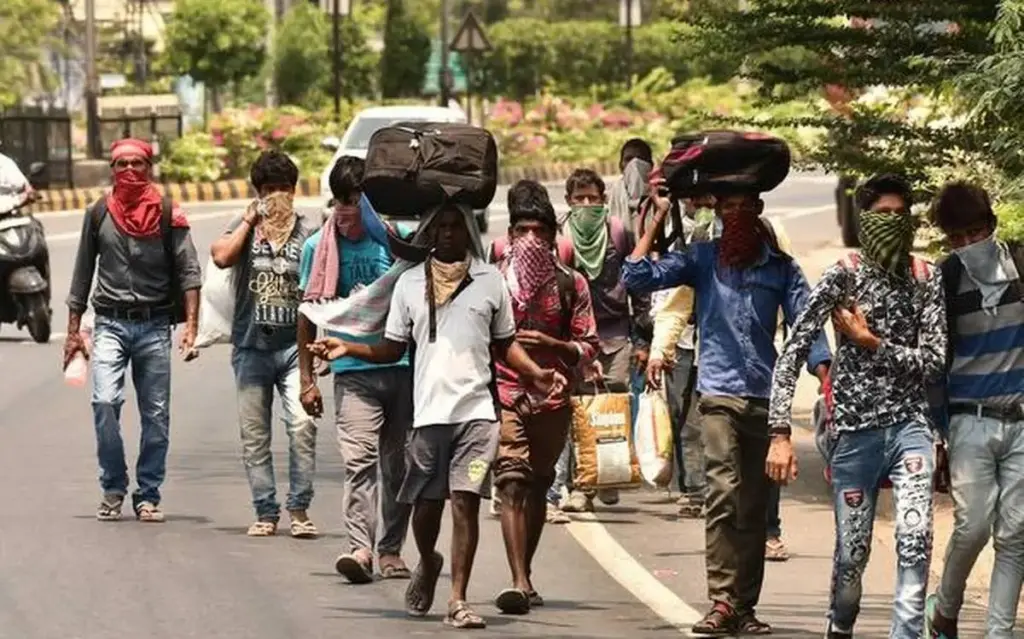
In Bihar, the long queues seen outside polling booths on November 6 and 11 were matched only by the lines that soon formed at railway stations across the state. As soon as voting concluded, thousands of people rushed to catch trains—the cheapest and most familiar route out of the state. These were not regular daily commuters. They were migrant workers, numbering in the lakhs, heading back to faraway workplaces after a brief festival pause that brought millions back to their native towns and villages.
Most of these travelers had returned home to celebrate Chhath, Bihar’s most cherished and widely observed festival. When the four-day celebration concluded on October 26, the familiar cycle of departure quickly resumed. For many families, the journey home, even if it lasts for only a few days, serves as an emotional anchor and a vital connection to their cultural roots. However, the inevitable return trip stands as a stark reminder that their long-term livelihoods lie elsewhere. Despite decades of political rhetoric, the promise of sustainable local employment remains a distant campaign slogan rather than a lived reality for the average Bihari household.
Official figures from the East Central Railway reveal the staggering scale of this post-festival and post-election departure. Between October 28 and 31 alone, more than twenty-two lakh people boarded trains from major transit hubs across the state, including Patna, Gaya, Bhagalpur, Katihar, Saharsa, Jaynagar, Madhubani, Sitamarhi, Darbhanga, Samastipur, Muzaffarpur, Begusarai, Motihari, Bettiah, Raxaul, Chhapra, and Siwan. During this peak period, an average of more than five lakh migrant workers left Bihar each day, straining railway networks and capturing the immense logistical challenge of regional labor mobility.
Yet, before rushing back, many of these workers stayed behind to cast their ballots, contributing to a surprisingly robust and record voter turnout. Interestingly, their participation in the democratic process was driven less by fervent political enthusiasm and more by underlying anxiety and self-preservation. The Special Intensive Revision of the electoral roll had created a widespread perception among migrant workers that failing to vote or missing an election cycle might jeopardize their voting rights in the future, or worse, negatively impact their access to essential government welfare schemes and entitlements.
As polling numbers climbed during the election phases, the post-election rush intensified in tandem. Fresh data released by the Danapur division indicates that between October 28 and November 16, approximately sixty-four lakh people left the state aboard three hundred and thirty-four regular and special festival trains. Despite these monumental numbers and the profound visibility of forced migration—locally known as palayan—the issue ultimately failed to translate into the systemic political transformation, or Badlao, that poll strategist-turned-politician Prashant Kishor had aggressively tried to mobilize.
Prominent opposition figures, including Tejashwi Yadav and the Mahagathbandhan alliance, also made migration the core rallying point of their campaigns. They framed the phenomenon as a systemic exodus born of decades of economic stagnation under nearly twenty years of Chief Minister Nitish Kumar’s rule. Concurrently, the Congress party launched an active campaign under the banner of "Palayan Roko Naukri Do" (Stop Migration, Give Jobs). Prashant Kishor went a step further, calling migrant workers the definitive "X factor" in the voter turnout and predicting a monumental wave of change. Yet, despite these intense focal points, Kishor’s newly formed Jan Suraaj party failed to win any seats, and the National Democratic Alliance (NDA) swept the polls, leaving political analysts and experts to question whether the issue of migration actually influenced voter choices at the ballot box.
Renowned psephologist Yogendra Yadav argues that while migration undoubtedly served as a central theme of the political discourse, it was ultimately not a game changer for the electorate. Similarly, Pushpendra, formerly associated with the Tata Institute of Social Sciences, believes the issue was framed by opposition parties in a way that made it appear entirely undesirable—reducing a complex socio-economic reality to a predictable political cliché destined to fall flat among pragmatic voters. Other analysts, such as Srikant, former director of the Jagjivan Ram Institute in Patna, suggest that migration itself must first be examined without institutional or social bias. He points out that countless affluent professionals, including the children of government ministers and senior bureaucrats, migrate abroad for opportunities without facing any social stigma. Migration, he argues, is not inherently a negative human endeavor.
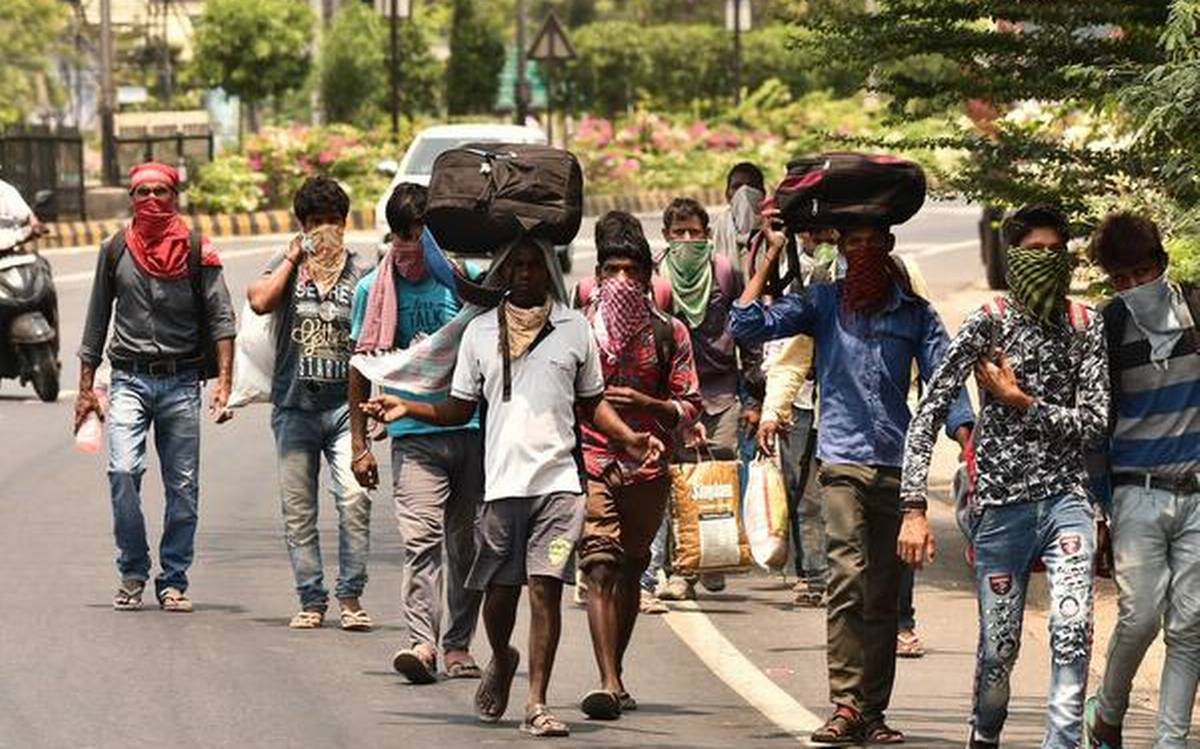
Expanding on this perspective, Pushpendra adds that human mobility has historically been a foundational pillar of civilization and economic development. The core question, therefore, is not whether people move for work, but whether that mobility actually improves their standard of living. In India, where the vast majority of the labor force operates within the informal sector, migrant workers routinely endure abject poverty wages, highly insecure working conditions, and substandard living arrangements in metropolitan hubs. For millions of families in Bihar, migration is simply a pragmatic, albeit harsh, strategy of basic economic survival.
Throughout the intense election campaign, rival political alliances treated migration like a persistent fever symptom, correctly identifying widespread unemployment as the underlying disease and promising jobs as the ultimate cure. The ruling NDA countered the opposition narrative by promising one crore government jobs over a five-year period, alongside the establishment of skilling hubs in every district, major new expressways, industrial parks, IT hubs, and a massive investment push to revive the state’s industrial base. They also targeted women’s economic empowerment through expanded initiatives like the Lakhpati Didi scheme.
The Mahagathbandhan alliance countered these promises with even bolder pledges, including a guaranteed government job for every single family within a span of 20 days, the restoration of the old pension scheme, a monthly financial allowance for women, new IT parks, free travel for exam aspirants, and aggressive industrial expansion specifically designed to curb distress migration. The Communist Party of India (Marxist), or CPI(M), echoed similar sentiments while fiercely accusing the NDA of running a negative and diversionary campaign.
Policy experts note that the only viable, long-term solution lies in making the domestic labor market fairer, more rewarding, and better regulated, while simultaneously making urban living more affordable for working-class families. Creating sustainable jobs within the borders of Bihar is essential, but analysts caution that this intervention may only reduce net migration rather than end the phenomenon entirely. For migration to truly resonate as a decisive political weapon, Pushpendra argues that opposition political parties must fundamentally reframe the issue and hold the central government structurally accountable for regional economic disparities.
Srikant notes that for Bihar’s millions of migrant workers, the daily choice usually comes down to a railway ticket or a local job. If gainful, secure employment opportunities exist at home, the desperate queues outside railway stations will naturally begin to shrink. However, he points to a much deeper institutional problem: the government currently lacks an honest, comprehensive assessment of actual migrant numbers. While official railway data routinely points to massive, undeniable outflows during festival and election seasons, the state government’s own internal surveys frequently estimate the migrant worker population at a mere forty to sixty thousand, highlighting a wide data gap in policy formulation.
Addressing these concerns, Bihar’s newly appointed Industry Minister, Dilip Jayswal, stated that his primary administrative priority is to systematically curb distress migration. While realistically acknowledging that providing government jobs to the entire population is an impossibility, he has promised that the Department of Industries will soon develop a specialized mission aimed at accelerating indigenous employment creation within the state.
For now, however, the familiar, poignant image remains unchanged across the landscape of Bihar. The major festivals conclude, the railway platforms fill to the brim with exhausted passengers, and the state’s relentless, generational cycle of migration rolls on.