As a five-month archival project gets underway at the Victoria and Albert (V&A) Museum in London, new light is being shed on the life, career, and enduring legacy of celebrated Victorian artist and illustrator Randolph Caldecott. Undertaken by an intern supported by The Randolph Caldecott Collection Trust, the project focuses on cataloguing and researching hundreds of rare works on paper created by the artist between 1846 and 1886.
Caldecott remains best known today for his hugely popular annual "Picture Books," which captivated Victorian audiences with titles such as "The House that Jack Built" and "Babes in the Wood." Yet his artistic footprint extends far beyond these published volumes. Housed within the V&A’s collections are more than 700 drawings, proof prints, and other artistic artifacts that offer an intimate look into the creative process behind his iconic imagery. These holdings include hand-coloured proof prints and previously unpublished illustrations, nearly half of which were acquired directly from the artist’s widow, Marian Caldecott, in the years following his untimely death.
Marian and Randolph’s Life in Kent
The story of Randolph and Marian Caldecott is deeply intertwined with the rural landscape of Kent. Born Marian Brind, she grew up in the village of Chelsfield as the daughter of a local businessman whose family trade centred on wine merchandising alongside several other commercial ventures. The Brind family home shared a boundary wall with the local village church.
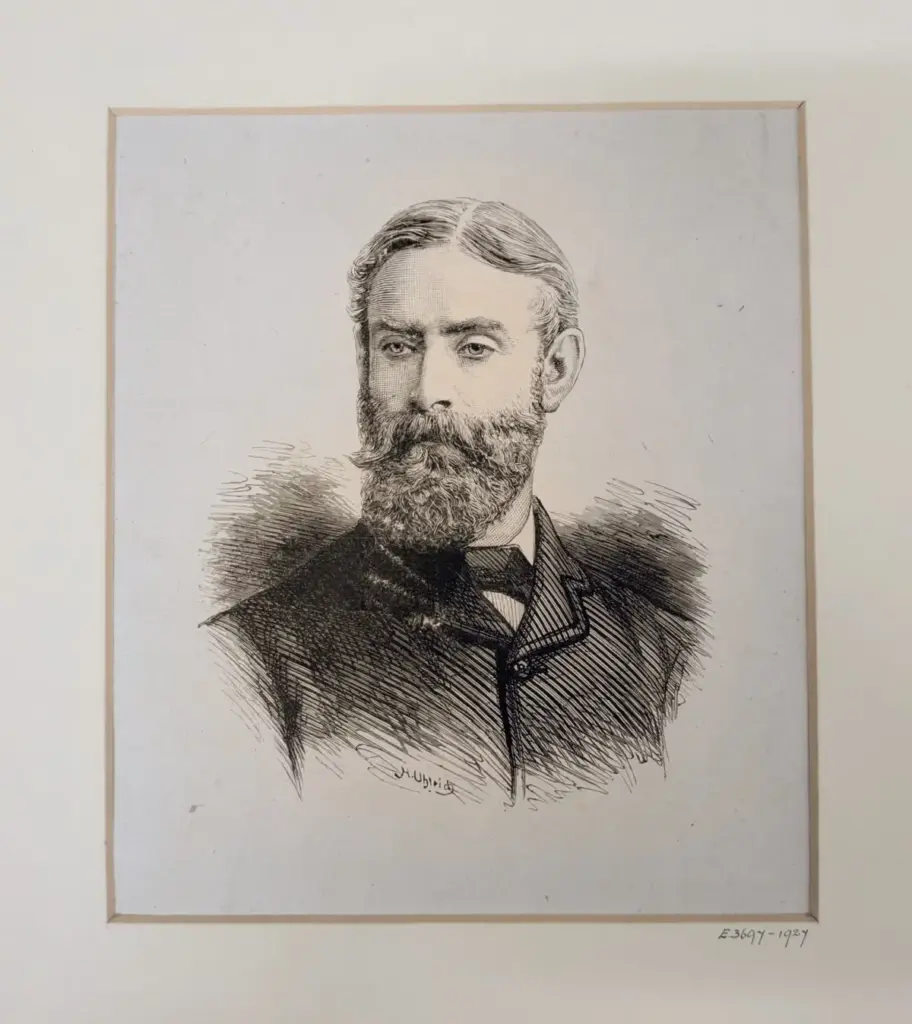
At the time, the Brinds lived as neighbours to Heinrich Sigismund Uhlrich, a German wood engraver who had emigrated from Norway in the early 1870s. Caldecott himself was living just seven miles away in Kemsing. Both Caldecott and Uhlrich contributed illustrations and engravings to the prominent weekly newspaper, The Graphic. The professional and personal circles of these men intersected deeply within the quiet Kentish countryside. Following Caldecott’s death in 1886, it was Uhlrich who engraved the commemorative portrait of the artist that accompanied his memorial tribute in The Graphic.
The exact chain of events leading to Caldecott’s introduction to Marian remains a charming historical puzzle. Records indicate that Caldecott was still residing in London when Uhlrich arrived in England and began his work for the newspaper. Furthermore, Caldecott did not move to Kent until a full year after Uhlrich married Sarah Anne Morgan, the daughter of a local Chelsfield farming family.
Because Sarah Morgan and Marian Brind were close in age and lived in immediate proximity to the church where Sarah and Heinrich were married in 1878, historians and researchers speculate that this wedding may have served as the introduction between Caldecott and his future wife. Although Caldecott’s published correspondence offers few clues about how he first met Marian, the timeline and geography suggest a strong possibility. Randolph and Marian were married in that same Kent church just two years later, in 1880.
Depictions of Marian Caldecott
Throughout their marriage, Marian and Randolph travelled extensively together, journeying for both artistic inspiration and to escape harsh winters in favour of the warmer climates of the French Riviera, a necessity given Caldecott’s fragile health.
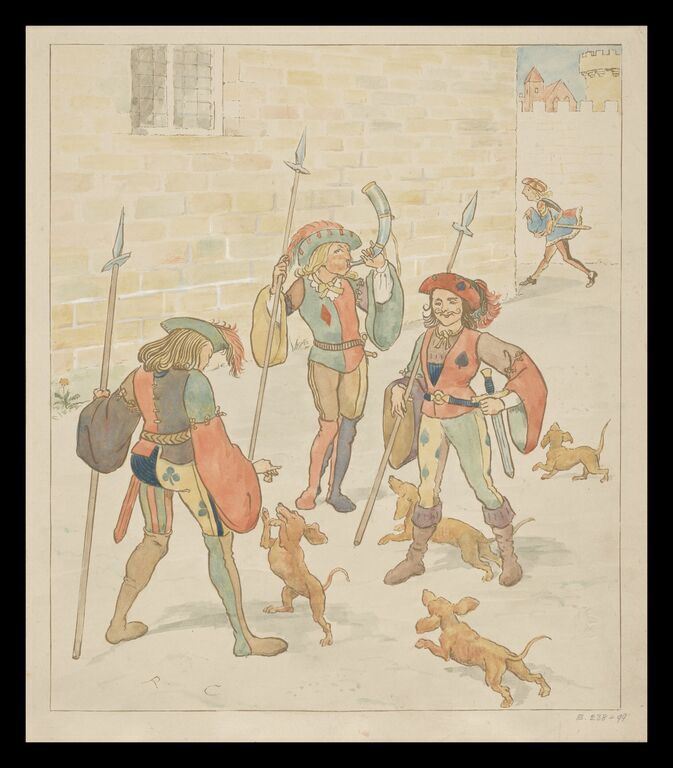
According to the Randolph Caldecott Society, Marian is believed to be depicted in at least one of the illustrations for Breton Folk, though the exact image remains unidentified. Researchers have also pointed to the figure on the right side of the watercolour painting "The Gavotte," created around 1880, as a potential portrait of Marian, though definitive visual comparisons are difficult due to the scarcity of surviving likenesses.

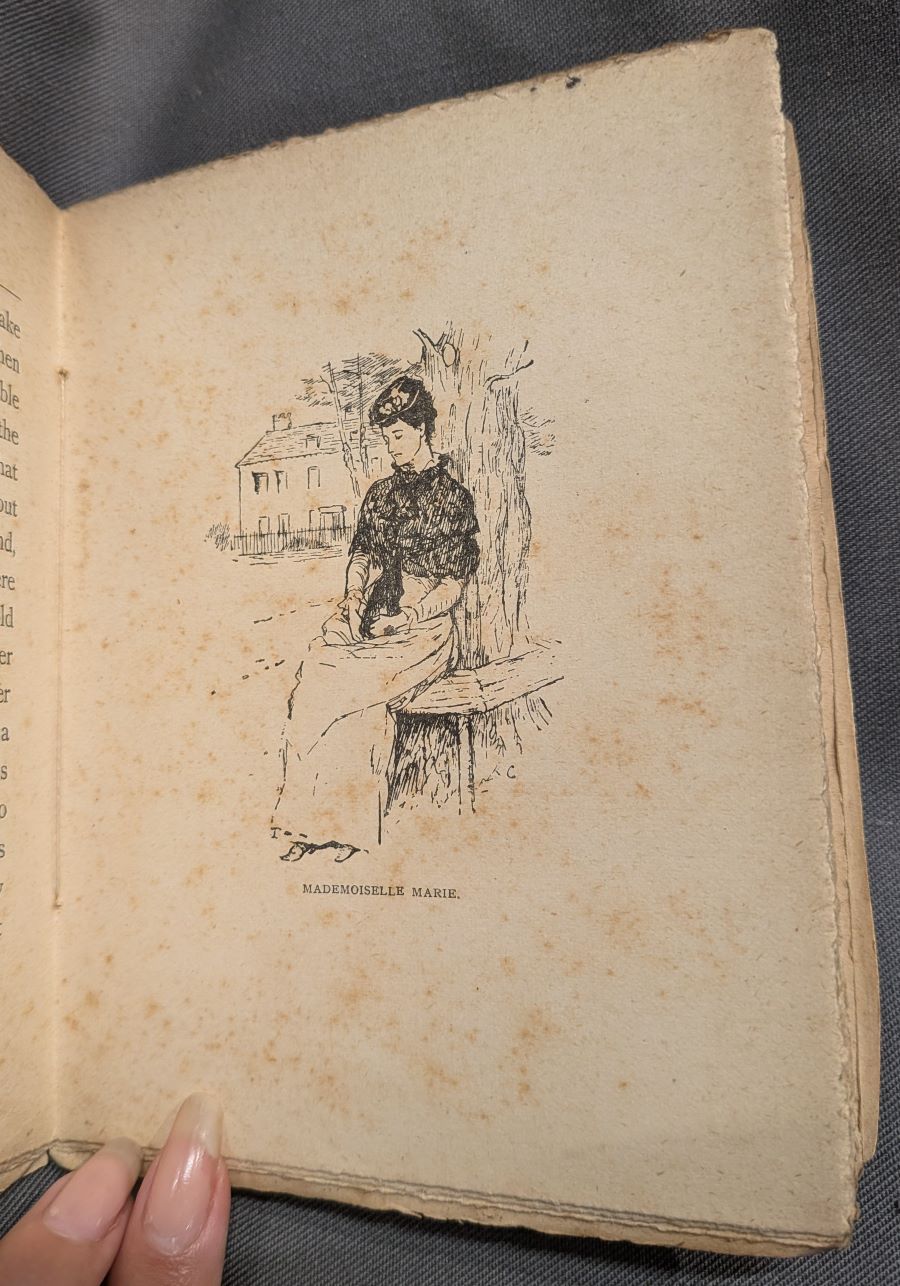
Despite her rare appearances in his formal artwork, Marian was captured in other ways. An annotated copy of the publication The Owls of Olynn Belfry, discovered only after the artist’s death, revealed that a drawing of the character "Mademoiselle Marie" was directly modelled after her.
Within Caldecott’s personal correspondence, she frequently appears simply as "Mrs. C." As part of a prominent social and professional circle, Randolph regularly interacted with high-profile artists and writers of the Victorian era, including Sir Frederic Leighton, John Everett Millais, George du Maurier, and author Juliana Horatia Ewing. Marian was integrated into this vibrant artistic community, frequently corresponding with Ewing and even offering to act as her husband’s secretary. However, Caldecott reportedly declined the offer, noting that he was too particular to allow anyone else to manage his correspondence.
Marian Caldecott and the V&A
In November 1885, during a voyage to the United States, Randolph noted in a letter that "Mrs. C. was not very well," having suffered from seasickness. Tragically, a few months later, it was Randolph’s health that gave way; unseasonably cold weather during a stay in Florida severely worsened his pre-existing medical conditions. He passed away in February 1886 at the age of 39.

Following his death, Marian took active steps to preserve his artistic legacy. She wrote to a mutual friend of the couple, Frederick Locker-Lampson, regarding the establishment of a committee to erect a monument in Randolph’s honour. She insisted that the committee include only individuals with a genuine admiration for her husband and his work, rejecting any attempt to inflate the project with uninterested names merely for public relations value.
Finding admirers of Caldecott’s work proved effortless. Among his prominent friends was the painter Thomas Armstrong, who served as the director of art at the V&A—then known as the South Kensington Museum. Through arrangements facilitated by Armstrong, Marian sold numerous examples of Randolph’s drawings and proof prints to the museum. These acquisitions were valued not only as masterpieces of illustration, but also as vital pedagogical tools for art students.
Archival research into Marian Caldecott’s nominal file at the V&A reveals an enduring relationship with the institution that extended far beyond her husband’s portfolio. In 1896, Marian loaned an 18th-century sack dress to the museum. Dating from the 1770s, the garment bore clear physical alterations made for fancy dress during the late 19th century. This detail has sparked new avenues of inquiry for current museum researchers, who now examine Caldecott’s illustrations of historical costume for any sign of a familiar garment worn or altered by Marian.

The history of the loaned dress also highlights the tumultuous events of the early 20th century. By 1918, the garment remained on public display in the museum’s "Loan Court," also known as Octagon Court and presently designated as Gallery 40. That August, amidst mounting concerns over potential enemy aircraft attacks during the First World War, the V&A dispatched a letter to Marian’s last known London address to confirm the status of the loan.
The letter was returned marked "not known" and "gone away." However, archival records show that Marian had left London and returned to Kent decades prior, living alongside her sister, Amy, in Tunbridge Wells until Amy’s passing in 1931. Marian herself died the following year. Decades later, in 2005, the historic dress she had loaned to the museum was formally accessioned into the permanent V&A collection, where it remains accessible through the institution’s online archives.
The ongoing cataloguing project at the V&A demonstrates the depth of Marian Caldecott’s influence. Far from being merely a footnote in the biography of a celebrated artist, her life bridged rural Victorian society, high artistic circles, and a lasting dedication to cultural preservation. Through her active stewardship after his death, Marian ensured that Randolph Caldecott’s whimsical picture books and brilliant drawings would remain preserved for future generations.